
Panorama Route & Mpumalanga
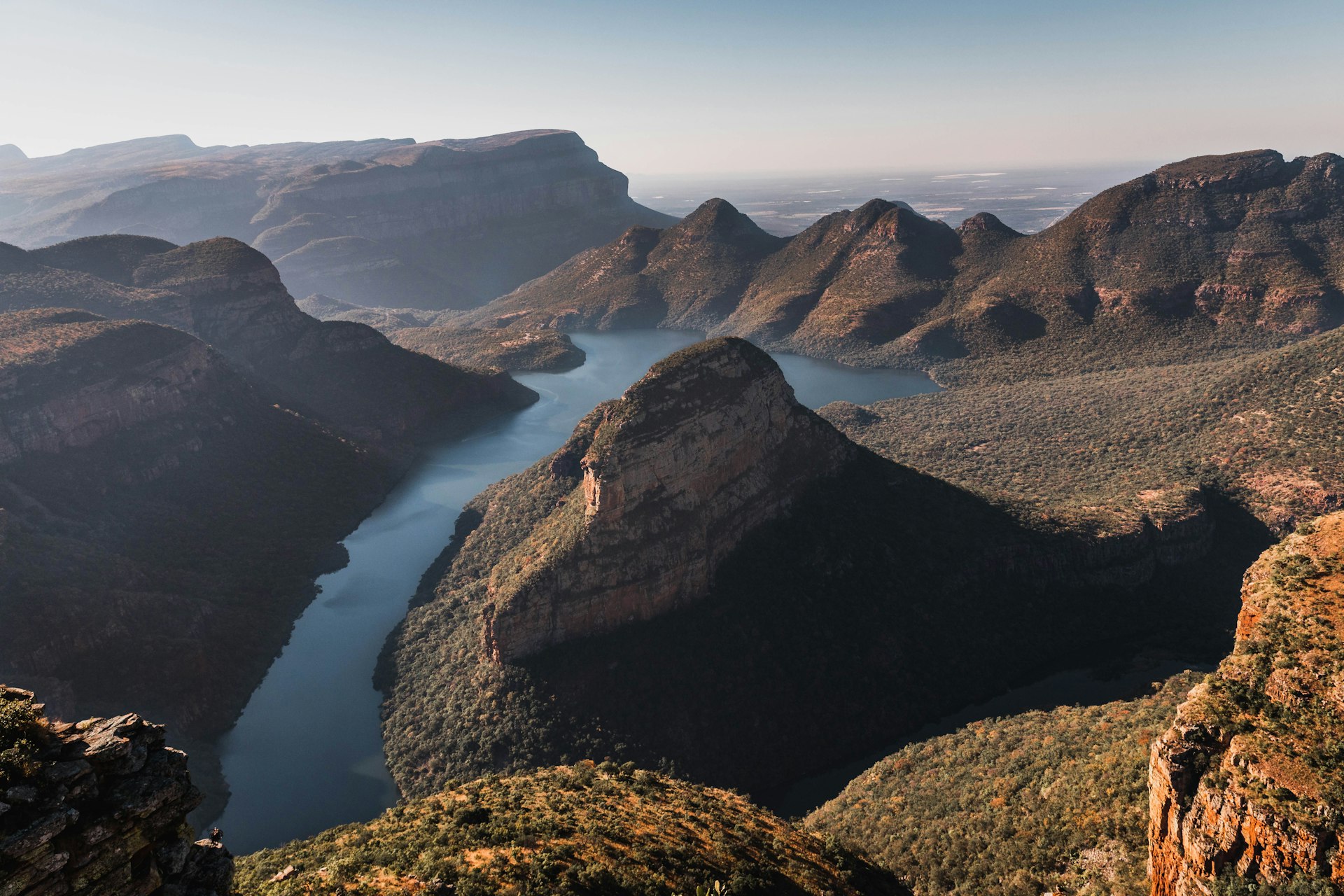
The dramatic escarpment drive north of Kruger, the third-largest canyon on earth (Blyde River, the world's largest green canyon), Bourke's Luck Potholes, God's Window, Mac Mac Falls, and the Three Rondavels. The natural prelude to a Kruger safari.
Waterfalls and the World's Green Canyon
Photo by Asher Pardey on Unsplash
About Panorama Route & Mpumalanga
Most visitors to Kruger National Park fly into Nelspruit and drive directly to their safari camp. The ones who take an extra day to drive the Panorama Route first arrive at the park with a fundamentally richer sense of the landscape they have entered, the escarpment geology, the waterfalls, the gorges, and the dramatic transition from the Highveld plateau to the Lowveld bushveld below. The Panorama Route follows the lip of the Mpumalanga Escarpment, the eastern edge of the South African interior plateau where the land drops precipitously into the Lowveld and ultimately toward the Mozambican coast. The route is a succession of viewpoints, geological formations, and waterfalls that trace the edge of one of earth's great geographical transitions.
The Blyde River Canyon, the central feature, is the third-largest canyon on earth and the largest green canyon, its forested walls maintaining colour year-round from the moisture rising from the river below. The Three Rondavels, three cylindrical rock towers with thatched summit vegetation, named for the traditional Ndebele round houses, are the canyon's most photographed feature. God's Window is the route's most famous viewpoint, looking from the escarpment edge down to the Lowveld plains and, on exceptional days, to Mozambique. Bourke's Luck Potholes, at the confluence of the Treur and Blyde rivers, are perfectly cylindrical formations drilled by millennia of swirling water and sand into the yellow and red rock; some reach three metres in diameter and five metres deep. Mac Mac Falls plunges 65 metres in two parallel streams; nearby Bridal Veil Falls is a delicate filamentous cascade. The contrast between the thunderous Mac Mac and the gentle Bridal Veil makes visiting both worthwhile.
Beyond the geology, the route is one of South Africa's better adventure-activity zones. Operators in Sabie run canyoning (ascending Mac Mac Falls' rock face), geckoing (single-person inflatable navigation of the Sabie River's rapids), quad biking, and 4x4 trails through the gorge terrain above Graskop. The Graskop Gorge gondola descends 51 metres into indigenous forest at the gorge floor, useful for those who want a close-up of the forest without a hike. Multiple base towns serve the route: Graskop is most central, Sabie sits at the southern end with the strongest adventure-activity scene, Hoedspruit covers the northern end and provides the most direct connection to Kruger's Phalaborwa and Orpen gates. Allow 1–2 full days for the route, rushing it in 3 hours produces photographs but not experience.
Things to Do in Panorama Route & Mpumalanga
Stop at the Three Rondavels viewpoint
The definitive Panorama Route view, looking across the canyon's main amphitheatre to the three cylindrical rock towers, the canyon walls beyond, and the Blyde River glinting far below. The full scale of the canyon (800m deep, 26km long) is fully apparent only from this viewpoint. Photography is best in early morning or late afternoon when the light angles bring out the rock colour.
Walk Bourke's Luck Potholes
At the confluence of the Treur and Blyde rivers, perfectly cylindrical potholes drilled by millennia of swirling water and sand into yellow and red rock, some 3 metres in diameter and 5 metres deep. The geological formations look entirely artificial; the explanation of the hydraulic drilling process makes them considerably more interesting. Well-maintained walkways above provide viewing platforms.
View the Lowveld from God's Window
The route's most famous viewpoint, a promontory on the escarpment edge where, on a clear day, the view extends from the plateau rim down to the Lowveld plains and (on exceptional days) to Mozambique. Best in early morning before haze builds; in summer, the viewpoint may be fogged in. The forest clinging to the escarpment face below is sustained by the rising moisture.
See Mac Mac and Bridal Veil Falls
Mac Mac Falls plunges 65 metres in two parallel streams (named for the Scottish and Irish miners of the 1870s gold rush), a short walk from the car park, with natural swimming pools upstream. Bridal Veil Falls nearby is more delicate, a filamentous cascade through fern and moss. The contrast between thunderous and gentle makes visiting both worthwhile.
Descend the Graskop Gorge gondola
A glass-floored cable car descends 51 metres into the indigenous forest at the gorge floor. A walkway at the bottom passes through the canopy of a forest type largely cleared from the surrounding plateau. Useful for travellers who want a close-up of the forest without a hiking commitment, and for genuine accessibility to the gorge environment.
Try canyoning or geckoing in Sabie
The escarpment's specialist adventure activities. Canyoning ascends and descends Mac Mac Falls' rock face with ropes, harnesses, and professional guides. Geckoing is single-person inflatable tube navigation of the Sabie River's rapids, short sections with significant drops, combining swimming and controlled free-fall. Among the more technically interesting adventure activities in southern Africa.
When to Visit Panorama Route & Mpumalanga
Cool Dry
May, September
The most reliable window for clear escarpment views. Cool, dry days; cold nights at altitude; minimal mist and rain. The optimal period for combining the Panorama Route with a Kruger safari, since both peak in this window. Pack warm layers, overnight temperatures at 1,800m can drop near freezing.
Spring
October, November
Warming temperatures, generally settled weather before summer storms arrive in earnest. The vegetation transitions from winter brown to spring green; wildflowers along the escarpment. Quieter than peak season, a good window for travellers who want the route without the school-holiday crowds.
Summer Storms
December, April
The escarpment generates frequent morning mist (October–April) and dramatic afternoon thunderstorms. The waterfalls run at maximum volume, Mac Mac at full thunder, Bourke's Luck at peak swirling. Visibility at God's Window is variable; be prepared for the famous viewpoint to deliver zero visibility on stormy days. Lush green canyon at its most photogenic.
Getting to Panorama Route & Mpumalanga
Most visitors approach the Panorama Route from Johannesburg via the N4 east, approximately 4–4.5 hours to Graskop. Hoedspruit (Eastgate Airport, HDS) is the closest airport with scheduled flights, providing direct access to the northern end of the route and the Timbavati/Thornybush concessions. Nelspruit (Kruger Mpumalanga International Airport, MQP) serves the southern approach. Self-drive is the only practical way to do the route, a rental car from Johannesburg, Hoedspruit, or Nelspruit. The R532 and R533 escarpment roads form the main circuit; standard vehicles handle the route comfortably.
Where to Stay
Ndhula Luxury Tented Lodge near Graskop offers elevated tented suites above the gorge with exceptional forest views, one of the most atmospheric properties on the escarpment. Tanamera Lodge in the Sabie area is a boutique property with strong views and personalised service. UmVangati House is a characterful guesthouse in the forest, quieter and more intimate than the larger properties. Westlodge at Graskop is a reliable budget option for self-drive travellers. One to two nights covers the route; combining with a 3–4 night Kruger safari is the natural format.
Travel Tips for Panorama Route & Mpumalanga
Frequently Asked Questions
- Should I do the Panorama Route before or after Kruger?
- Before is the natural order. The route prepares you for Kruger by establishing the escarpment-to-Lowveld geographical context, and the descent from God's Window to the park is the most logical physical sequence. After Kruger works too but feels more like a coda than an introduction.
- Is one day enough?
- It's the minimum that works. A long day from Graskop covers God's Window, Mac Mac Falls, Bourke's Luck Potholes, and the Three Rondavels with rushed stops. Two days lets you pace it properly, do the gondola or an adventure activity, and capture morning light at the major viewpoints. Two days is significantly more rewarding than one.
- What about the Blyde River Canyon boat trips?
- Boat tours operate from the dam at the canyon's southern end (Aventura Blyde Resort), a different perspective from the rim viewpoints, accessing waterfalls and rock formations visible only from the canyon floor. Worth doing if you have an extra day; not essential if your time is constrained.
- Is the route family-friendly?
- Yes, the major viewpoints, Bourke's Luck walkways, and Graskop Gorge gondola are accessible for children and older travellers. The waterfall walks (Mac Mac, Bridal Veil) involve light walking. The adventure activities (canyoning, geckoing) have minimum age requirements (typically 12+) but the rest of the route works for all ages.
Explore More, Panorama Route & Mpumalanga
More in South Africa
Kruger National Park
Nearly two million hectares of savanna, riverine forest, and granite kopjes, and one of the most accessible places on Earth to see the Big F…
Cape Town
Wedged between Table Mountain and two oceans, Cape Town is one of the most beautifully sited cities on Earth, and one of the most rewarding …
The Garden Route
A 300-kilometre coastal drive between Mossel Bay and Storms River, threading through ancient forests, lagoons, surfing beaches, and dramatic…
Cape Winelands
Three hundred years of winemaking, set against jagged mountains and Cape Dutch farmsteads an hour from Cape Town. Stellenbosch, Franschhoek,…
Madikwe Game Reserve
An 80,000-hectare malaria-free Big Five reserve on the Botswana border, restored from depleted farmland by Operation Phoenix, one of history…
Eastern Cape Reserves
South Africa's malaria-free safari circuit anchored on Addo Elephant National Park and the surrounding private reserves (Shamwari, Kwandwe, …
KwaZulu-Natal & the Drakensberg
South Africa's most geographically diverse province, Hluhluwe-iMfolozi (the world's oldest reserve, where the southern white rhino was saved…
Johannesburg
South Africa's economic engine and the most underestimated city on a typical southern Africa itinerary. The Apartheid Museum, Soweto's Vilak…
Sun City & Pilanesberg
Three hours from Johannesburg, Sun City, Africa's most elaborate purpose-built entertainment resort, sits beside Pilanesberg National Park, …