
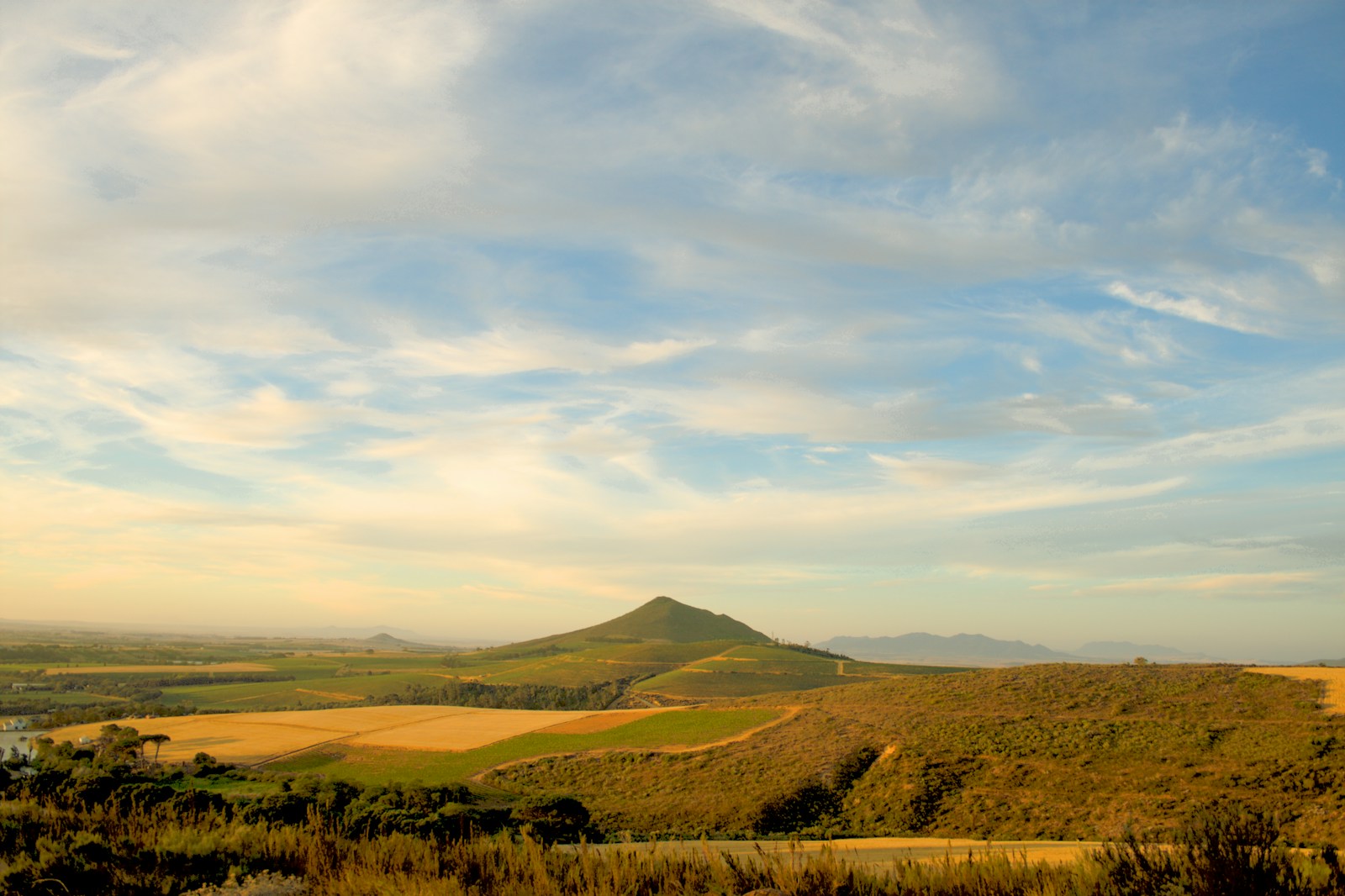
Cape Winelands
Three hundred years of winemaking, set against jagged mountains and Cape Dutch farmsteads an hour from Cape Town. Stellenbosch, Franschhoek, and Paarl together form one of the most beautiful and accessible wine regions in the world.
Old World Wines, New World Setting
About Cape Winelands
South Africa has been making wine since 1659, when the first vines were planted at the Dutch settlement at the Cape. By the late 17th century the Constantia estate was producing dessert wines that ended up on the tables of Napoleon and Jane Austen. The modern wine industry took off in the 1990s after the end of apartheid reopened export markets, and today the Cape Winelands are home to over 500 estates, some of the oldest wineries in the New World, and a food scene that easily rivals any wine region in Europe.
The three core towns of the Winelands, Stellenbosch, Franschhoek, and Paarl, are each within an hour of Cape Town and are easily combined into a long weekend or a full week. Stellenbosch is the largest and most prestigious, home to the country's leading agricultural university and the highest concentration of serious estates. Franschhoek is smaller, more polished, and built around its French Huguenot heritage, the best food in the region is here, and the Franschhoek Wine Tram has made it the easiest day trip for non-drivers. Paarl is more working and rural, with the iconic granite domes of Paarl Rock dominating the skyline.
What sets the Cape Winelands apart from other wine regions is the geography. The mountains here are not gentle hills, they are sheer, granite, dramatic, often dusted with snow in winter. Cape Dutch architecture, with its whitewashed walls and distinctive curved gables, lines the older estates. And the food has caught up with the wine: Franschhoek alone has multiple restaurants on the World's 50 Best lists, and the casual end of the spectrum, farm cafés, deli lunches, charcuterie boards on the lawn, is some of the best eating in Africa.
Things to Do in Cape Winelands
Ride the Franschhoek Wine Tram
A double-decker tram that loops between eight or nine wine estates in the Franschhoek valley. Hop on and off as you please, taste at three or four estates, and let someone else handle the driving. The most popular way to experience the Winelands without a designated driver.
Long lunch at a top Stellenbosch estate
Restaurants like Jordan, Tokara, Delaire Graff, and Babylonstoren have built international reputations not just for the food but for the setting, long tables on lawns under oaks, wine pairings from the estate's own cellar, and views to the Helderberg or Simonsberg. Book ahead, especially in summer.
Tour the historic Constantia estates
Constantia is inside the Cape Town city limits and is the oldest wine region in South Africa. Groot Constantia, Klein Constantia, and Buitenverwachting are easy half-day visits from the city centre and produce some of the country's best Sauvignon Blanc and the legendary Vin de Constance dessert wine.
Visit Babylonstoren
A working farm and one of the most beautiful estates in the country. The garden is a destination in itself, the food is exceptional, and the wines are excellent. Book the garden tour, stay for lunch at Babel, and consider a night at the on-site farm hotel.
Walk the Stellenbosch town centre
Beyond the wineries, Stellenbosch town itself is worth a walking morning. Cape Dutch architecture along Dorp Street, the Stellenbosch University Botanical Garden, the Toy and Miniature Museum, and a dozen good cafés and bookshops in between.
Hike or drive the mountain passes
The Franschhoek Pass, Bain's Kloof, and the road over Helshoogte all deliver dramatic views into the valleys and over the vineyards. The Hottentots Holland and Jonkershoek mountains have excellent hiking trails that you can combine with a wine lunch on the way back.
When to Visit Cape Winelands
Harvest
February, April
The most exciting time to be in the Winelands. Vineyards are alive with picking, the cellars are working overtime, and many estates run harvest experiences and special tastings. Weather is warm and dry. Book accommodation well in advance.
Summer
December, January
Peak holiday season. Hot, busy, and outdoors-friendly. Long lunches on shaded lawns are the defining experience. Many estates run picnic baskets, summer concerts, and outdoor cinema nights.
Winter
June, August
Cool, rainy, and quiet. The mountains can carry snow, fires are lit in the tasting rooms, and many estates run winter specials. Less crowded and more atmospheric for travellers who want a different feel.
Shoulder
September, November
Spring in the vineyards is bud-break season, fresh growth, wildflowers in the surrounding reserves, and warming weather. October and November are ideal for travellers who want good weather without the peak crowds.
Getting to Cape Winelands
Stellenbosch is 50 minutes by car from Cape Town International Airport via the N2 and R310. Franschhoek is another 30 minutes east. Paarl is 50 minutes north on the N1. The whole region is best explored by car if you have a designated driver, or by booking a guided wine tour from Cape Town if you don't. Uber and Bolt operate within the region and are a viable option for short hops between estates and town. There is no useful public transport between estates.
Where to Stay
Each of the three towns has its own character. Stellenbosch town centre puts you in walking distance of restaurants, museums, and several urban estates. Franschhoek is more polished and intimate, the best base for foodies and couples. Paarl is more spread out but offers some of the largest wine farms and the best mountain views. The most distinctive accommodation is on the wine estates themselves: Delaire Graff, Babylonstoren, La Residence (Franschhoek), Lanzerac, Spier, and Boschendal all run hotels or guesthouses. Two-three nights is enough; a week lets you do all three towns properly.
Travel Tips for Cape Winelands
Frequently Asked Questions
- Stellenbosch, Franschhoek, or Paarl?
- All three, ideally. If you only have one day, Franschhoek with the Wine Tram is the most efficient introduction. If you have two days, add Stellenbosch for depth. If you have three or more, spend a half day in Paarl as well, the granite domes and quieter farms are a different vibe.
- Day trip from Cape Town or stay overnight?
- If you are short on time, day trips are easy. But staying overnight in the Winelands lets you eat dinner at an estate, walk through vineyards in the morning, and avoid the rush back to the city. Two nights is the sweet spot for a first visit.
- Is South African wine actually good?
- Yes, and good value. South African Chenin Blanc, Pinotage (the country's signature grape), Cabernet Sauvignon, and Cap Classique sparkling wines hold their own against any wine region in the world, often at half the price. The best estates are now exporting to top restaurants in Europe and the US.
- How do I taste responsibly?
- Most tastings are 5-6 wines of about 30ml each. Spit if you are visiting more than two estates in a day, the spittoons are there for a reason and the staff don't mind. Drink water between tastings. And book a driver if you plan to taste seriously across more than one estate.
Explore More, Cape Winelands
Things To Do
Plan Your Trip
More in South Africa
Kruger National Park
Nearly two million hectares of savanna, riverine forest, and granite kopjes, and one of the most accessible places on Earth to see the Big F…
Cape Town
Wedged between Table Mountain and two oceans, Cape Town is one of the most beautifully sited cities on Earth, and one of the most rewarding …
The Garden Route
A 300-kilometre coastal drive between Mossel Bay and Storms River, threading through ancient forests, lagoons, surfing beaches, and dramatic…
Madikwe Game Reserve
An 80,000-hectare malaria-free Big Five reserve on the Botswana border, restored from depleted farmland by Operation Phoenix, one of history…
Eastern Cape Reserves
South Africa's malaria-free safari circuit anchored on Addo Elephant National Park and the surrounding private reserves (Shamwari, Kwandwe, …
KwaZulu-Natal & the Drakensberg
South Africa's most geographically diverse province, Hluhluwe-iMfolozi (the world's oldest reserve, where the southern white rhino was saved…
Johannesburg
South Africa's economic engine and the most underestimated city on a typical southern Africa itinerary. The Apartheid Museum, Soweto's Vilak…
Sun City & Pilanesberg
Three hours from Johannesburg, Sun City, Africa's most elaborate purpose-built entertainment resort, sits beside Pilanesberg National Park, …
Panorama Route & Mpumalanga
The dramatic escarpment drive north of Kruger, the third-largest canyon on earth (Blyde River, the world's largest green canyon), Bourke's L…