
Eastern Cape Reserves
South Africa's malaria-free safari circuit anchored on Addo Elephant National Park and the surrounding private reserves (Shamwari, Kwandwe, Pumba, Amakhala). The Big 7, Big Five plus great white sharks and southern right whales, and family-tailored programming.
Malaria-Free Big Five for Families
Photo by Wolfgang Hasselmann on Unsplash
About Eastern Cape Reserves
For families with young children, pregnant travellers, or anyone who cannot or prefers not to take antimalarial medication, the Eastern Cape's safari circuit provides a compelling alternative to the Lowveld's wildlife credentials, without the malaria risk that accompanies a Kruger visit. The Eastern Cape's private reserves have built their reputations on family-tailored programming, temperate climate, rolling landscape, and the particular advantage of the Big 7, a concept that supplements the traditional Big Five with the great white sharks and southern right whales accessible off the Eastern Cape coast.
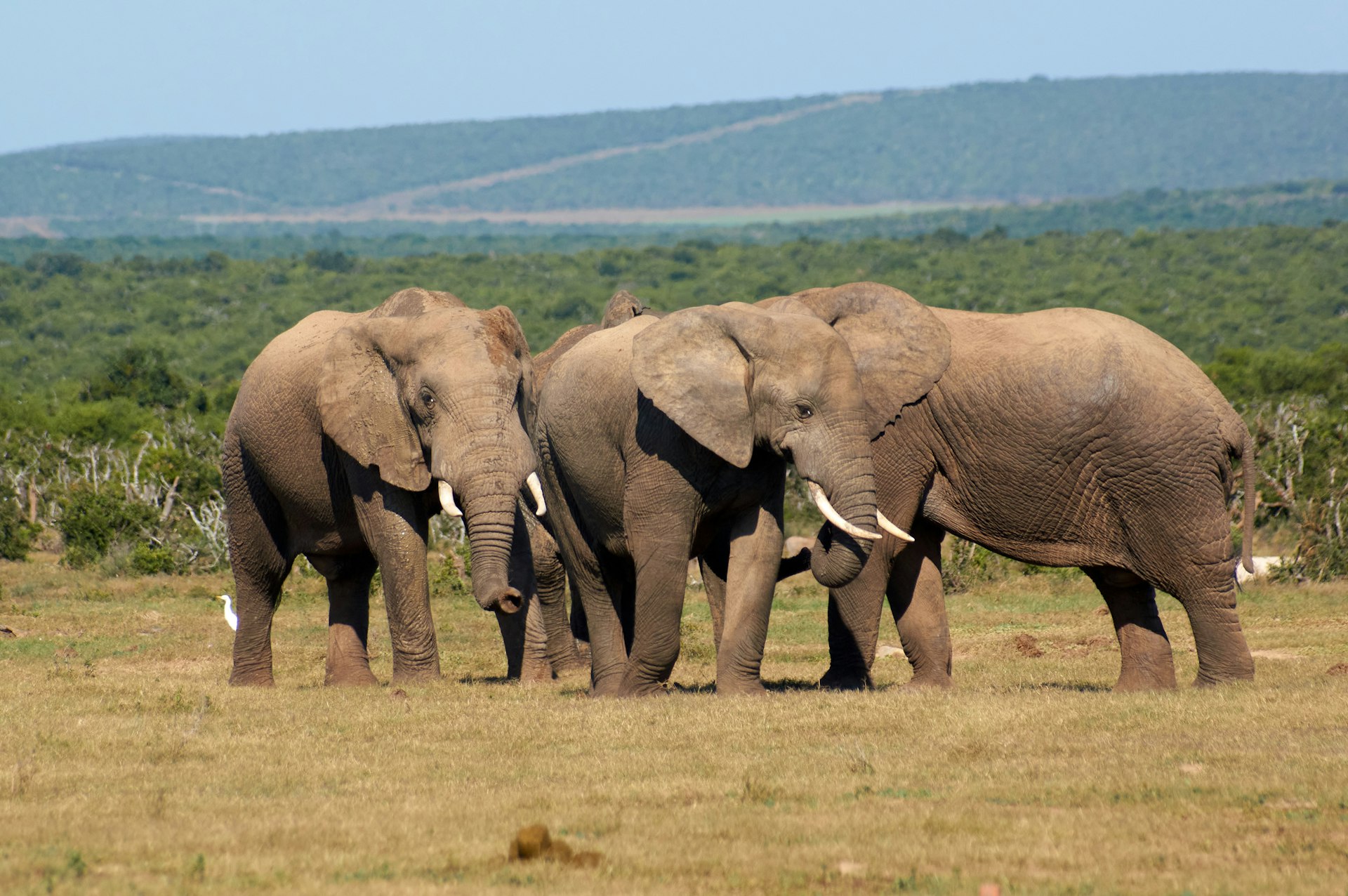
Addo Elephant National Park anchors the public offering. South Africa's third-largest national park is famous for its enormous, easily observable elephant herds, over 600 individuals in a relatively compact reserve, making elephant sightings here among the most reliable anywhere in the country. Lions, black rhino, buffalo, leopard, and hyena complete the Big Five, while the offshore marine protected area adds great white sharks and southern right whales. The park is highly accessible, well-maintained roads, decent camp facilities, and a self-drive circuit that works well in a standard vehicle. As a public park, it provides excellent value at a lower price point than the surrounding private reserves.
The surrounding private reserves provide the exclusive lodge experience. Shamwari is internationally celebrated through television documentaries and its globally acclaimed Born Free big cat sanctuaries (housing rescued lions and other cats that cannot be rewilded). Pumba's exceptional distinction is its white lion population, extremely rare genetic variants of the tawny lion, and the only reliably viewable white lions in an Eastern Cape reserve. Kwandwe occupies 22,000 hectares of malaria-free landscape on the Great Fish River, historically significant in South African colonial history, with a riverine character distinct from the busier Addo circuits. Gorah Elephant Lodge is positioned within Addo on a private concession, offering Addo elephant density with private lodge infrastructure. The Eastern Cape is also the natural extension of a Garden Route self-drive, a Cape Town to Port Elizabeth (Gqeberha) loop covering the Garden Route plus a few nights of safari is one of South Africa's best two-week itineraries.
Things to Do in Eastern Cape Reserves
Self-drive Addo's elephant circuit
South Africa's third-largest national park, with 600+ elephants in a compact area making sightings extraordinarily reliable. Well-maintained self-drive roads, the Hapoor Dam waterhole as the key concentration point, and standard vehicle access make Addo accessible without a guided tour.
Stay at a Big Five private reserve
Shamwari, Kwandwe, Pumba, Amakhala, the surrounding private reserves provide guided game drives, exclusive lodge accommodation, and the focused safari experience that Addo's public-park access cannot match. Three to four nights at a private reserve is the standard format.
See the white lions at Pumba
Pumba's white lion population is the only reliably viewable in any Eastern Cape reserve. White lions are extremely rare genetic variants of the tawny lion that have captured global attention; standard Big Five programming is offered alongside this specific draw.
Visit the Born Free sanctuaries at Shamwari
Shamwari's wildlife rehabilitation tours and the Born Free big cat sanctuaries house rescued lions and other cats that cannot be rewilded. Specialised conservation-interested visits are available alongside the main game-viewing programme, a thoughtful and ethically run dimension of the reserve's offering.
Marine Big 7, sharks and whales
Day excursions from Eastern Cape reserves access the offshore Big 7, great white shark cage diving operates from Mossel Bay and Gansbaai (both within a Garden Route self-drive); southern right whales are observable from coastal viewpoints and dedicated boat trips during the June–November season.
Children's ranger programme
Shamwari and Amakhala both run particularly well-structured junior ranger and wildlife tracking programmes, activities calibrated to ages 6+ that create lasting engagement with the wildlife rather than passive vehicle sightings. Excellent for family safari trips.
When to Visit Eastern Cape Reserves
Cool Dry
May, September
The most reliable game viewing window. Cooler temperatures, vegetation thins, and wildlife concentrates around water sources. Comfortable for full-day activity and excellent for the southern right whales (June–November) along the offshore Big 7 circuit. Pack warm layers, Eastern Cape evenings can be cold even in milder months.
Whale Season
June, November
Southern right whales arrive along the Eastern Cape coast for calving, the offshore component of the Big 7 is at its peak. Most reserves with marine programming run dedicated whale-watching excursions during this window; the combination of land-based safari and ocean wildlife is uniquely available in the Eastern Cape.
Summer
December, April
The summer rains bring afternoon thunderstorms but the temperate Eastern Cape rarely sees the extreme heat of the Lowveld. Wildlife disperses across greener landscapes; calving brings predator activity. Ideal for travellers who want to combine safari with Garden Route beach time at the warmest part of the year.
Getting to Eastern Cape Reserves
From Cape Town, the Eastern Cape reserves are approximately 700km east, the natural conclusion of a Garden Route self-drive. From Johannesburg, fly direct to Port Elizabeth/Gqeberha (PE/PLZ), the airport is approximately 1 hour from most reserves. International visitors typically arrive via Cape Town and end at Port Elizabeth, or vice versa, on a circular South African itinerary. Self-drive within the region is straightforward; rental cars are widely available at Port Elizabeth airport.
Where to Stay
The accommodation splits between Addo (public park) and the private reserves. In Addo, Gorah Elephant Lodge is the premier option, a private concession within the park with exceptional elephant access at the lodge waterhole. The public park's own rest camps (Main Camp, Matyholweni) are budget-friendly and function well for self-drive visitors. In the private reserves, Shamwari operates multiple lodges of varying styles; Kwandwe Great Fish River Lodge is the riverside option; Pumba Private Game Reserve hosts the white lion programme; Amakhala is family-focused. Three to four nights minimum is required to do the reserves properly; longer combinations with the Garden Route extend the trip naturally.
Travel Tips for Eastern Cape Reserves
Frequently Asked Questions
- Eastern Cape or Kruger?
- Different scales and registers. Kruger is larger, with denser predator habituation and a more dramatic Lowveld landscape, plus malaria. The Eastern Cape is malaria-free, more temperate, smaller and more intimate, and weights toward elephants and family-friendly programming. For first-time safari families, Eastern Cape is often the better choice; for predator-focused or experienced safari travellers, Kruger.
- Is Addo really worth a visit?
- Yes, particularly for elephant-focused travellers. The 600+ herd in a compact reserve makes elephant viewing exceptionally reliable, and the public-park access keeps costs low. Addo is also the only Big 7 area, with the marine extension to great white sharks and whales accessible by day excursion.
- How does the Eastern Cape compare to KwaZulu-Natal?
- Both provide alternative safari to the Lowveld but with different characters. KZN combines bush and beach with the iSimangaliso UNESCO coast and Hluhluwe-iMfolozi (the world's oldest reserve, famous for rhinos); the Eastern Cape combines bush with the Garden Route and the marine Big 7. Both are excellent. Choose based on what you want as your secondary experience, coastal beaches and snorkelling (KZN) or Garden Route scenery and wine country (Eastern Cape).
- How many days do I need?
- Three to four nights for a single reserve; longer combined with Garden Route or Cape Town. The two-week Cape Town–Garden Route–Eastern Cape loop is one of South Africa's classic itineraries, three nights in Cape Town, three on the Garden Route, three in the Eastern Cape, fly home from Port Elizabeth.
Explore More, Eastern Cape Reserves
Things To Do
Plan Your Trip
More in South Africa
Kruger National Park
Nearly two million hectares of savanna, riverine forest, and granite kopjes, and one of the most accessible places on Earth to see the Big F…
Cape Town
Wedged between Table Mountain and two oceans, Cape Town is one of the most beautifully sited cities on Earth, and one of the most rewarding …
The Garden Route
A 300-kilometre coastal drive between Mossel Bay and Storms River, threading through ancient forests, lagoons, surfing beaches, and dramatic…
Cape Winelands
Three hundred years of winemaking, set against jagged mountains and Cape Dutch farmsteads an hour from Cape Town. Stellenbosch, Franschhoek,…
Madikwe Game Reserve
An 80,000-hectare malaria-free Big Five reserve on the Botswana border, restored from depleted farmland by Operation Phoenix, one of history…
KwaZulu-Natal & the Drakensberg
South Africa's most geographically diverse province, Hluhluwe-iMfolozi (the world's oldest reserve, where the southern white rhino was saved…
Johannesburg
South Africa's economic engine and the most underestimated city on a typical southern Africa itinerary. The Apartheid Museum, Soweto's Vilak…
Sun City & Pilanesberg
Three hours from Johannesburg, Sun City, Africa's most elaborate purpose-built entertainment resort, sits beside Pilanesberg National Park, …
Panorama Route & Mpumalanga
The dramatic escarpment drive north of Kruger, the third-largest canyon on earth (Blyde River, the world's largest green canyon), Bourke's L…