
Lake Tanganyika
The world's longest freshwater lake, 673 kilometres of clear, mountain-edged water in northern Zambia. Endemic cichlid diving, sport fishing, and a tropical dimension to the country that the bush parks cannot offer.
The World's Longest Freshwater Lake
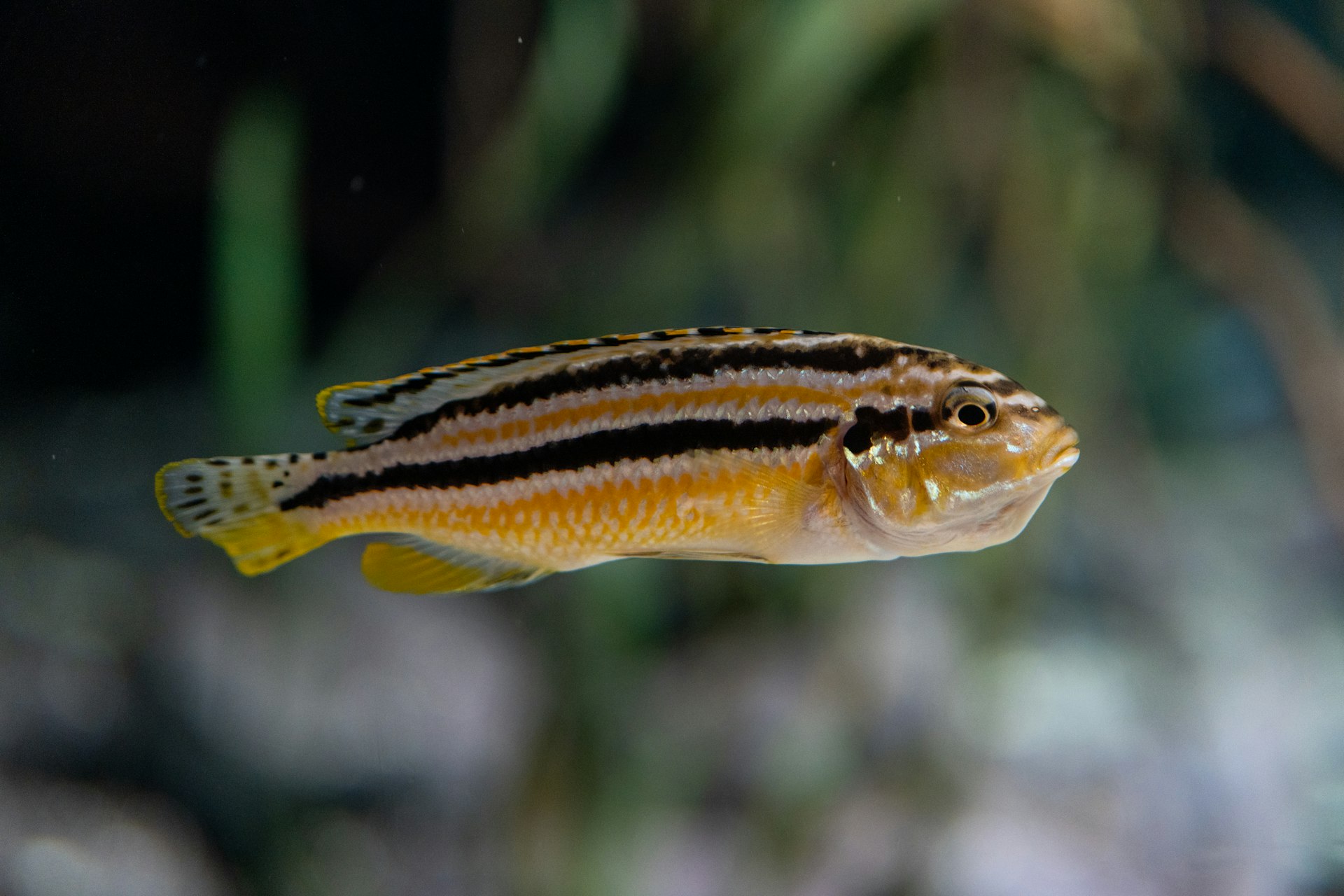
Photo by Robert Schwarz on Unsplash
About Lake Tanganyika
Most visitors to Zambia arrive with binoculars and neutral safari clothing. Those who find their way to Lake Tanganyika often wish they had packed a mask and fins instead. Tanganyika is the world's longest freshwater lake, 673 kilometres along the Rift Valley from Zambia in the south to Burundi in the north, and the second-deepest lake on earth at 1,470 metres. Its 9 to 12 million years of geographic isolation have created an aquatic ecosystem of extraordinary evolutionary uniqueness: over 350 species of cichlid fish are found nowhere else on earth, hosting an underwater world of colour and behavioural complexity that rivals any coral reef for visual impact.
The Zambian shore lies in the country's far north, in the Mpulungu district near the Tanzania, DRC, and Burundi borders. There are no lions here, no elephant herds on a dusty floodplain. What there is instead is a tropical, luminous, genuinely beautiful lake environment, mountains tumbling steeply to the shoreline, water that is warm and clear with visibility regularly over 20 metres, and a rhythm of the day dictated by sunlight on water rather than the movements of wildlife across the bush. For travellers who have spent a week of intense safari in the south, Tanganyika offers a complete change of register: a lake escape that decompresses without sacrificing visual richness.
Diving is the headline activity, and it is unlike any ocean dive. The rocky shoreline habitats are carpeted in cichlids, territorial males in vivid breeding colours, females mouthbrooding eggs and fry, and the constant negotiations of dozens of species in close proximity. The colours are electric and the behaviour is as watchable as any large mammal interaction. For non-divers, snorkelling in the shallow rocky areas off the lodge beaches is immediately rewarding. Beyond the water, sport fishing for Nile perch and the endemic *Lates*, sunset birdwatching on the surrounding montane forest, and nature walks into the steep terrain behind the lodges round out a destination that rewards a slower pace than the bush parks demand.
Things to Do in Lake Tanganyika
Scuba dive among the endemic cichlids
The signature Tanganyika experience. Multi-dive day trips from Ndole Bay or Lake Shore explore different sections of the rocky shoreline, with briefings covering the cichlid species likely at each site. PADI-qualified instructors offer Open Water certification and introductory dives for non-certified guests. The water is clear, warm, and immediately rewarding.
Snorkel the rocky shallows
For non-divers, guided snorkelling excursions in the rocky shallows immediately off the lodge beaches put you within metres of the cichlid spectacle. The clarity of Tanganyika's water makes mask-and-fins exploration extraordinarily rewarding even at 2–3 metres depth, fish diversity and density rival many coral reef snorkelling sites.
Sport fish for Nile perch and Lates
Lake Tanganyika holds a complex of game fish species, including Nile perch, large cichlid predators, and the endemic *Lates* (which can reach considerable size). Sport fishing excursions from the lodges use local boats and experienced guides who know the productive channels and drop-offs.
Walk the surrounding mountains
The mountains rimming Tanganyika's Zambian shoreline drop steeply to the water, creating a dramatic terrain of forested slopes and rocky outcrops behind the lodges. Guided nature walks through this terrain hold a good variety of small mammals, birds, and botanical interest, with elevated viewpoints over the lake providing the best photography positions in northern Zambia.
Bird the lake-edge and montane forest
African fish eagle, pied kingfisher, and several tern species patrol the lake surface; the forested hillsides hold montane forest specialists relevant to the broader northern Zambia birding circuit. The combination of lake and forest in the same itinerary makes Tanganyika a productive single-base birding destination.
Take the MV Liemba ferry to Tanzania
Mpulungu is accessible by the historic MV Liemba ferry from Kigoma in Tanzania, a classic east African lake crossing that takes approximately three days and is an experience in its own right. Travellers approaching Zambia from the east can build the ferry into their itinerary as a memorable point of entry.
When to Visit Lake Tanganyika
Diving Season
June, October
Optimal water clarity, calm surface conditions, and dry weather. The best window for diving, snorkelling, and general outdoor activity. Visibility regularly exceeds 20 metres. Cooler nights and warm days (25–30°C). The peak season for the lake.
Shoulder
November / April, May
Reasonable conditions for most activities; transition months between the two primary seasons. Less crowded than peak. The lake remains warm and welcoming, with somewhat reduced clarity in the shoulders.
Birding Season
December, March
The rains bring a dramatic increase in bird diversity as migratory species arrive in the surrounding montane forest. Diving conditions can be affected by reduced clarity during heavy rainfall periods, but the broader nature experience is at its richest.
Getting to Lake Tanganyika
The closest scheduled airstrip is Kasama, approximately 3–4 hours by road from Mpulungu. Proflight Zambia connects Kasama to Lusaka in roughly 2 hours. Some lodges arrange light charter to Mpulungu airport directly. By road from Lusaka, the drive takes 12–14 hours via the Great North Road (T2) and is practical only for overlanders with multiple days. From Tanzania, the MV Liemba ferry from Kigoma is a memorable three-day crossing for travellers approaching from the east. Travel time is real either way, build a full transit day into the itinerary.
Where to Stay
Two well-established properties dominate the Zambian shore. Ndole Bay Lodge is the most established diving operation on the lake, positioned on a sheltered bay with comfortable chalets and a fully equipped dive centre, the standard choice for diving-focused visitors. Lake Shore Lodge is a complementary property in character and quality, with a strong focus on both diving and fishing, good facilities, and a reputation for attentive service. Three to five nights covers the lake properly, longer for serious divers working through the dive sites.
Travel Tips for Lake Tanganyika
Frequently Asked Questions
- How does Lake Tanganyika diving compare to ocean diving?
- Different rather than worse. The species are freshwater cichlids, colourful, behaviourally complex, and concentrated in dense rocky-habitat communities. There is no coral and no large pelagic life, but the visibility, clarity, and species diversity make it immediately rewarding for divers experienced in coral reefs. For divers who have not seen freshwater cichlids before, it is a genuinely surprising experience.
- Is Tanganyika safe for swimming?
- Yes, with normal lake-water precautions. The lakeshore at Ndole Bay and Lake Shore is sheltered and lifeguarded; bilharzia (schistosomiasis) is present in some sections of the lake but the risk is generally low at the established lodge beaches. Lodge staff will brief on which areas are safe for swimming and which to avoid.
- Can I combine Tanganyika with a Zambia safari?
- Yes, with deliberate planning. The most coherent option is integrating the lake into a 10-day-plus northern circuit alongside Kasanka, Bangweulu, and the Northern Waterfalls. Combining with the southern safari parks (Luangwa, Lower Zambezi) requires additional flying and is usually only worth it on a 3-week trip.
- Is it suitable for a family trip?
- Yes, possibly more than the safari parks. The lake activities (snorkelling, swimming, fishing, walking) work well for older children, the lodges are comfortable, and the rhythm is relaxed. Combine with a few days of safari in South Luangwa for a balanced family Zambia trip.
Explore More, Lake Tanganyika
Plan Your Trip
More in Zambia
Victoria Falls
One of the seven natural wonders of the world, Victoria Falls is twice the height of Niagara and one and a half times as wide. The Zambian s…
South Luangwa National Park
The valley where guided walking safaris were invented in the 1950s, and where they remain the best in Africa. South Luangwa offers extraordi…
Lower Zambezi National Park
A pristine 4,000-square-kilometre stretch of the Zambezi floodplain, where elephants wade in the river and canoe safaris glide past hippos a…
Kafue National Park
Zambia's largest park, 22,400 square kilometres of miombo woodland, river corridor, and the seasonal Busanga floodplain. Cheetah, wild dogs,…
Liuwa Plains National Park
Africa's second-largest wildebeest migration, on a vast minimalist floodplain in remote western Zambia. Dominant spotted hyena clans, intact…
Kasanka & Bangweulu Wetlands
The world's largest mammal migration, 10 million fruit bats descending on a single grove in Kasanka National Park each November, and the sho…
Northern Circuit Waterfalls
Seventeen significant waterfalls in northern Zambia, Kalambo's 235-metre plunge, Lumangwe's 150-metre curtain, Chishimba's three-cascade hik…
Lusaka
Zambia's primary international entry point and one of the fastest-growing cities in Africa. The Kabwata Cultural Centre, a maturing restaura…
Cultural Heritage & Shiwa Ng'andu
Zambia's 73 ethnic groups, 100+ annual ceremonies, and the country's most improbable architectural relic, the 1920s Italianate manor of Shiw…