
Kasanka & Bangweulu Wetlands
The world's largest mammal migration, 10 million fruit bats descending on a single grove in Kasanka National Park each November, and the shoebill stork's stronghold in the vast Bangweulu Wetlands. Two of Africa's most extraordinary wildlife events in one northern circuit.
Ten Million Bats and the Shoebill
Photo by Marc Eggert on Unsplash
About Kasanka & Bangweulu Wetlands
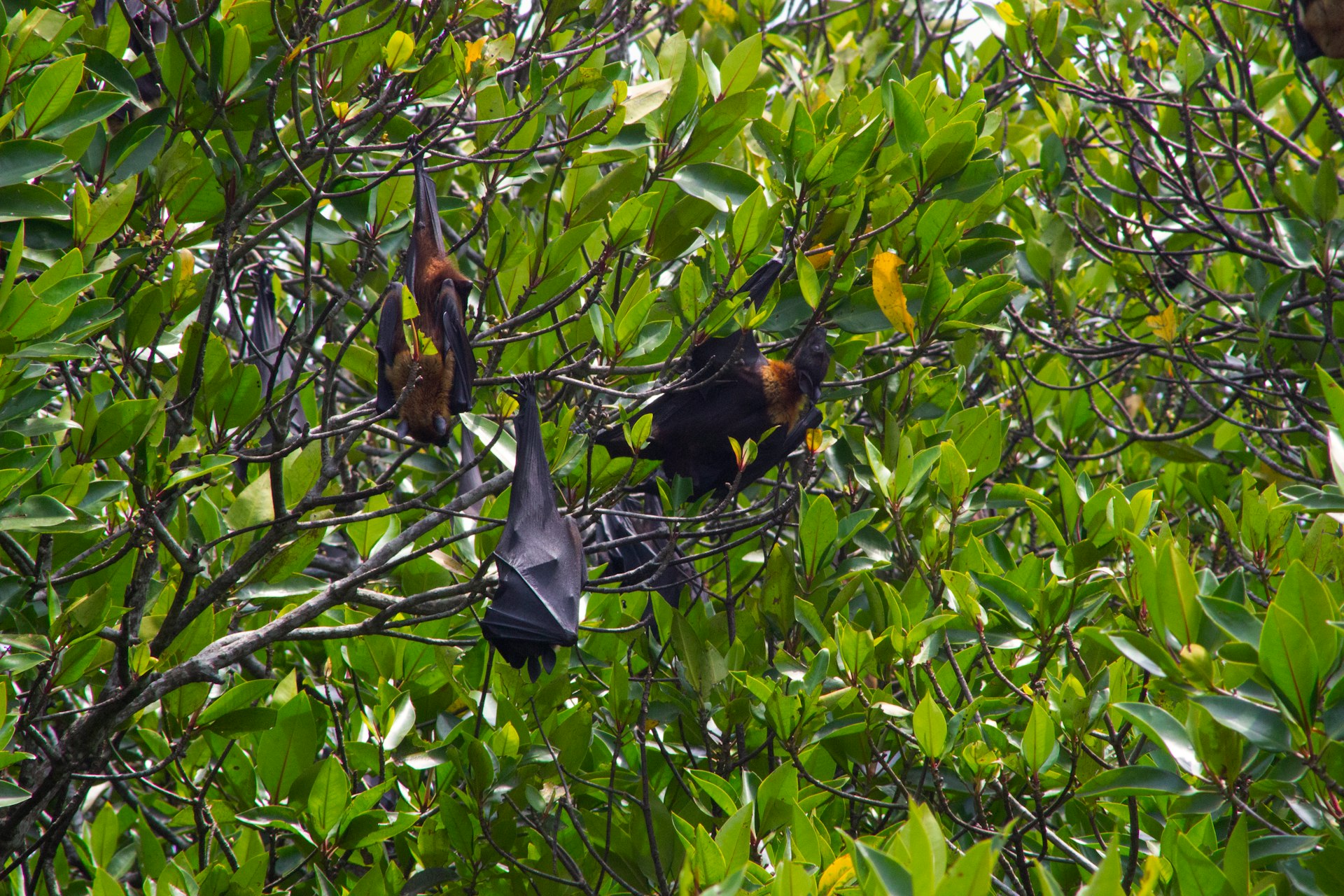
The largest mammal migration on earth does not happen in the Serengeti. It happens in a small patch of swamp forest in northern Zambia that most of the world has never heard of, between October and December every year, when approximately 10 million straw-coloured fruit bats descend on Kasanka National Park to gorge on the ripening wild fruits of a single grove of swamp-forest trees. At dusk, the sky turns black and chaotic, a living, wheeling mass of ten million animals that blocks the horizon and fills the air with a noise like distant rain. At dawn, they return. The spectacle has been documented by the BBC and National Geographic, but visitor numbers at the site remain, by global standards, astonishingly modest. You can watch ten million bats from a platform you effectively have to yourself.
Northeast of Kasanka, the Bangweulu Wetlands operate on an entirely different register, vast, slow, and ancient. As the floodwaters recede between May and August, the wetlands become accessible and reveal one of the few reliable locations globally for the shoebill stork: a prehistoric-looking bird of extraordinary size and surpassing strangeness that stands motionless in the shallow water waiting for lungfish, and which no photograph adequately prepares you for seeing in the flesh. Bangweulu also holds the entire global population of the black lechwe, a dramatically dark sub-species found nowhere else on earth, in herds of hundreds that move across the wetland in striking visual contrast against the silver-grey water.
Kasanka and Bangweulu are complementary destinations: different ecosystems, different specialisms, geographically adjacent enough to combine in a single 5–7 day northern circuit. They sit at the extreme end of what wildlife travel can offer, phenomena so specific, so extraordinary, and so lightly visited that the experience of being present for them carries a quality that more accessible destinations, however beautiful, cannot reproduce. These are places for people who know what they are looking for.
Things to Do in Kasanka & Bangweulu Wetlands
Watch the dawn bat return at Kasanka
The defining Kasanka experience. After a night of feeding, all ten million bats must return to their roost trees before the heat and aerial predators become too much. For 45 minutes the sky directly above the viewing platform is a living mass of bats, wing-beats audible as a continuous roar, bodies catching the first light in flashes of chestnut and gold. Photographs cannot capture the scale.
Track the shoebill stork in Bangweulu
Mokoro (dugout canoe) excursions from Shoebill Island Camp into the papyrus channels of the Bangweulu Wetlands are the closest reliable shoebill encounters in Africa. Once located, the bird typically remains motionless for extended periods, allowing prolonged photography and observation that other species would never permit. Encounters are intimate and can last an hour or more.
Observe the predator concentration on the bat migration
The bat migration draws a remarkable secondary spectacle: martial eagles, crowned eagles, and various large hawks work the edges of the swamp forest plucking individual bats from the air; pythons position themselves in the roost trees; crocodiles wait at the base. The entire food web reorganizes around the bats for the duration. A complete ecosystem event.
Walk among the black lechwe herds
Bangweulu's endemic black lechwe, a dramatically dark sub-species found only in this wetland, moves in herds of hundreds during the dry season. Vehicle and walking encounters from the Bangweulu camps put you within respectful distance of an antelope you cannot see anywhere else on earth.
Look for sitatunga at Kasanka
Kasanka's extensive wetland and swamp-forest habitat supports a reliable sitatunga population, a shy, semi-aquatic antelope with a dense waterproofed coat adapted for moving through papyrus. The park's elevated walkways and viewing platforms in the Fibwe area produce regular encounters that other parks cannot match.
Combine the northern circuit
Kasanka and Bangweulu pair naturally with each other (3–4 hour drive between them) and with Lake Tanganyika and the Northern Waterfalls for a coherent 7–10 day northern Zambia circuit. This is the most efficient way to access the country's most specialist wildlife events alongside the lake and waterfall scenery.
When to Visit Kasanka & Bangweulu Wetlands
Bat Migration
Late October, December
The straw-coloured fruit bats arrive in Kasanka from late October and peak in November. Exact timing varies year to year depending on fruit availability, confirm with Wasa Lodge in September or October. The dawn return flight is the standard viewing experience: 04:00 alarm calls, a viewing platform above the canopy, and 45 minutes of ten million animals in flight.
Shoebill Window
May, August
The Bangweulu Wetlands are most productive as the floodwaters recede between May and August, concentrating fish in accessible shallows and bringing the shoebill out into viewing range. Mokoro excursions from Shoebill Island Camp into the papyrus channels regularly produce extended encounters. Black lechwe herds are also at their most reliable.
General Wildlife
May, September
Outside the bat and shoebill specialist windows, Kasanka is a productive small park for sitatunga, puku, and sable, with year-round wetland birdwatching. A useful shoulder window for travellers combining the northern circuit with Lake Tanganyika or the waterfalls.
Getting to Kasanka & Bangweulu Wetlands
Kasanka is approximately 5–6 hours by road from Lusaka via the Great North Road (T2), turning west at Serenje. The road to the park entrance is graded gravel, adequate for a standard vehicle with good clearance in dry season, but 4WD is advisable. Light charter from Lusaka is also available. Bangweulu is more remote; the most practical access is by light charter to Shoebill Island Camp's airstrip, with road access from Kasanka taking 3–4 hours on variable gravel and requiring 4WD. The two parks are adjacent enough to combine in a single 5–7 day northern circuit.
Where to Stay
Wasa Lodge in Kasanka is the premier property and the standard base for bat migration visits, well-positioned, comfortable, and with a dedicated viewing infrastructure for the spectacle. Kasanka also has more basic park-managed campsites for self-sufficient travellers. In Bangweulu, Shoebill Island Camp is purpose-built for shoebill access, with mokoro excursions as the primary activity, small, specialist, and booked early for the May–August window. Three nights at each, ideally combined, is the right length for the northern circuit.
Travel Tips for Kasanka & Bangweulu Wetlands
Frequently Asked Questions
- Is the Kasanka bat migration as spectacular as it sounds?
- Yes, and more so than photographs suggest. The scale is genuinely incomprehensible in person: ten million animals simultaneously in flight produces a sound, a smell, and a visceral atmospheric pressure that no photograph captures. Visitors who have seen the great wildebeest migrations frequently report Kasanka as the more affecting experience.
- How likely am I to see a shoebill?
- Very likely during the May–August window. Bangweulu is one of the two or three most reliable global locations, and Shoebill Island Camp's local guides know the productive papyrus channels intimately. Encounters are typically prolonged thanks to the bird's characteristic stillness, once located, it tends to remain in the same position for an hour or more.
- Can I do both spectacles in one trip?
- Not at peak. The bat migration window (October–December) and the shoebill window (May–August) do not overlap. The most rewarding strategy is to choose one and combine with the broader northern circuit; serious northern Zambia enthusiasts return for the second on a later trip.
- Are the camps comfortable?
- Comfortable rather than luxurious. Wasa Lodge and Shoebill Island Camp are both well-run, properly equipped, and pleasant, but they are wilderness camps in remote locations, not high-end fly-in lodges. The accommodation is appropriate to the destinations rather than the differentiator.
Explore More, Kasanka & Bangweulu Wetlands
Things To Do
Plan Your Trip
More in Zambia
Victoria Falls
One of the seven natural wonders of the world, Victoria Falls is twice the height of Niagara and one and a half times as wide. The Zambian s…
South Luangwa National Park
The valley where guided walking safaris were invented in the 1950s, and where they remain the best in Africa. South Luangwa offers extraordi…
Lower Zambezi National Park
A pristine 4,000-square-kilometre stretch of the Zambezi floodplain, where elephants wade in the river and canoe safaris glide past hippos a…
Kafue National Park
Zambia's largest park, 22,400 square kilometres of miombo woodland, river corridor, and the seasonal Busanga floodplain. Cheetah, wild dogs,…
Liuwa Plains National Park
Africa's second-largest wildebeest migration, on a vast minimalist floodplain in remote western Zambia. Dominant spotted hyena clans, intact…
Lake Tanganyika
The world's longest freshwater lake, 673 kilometres of clear, mountain-edged water in northern Zambia. Endemic cichlid diving, sport fishing…
Northern Circuit Waterfalls
Seventeen significant waterfalls in northern Zambia, Kalambo's 235-metre plunge, Lumangwe's 150-metre curtain, Chishimba's three-cascade hik…
Lusaka
Zambia's primary international entry point and one of the fastest-growing cities in Africa. The Kabwata Cultural Centre, a maturing restaura…
Cultural Heritage & Shiwa Ng'andu
Zambia's 73 ethnic groups, 100+ annual ceremonies, and the country's most improbable architectural relic, the 1920s Italianate manor of Shiw…