
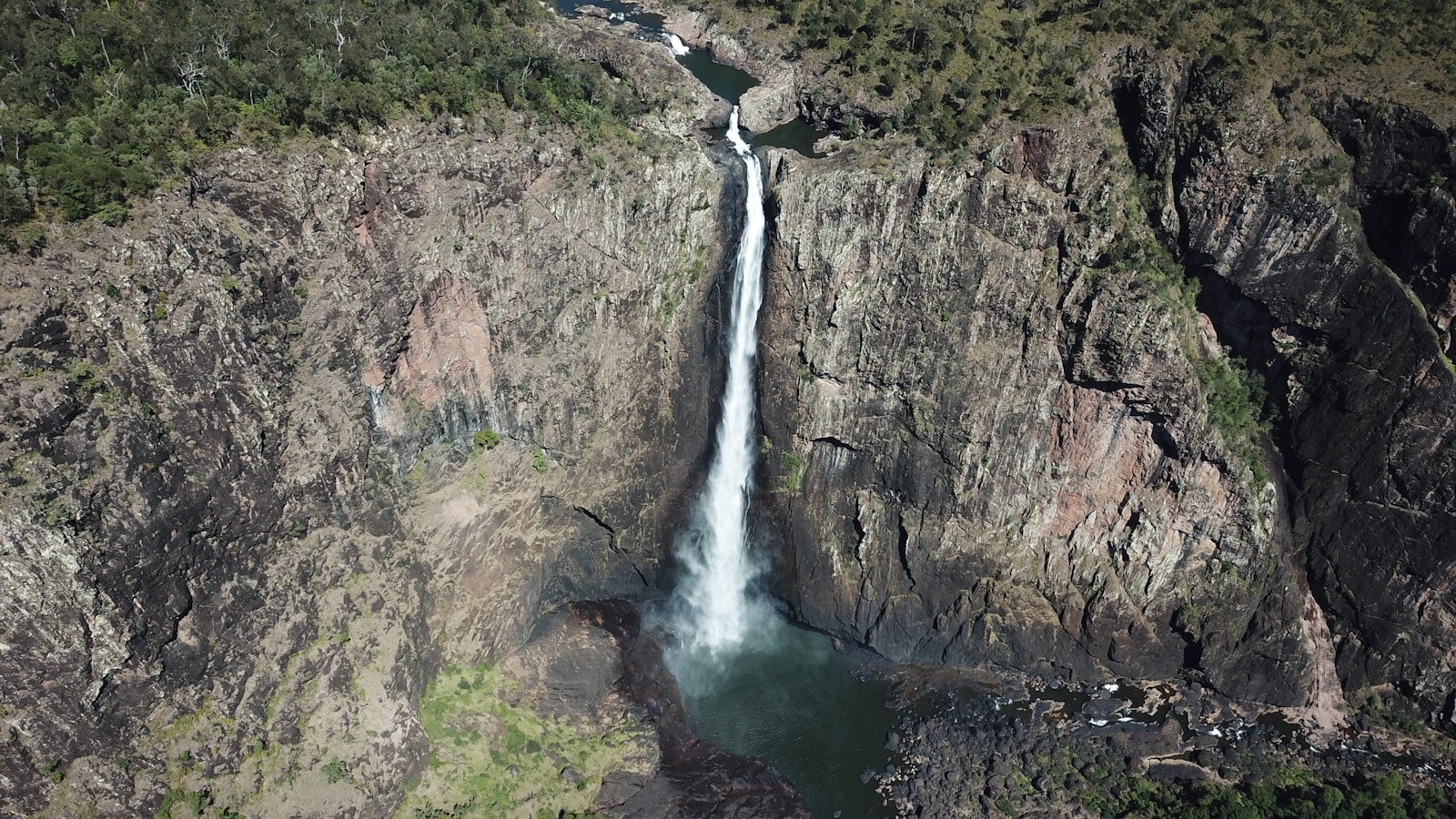
Victoria Falls
One of the seven natural wonders of the world, Victoria Falls is twice the height of Niagara and one and a half times as wide. The Zambian side offers the closest, most intimate views, and the most daring experiences.
The Smoke That Thunders
Photo by Rhys Scarrott on Unsplash
About Victoria Falls
Victoria Falls, known locally as Mosi-oa-Tunya, "The Smoke That Thunders", is the largest sheet of falling water on Earth. The Zambezi River plunges 108 metres into a narrow gorge, sending a column of spray more than 400 metres into the sky that can be seen from 50 kilometres away.
The Zambian side of the falls is smaller in number of viewpoints than the Zimbabwe side, but what it lacks in panorama it makes up for in intimacy. You can walk right to the lip of the falls, cross the Knife-Edge Bridge into the cloud of spray, and, from mid-August to mid-January, swim in Devil's Pool, a natural rock basin on the very edge of the 100-metre drop. It is the single most unforgettable swim on the continent.
Beyond the falls themselves, the town of Livingstone is a hub for some of Africa's best adventure activities: white-water rafting the Batoka Gorge, bungee jumping off the Victoria Falls Bridge, microlight flights over the falls, sunset cruises on the upper Zambezi, and walking safaris in Mosi-oa-Tunya National Park, where white rhino, elephant, and buffalo roam within minutes of the falls. Whether you want wonder, adrenaline, or both, you come to Victoria Falls and you find it.
Things to Do in Victoria Falls
Swim in Devil's Pool
A natural rock basin on the very lip of the falls, accessible only when water levels are low (mid-August to mid-January). Guided trips leave from Livingstone Island, book weeks in advance.
Walk the Knife-Edge Bridge
A footbridge that crosses directly into the cloud of spray for a full-sensory view of the Eastern Cataract. Bring a rain jacket, you will be drenched.
White-water raft the Batoka Gorge
Widely considered the best commercial white-water rafting in the world. Grade 5 rapids through a 120-metre-deep basalt gorge, operating from August when water levels allow.
Bungee jump the Victoria Falls Bridge
A 111-metre drop from the historic 1905 bridge that connects Zambia and Zimbabwe, with the Zambezi thundering below. Also offers a bridge swing and zip-line across the gorge.
Sunset cruise on the upper Zambezi
Glide along the river above the falls as elephants drink from the banks and hippos surface around the boat. The sunset over the Zambezi is one of the great views in Africa.
Safari in Mosi-oa-Tunya National Park
A small but wildlife-rich park on the Zambian bank of the Zambezi, home to white rhino, elephant, giraffe, and buffalo. A half-day game drive or walking safari fits neatly alongside a falls visit.
When to Visit Victoria Falls
High Water
February, May
The falls are at their most powerful and the spray is so dense that views can be obscured, but the sheer scale is overwhelming. Expect to get soaked. Devil's Pool is closed during this period.
Shoulder
June, August
The sweet spot. The falls are still voluminous but the spray has begun to ease, giving you both the power and the views. Weather is cool, dry, and comfortable. The busiest tourist season.
Low Water
September, January
Water levels drop and the Zimbabwe side of the falls thins out, but the Zambian side reveals dry rocky ledges, and this is the only time Devil's Pool is safe to swim in. Best for adventure activities.
Getting to Victoria Falls
Fly into Harry Mwanga Nkumbula International Airport (LVI) in Livingstone, Zambia, the airport is 20 minutes from the falls and town. Direct regional flights arrive from Johannesburg, Cape Town, Nairobi, and Addis Ababa. Many visitors combine both sides of the falls using the KAZA UniVisa ($50), which allows unlimited crossings between Zambia and Zimbabwe for 30 days. The Victoria Falls Bridge is a 10-minute walk from the Zambian entrance. Overland arrivals are straightforward from Botswana via the Kazungula Bridge.
Where to Stay
Livingstone has accommodation for every budget, from backpacker lodges in town to boutique river camps along the upper Zambezi and luxury properties inside Mosi-oa-Tunya National Park. Riverside camps offer elephants on the lawn and sunset views over the Zambezi; town-based hotels give you easy access to adventure operators and restaurants. For a single night of splurge, the colonial-era hotels on both sides of the bridge have long been the classic way to experience the falls.
Travel Tips for Victoria Falls
Frequently Asked Questions
- Which side of Victoria Falls is better, Zambia or Zimbabwe?
- Zimbabwe offers the broader panoramic views across 16 viewpoints. Zambia offers closer, more immersive access, including Devil's Pool and the Knife-Edge Bridge. The honest answer is to see both, which is why the KAZA UniVisa exists.
- When is Devil's Pool open?
- Roughly mid-August to mid-January, depending on water levels. It closes during high-water season (February to July) when the current is too dangerous. Always check with your tour operator before booking travel around it.
- How many days do I need at Victoria Falls?
- Two to three days is enough to see the falls from both sides, do one or two adventure activities, and fit in a sunset cruise or a short safari. Adventure-focused travellers can easily fill a week.
- Is Victoria Falls safe to visit?
- Yes. Livingstone is a well-established tourism town with a strong safety record. Standard travel precautions apply, use licensed operators for adventure activities, watch your belongings in town, and take malaria prophylaxis.
Explore More, Victoria Falls
More in Zambia
South Luangwa National Park
The valley where guided walking safaris were invented in the 1950s, and where they remain the best in Africa. South Luangwa offers extraordi…
Lower Zambezi National Park
A pristine 4,000-square-kilometre stretch of the Zambezi floodplain, where elephants wade in the river and canoe safaris glide past hippos a…
Kafue National Park
Zambia's largest park, 22,400 square kilometres of miombo woodland, river corridor, and the seasonal Busanga floodplain. Cheetah, wild dogs,…
Liuwa Plains National Park
Africa's second-largest wildebeest migration, on a vast minimalist floodplain in remote western Zambia. Dominant spotted hyena clans, intact…
Kasanka & Bangweulu Wetlands
The world's largest mammal migration, 10 million fruit bats descending on a single grove in Kasanka National Park each November, and the sho…
Lake Tanganyika
The world's longest freshwater lake, 673 kilometres of clear, mountain-edged water in northern Zambia. Endemic cichlid diving, sport fishing…
Northern Circuit Waterfalls
Seventeen significant waterfalls in northern Zambia, Kalambo's 235-metre plunge, Lumangwe's 150-metre curtain, Chishimba's three-cascade hik…
Lusaka
Zambia's primary international entry point and one of the fastest-growing cities in Africa. The Kabwata Cultural Centre, a maturing restaura…
Cultural Heritage & Shiwa Ng'andu
Zambia's 73 ethnic groups, 100+ annual ceremonies, and the country's most improbable architectural relic, the 1920s Italianate manor of Shiw…