
Cultural Heritage & Shiwa Ng'andu
Zambia's 73 ethnic groups, 100+ annual ceremonies, and the country's most improbable architectural relic, the 1920s Italianate manor of Shiwa Ng'andu, in the heart of the Northern Province. The Kuomboka royal flotilla, the N'cwala first-fruits ceremony, ancient rock art, and a colonial estate that should not exist.
Ceremonies, Estates and Living Traditions
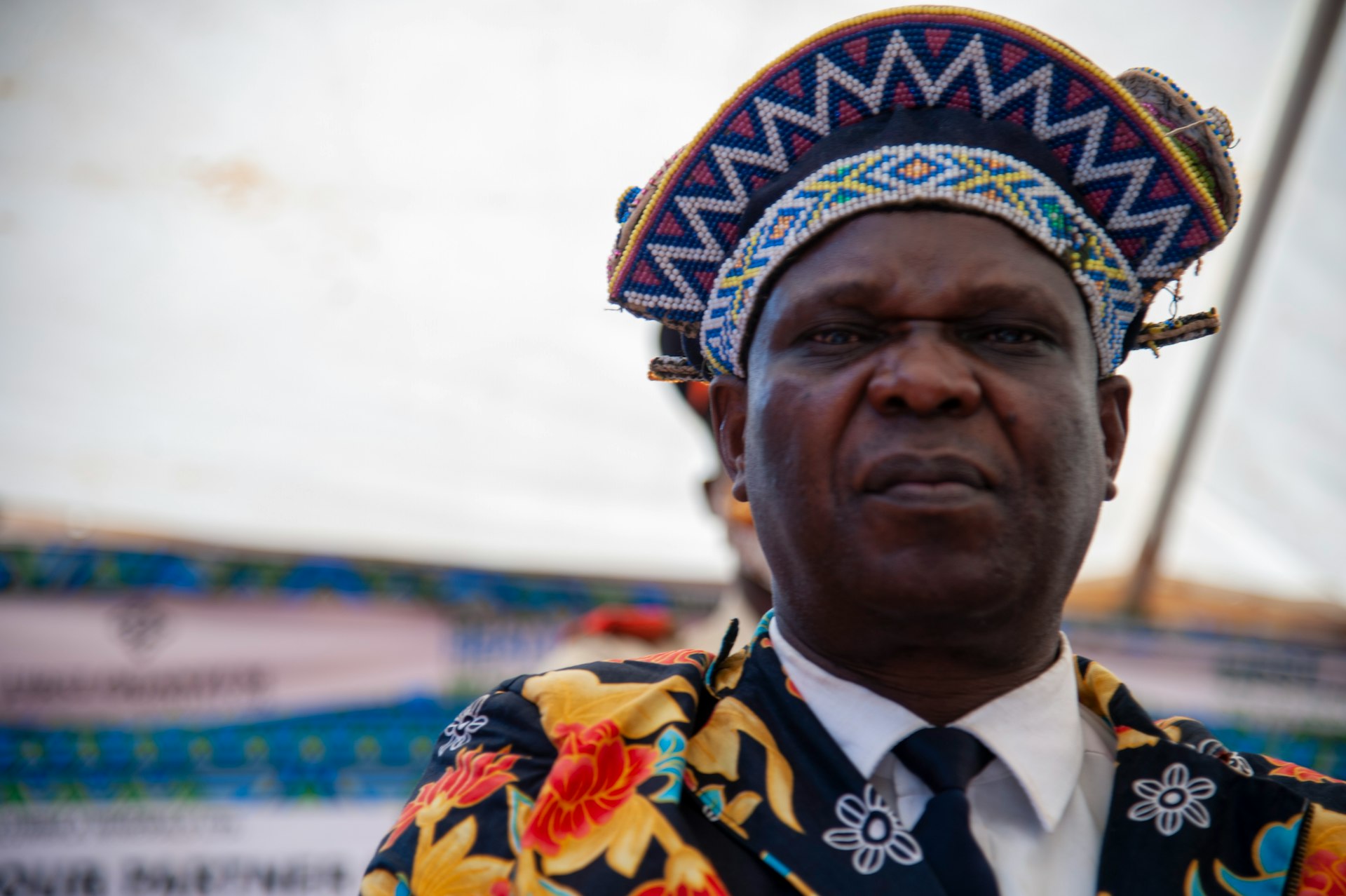
Photo by Sikwe Scarter on Unsplash
About Cultural Heritage & Shiwa Ng'andu
Zambia contains 73 distinct ethnic groups, each with its own language, ceremonial tradition, architectural aesthetic, and philosophical framework for understanding the world. In most travel writing, this fact appears as a statistic and then disappears. In Zambia, it is everywhere: in the way a greeting is structured in Bemba versus Nyanja, in the geometric painted walls of a Tonga homestead versus the cattle-kraal architecture of Lozi settlements on the floodplain, in the specific drum pattern that opens a N'cwala ceremony in the Eastern Province. This is not heritage preserved in a museum. It is heritage in active use, governing marriage, inheritance, land tenure, spiritual practice, and the relationship between a king and his people with a continuity that colonial rule and subsequent decades of development pressure have not erased.
The headline cultural event is the Kuomboka, the annual ceremony marking the relocation of the Litunga (the Lozi king) from his low-lying royal palace on the Zambezi floodplain to his high-water residence as the floods rise. The Nalikwanda, the royal barge, painted black and white with a life-size elephant effigy at its helm, propelled by scores of paddlers in traditional regalia, leads a procession of hundreds of canoes across the flooded plains of the Western Province in March. The exact date is announced only days beforehand, dictated by the actual flood levels. The Kuomboka is not primarily a tourist event; it is a functioning expression of Lozi political authority and the relationship between the Litunga and his people, governed by a traditional governance system that predates the colonial period by centuries. Other major ceremonies, N'cwala in the Eastern Province (February/March), Umutomboko in Luapula (July), Ukusefya Pa Ng'wena in Kasama (August), anchor a calendar of over 100 traditional events held annually across the country's 10 provinces.
Shiwa Ng'andu Manor House anchors the cultural-heritage circuit on the architectural side. In the early 1920s, a British colonial officer named Stewart Gore-Browne returned from the First World War with a vision of extraordinary impracticality: he would build an English country manor house in the remotest part of what was then Northern Rhodesia. The result, completed over two decades, is one of the most remarkable architectural achievements in African colonial history, a full-scale Italianate English estate with formal gardens, a chapel, estate cottages, and a central house built from handmade brick. The estate continues to be managed by Gore-Browne's descendants and is accessible as a heritage site and guesthouse. Combined with the adjacent Kapishya Hot Springs, ancient rock art at Mwela near Kasama (over 1,000 paintings), and the broader ceremonial calendar, Zambia's cultural heritage circuit is the dimension of the country most consistently underestimated by international travellers, and therefore one of the most rewarding for those who plan around it.
Things to Do in Cultural Heritage & Shiwa Ng'andu
Witness the Kuomboka royal flotilla
The annual Lozi ceremony marking the Litunga's move from low-water to high-water residence as the Zambezi floods rise. The Nalikwanda barge, painted black and white, propelled by scores of paddlers, with a life-size elephant effigy at its helm, leads a procession of hundreds of canoes across the flooded plains in one of the most spectacular cultural events in Africa. Mongu is the gateway; the ceremony departs from Lealui to Limulunga.
Stay at Shiwa Ng'andu Manor House
An Italianate English country estate in the bush of Muchinga Province, formal gardens, a chapel, estate cottages, and a central house built from handmade brick over two decades by Stewart Gore-Browne. The estate is accessible as a heritage site and guesthouse, allowing overnight stays in the manor's guest quarters, tours of the house and archives, and walks around the lake that gives the estate its full name (*Ng'andu*, "lake of the crocodile").
Soak at Kapishya Hot Springs
Adjacent to Shiwa Ng'andu, Kapishya's geothermal pools sit in a riverine forest setting and are managed by the same family as the manor. The experience of bathing in thermal water in a forest, a day's drive from the nearest city, is specifically and deeply pleasant. Day excursion from the estate or overnight at the small adjacent lodge.
Attend the N'cwala or Umutomboko ceremony
Beyond Kuomboka, Zambia's ceremonial calendar includes the Ngoni N'cwala (first fruits, February/March, Eastern Province), the Lunda Umutomboko (river crossing, July, Luapula), and the Bemba Ukusefya Pa Ng'wena (founding migration, August, Northern Province). Each is a different cultural register; each is accessible to respectful international visitors.
Visit Mwela rock art
Near Kasama, Mwela is the largest rock art complex in Zambia and one of the most significant in central Africa, over 1,000 paintings across multiple sites, dating from several thousand years ago. Abstract geometric designs alongside figurative images of humans and animals. A guided visit explains the symbolism and the broader archaeological record of early human habitation in the region.
Kabwata Cultural Centre as starting point
Lusaka's Kabwata Cultural Centre is the practical starting point for the cultural-heritage circuit, a working village of traditional rondavels representing each of Zambia's 73 ethnic groups, with craftspeople producing and selling in traditional styles. Two hours here before heading to a regional ceremony or the Shiwa Ng'andu estate provides essential context.
When to Visit Cultural Heritage & Shiwa Ng'andu
Kuomboka Window
March (date announced days ahead)
The Kuomboka ceremony is held once annually, typically in March, but the exact date is dictated by the actual flood levels on the Zambezi rather than a fixed calendar. Build a flexible window of several days around the expected timing rather than booking fixed flights for a specific date. Mongu accommodation fills quickly once the date is announced.
Dry Ceremonial Season
February, August
The major ceremonial calendar runs through this window. N'cwala (Ngoni first-fruits ceremony, Eastern Province) in February/March; Kuomboka (Lozi, Western Province) in March; Umutomboko (Lunda, Luapula Province) on the last Saturday of July; Ukusefya Pa Ng'wena (Bemba, Northern Province) in August. Different regions, different ceremonies, each accessible to respectful visitors.
Shiwa Ng'andu Window
May, October
The Shiwa Ng'andu estate and Kapishya Hot Springs are most accessible in the dry season, when the road network from Lusaka and Kasama is reliable. The estate's gardens are at their best in cooler months; the hot springs are pleasant year-round but most enjoyable in the cool early dry. Two to three nights at the estate is the typical visit.
Getting to Cultural Heritage & Shiwa Ng'andu
The cultural-heritage sites are scattered across Zambia and require itinerary planning rather than single-destination logistics. For Kuomboka, fly into Lusaka and drive 6–7 hours to Mongu (Western Province), the route is tarred and accessible to standard vehicles. For Shiwa Ng'andu, the estate is approximately 7–8 hours from Lusaka by road via the Great North Road (T2), or more practically by light charter from Lusaka or Kasama; Shiwa pairs naturally with the Kasanka–Bangweulu–Tanganyika northern circuit. Mwela rock art is accessed from Kasama. The N'cwala, Umutomboko, and Ukusefya Pa Ng'wena ceremonies are in Eastern, Luapula, and Northern Provinces respectively, confirm logistics with regional operators well in advance.
Where to Stay
For Kuomboka, accommodation in Mongu fills quickly once the ceremony date is announced, book the moment you have confirmation of timing. The Bbula Cultural Lodge and several guesthouses serve as bases. At Shiwa Ng'andu, the manor itself accepts overnight guests in its guest quarters, a genuinely characterful stay with formal dining, library access, and walks of the estate. Kapishya Hot Springs Lodge is the alternative nearby, with simpler accommodation and direct access to the springs. For Kasama-based ceremony or rock-art visits, the city's mid-range guesthouses serve as functional bases.
Travel Tips for Cultural Heritage & Shiwa Ng'andu
Frequently Asked Questions
- Is the Kuomboka ceremony open to international visitors?
- Yes, the ceremony is publicly attended and welcomes both Zambian citizens and international visitors. The flotilla is visible from the floodplain banks at Lealui (departure) and Limulunga (arrival). Working with a local Mongu-based operator significantly improves the visitor experience, providing context and access that independent attendance does not.
- How significant is Shiwa Ng'andu architecturally?
- It is one of the most remarkable architectural achievements in African colonial history, a full-scale Italianate English estate built in the bush of what was then Northern Rhodesia. There is nothing else like it on the continent. Whether you find that charming or troubling is a separate question, but the architecture itself is extraordinary and the family-run estate is honest about both its colonial origins and its complicated legacy.
- Can I attend a ceremony if I am not invited by the local community?
- Yes, the major public ceremonies (Kuomboka, N'cwala, Umutomboko, Ukusefya Pa Ng'wena) are open to respectful visitors. They are not exclusive events. They do, however, expect appropriate dress, photography etiquette, and an attitude that treats the ceremony as a functioning institution rather than a performance.
- How does Zambia's cultural heritage compare with neighbouring countries?
- Less internationally marketed than the cultural offerings in countries like Tanzania (Maasai) or Botswana (San), but no less rich. Zambia's 73 ethnic groups produce a ceremonial and architectural diversity that very few African countries match, and the ceremonies remain in active use rather than performed for visitors. For travellers interested in living cultural traditions, Zambia is one of the most rewarding destinations on the continent.
Explore More, Cultural Heritage & Shiwa Ng'andu
Things To Do
Plan Your Trip
More in Zambia
Victoria Falls
One of the seven natural wonders of the world, Victoria Falls is twice the height of Niagara and one and a half times as wide. The Zambian s…
South Luangwa National Park
The valley where guided walking safaris were invented in the 1950s, and where they remain the best in Africa. South Luangwa offers extraordi…
Lower Zambezi National Park
A pristine 4,000-square-kilometre stretch of the Zambezi floodplain, where elephants wade in the river and canoe safaris glide past hippos a…
Kafue National Park
Zambia's largest park, 22,400 square kilometres of miombo woodland, river corridor, and the seasonal Busanga floodplain. Cheetah, wild dogs,…
Liuwa Plains National Park
Africa's second-largest wildebeest migration, on a vast minimalist floodplain in remote western Zambia. Dominant spotted hyena clans, intact…
Kasanka & Bangweulu Wetlands
The world's largest mammal migration, 10 million fruit bats descending on a single grove in Kasanka National Park each November, and the sho…
Lake Tanganyika
The world's longest freshwater lake, 673 kilometres of clear, mountain-edged water in northern Zambia. Endemic cichlid diving, sport fishing…
Northern Circuit Waterfalls
Seventeen significant waterfalls in northern Zambia, Kalambo's 235-metre plunge, Lumangwe's 150-metre curtain, Chishimba's three-cascade hik…
Lusaka
Zambia's primary international entry point and one of the fastest-growing cities in Africa. The Kabwata Cultural Centre, a maturing restaura…