
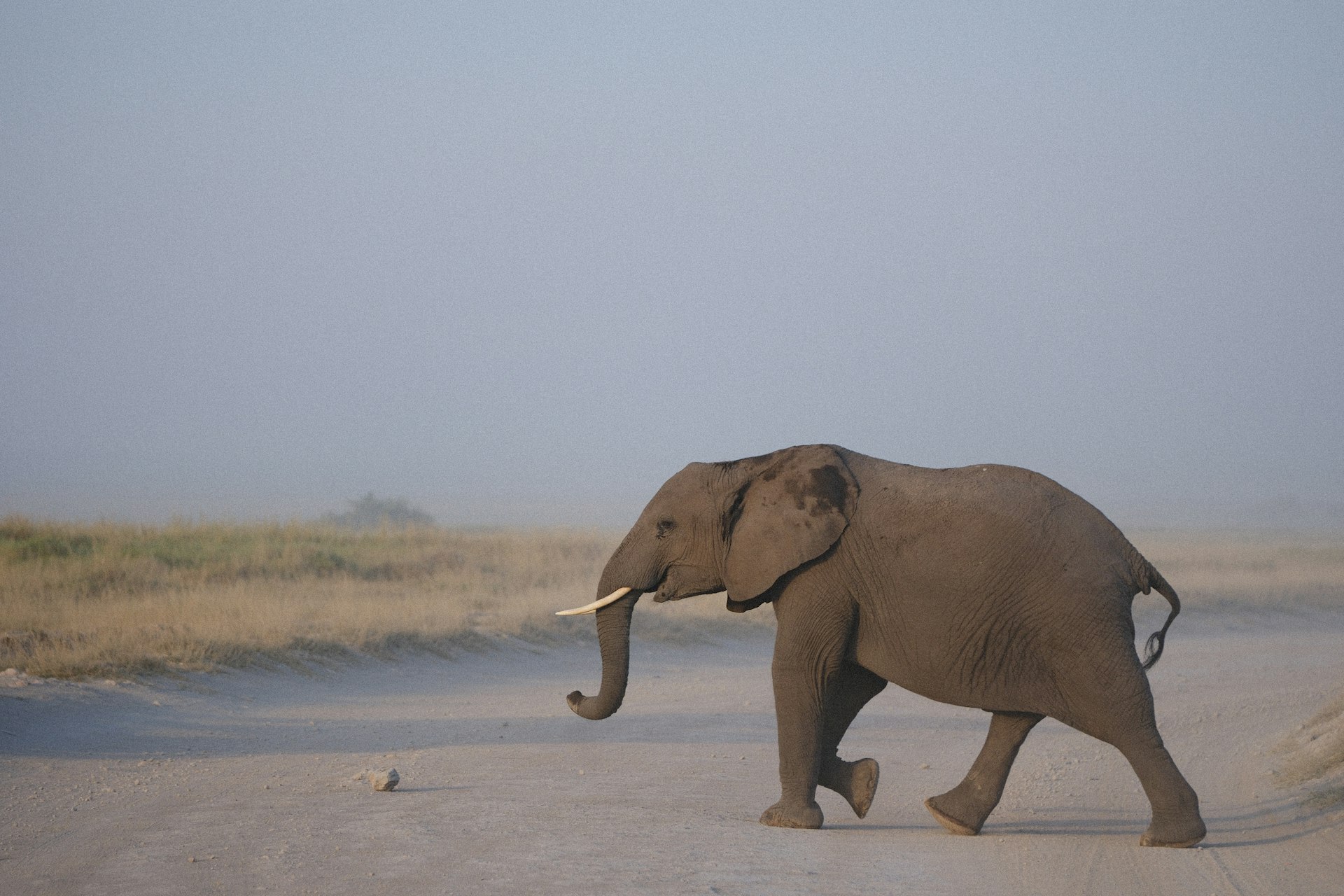
Maputo National Park
Proclaimed in 2021, this Peace Parks-managed reserve combines coastal dune forest, lagoons, and grassland with a protected marine zone, habituated elephant herds, giraffe, whale sharks, and sea turtles in the same destination, just 70km south of Maputo.
Africa's Newest National Park, Bush Meets Beach
Photo by Simone Dinoia on Unsplash
About Maputo National Park
Proclaimed in 2021 through the amalgamation of the Maputo Special Reserve and the Ponta do Ouro Partial Marine Reserve, Maputo National Park is among the newest national parks in Africa, and one of the most biodiverse per square kilometre anywhere on the continent. The park occupies a position of exceptional ecological significance: the Maputaland Centre of Plant Endemism, one of the world's most biologically rich ecoregions. Its topography transitions within a few kilometres from forested sand dunes and coastal lagoons through swamp forest and grassland to coral reef, creating an unusual "bush meets beach" ecosystem where terrestrial safari and marine wildlife encounter operate in the same geographic space.
The park is managed under a 15-year partnership with the Peace Parks Foundation and is part of the larger Lubombo Transfrontier Conservation Area connecting Mozambique, South Africa, and Eswatini. It is located just 70km south of Maputo, making it one of the most accessible wilderness experiences available from an African capital city. The park's elephant population, large herds that have developed familiarity with safari vehicles through years of protected encounter, is the terrestrial headline. The combination of coastal vegetation, seasonal grasslands, and the freshwater systems feeding the coastal lagoons creates productive habitat; encounters with herds of 20–50 elephants on open-vehicle game drives are regular occurrences. Giraffes, unusual on the Mozambican coast, have established a population in the park's acacia woodland areas, creating an unexpected and visually striking terrestrial dimension. Hippo and crocodile inhabit the inland water systems.
The park's protected marine zone, continuous with Ponta do Ouro's reef systems to the south, supports seasonal whale shark aggregations, resident dolphin pods, and one of the most significant sea turtle nesting grounds on the southern Mozambique coast. Snorkelling and dive excursions from Ponta Membene Lodge access the reef systems directly offshore. Turtle nesting season (November–February) brings both loggerhead and leatherback turtles to the beaches within the park boundaries; night turtle walks are organised by the lodge with trained rangers. The park's internal tracks are deeply sandy and require a capable 4WD with low-range engagement, the same terrain management as the Kalahari or remote Namibian tracks. Self-driving is permitted for suitably equipped visitors; guided open-vehicle safaris from Ponta Membene cover the most productive game areas with ranger expertise. The park is still becoming what it will be, its management systems still establishing rhythms, its visitor infrastructure still growing, but what it offers now is already compelling, and what it offers in five or ten years will be more so.
Things to Do in Maputo National Park
Game drive among habituated elephants
The park's elephant herds, large groups that have developed familiarity with safari vehicles, are the terrestrial headline. Encounters with herds of 20–50 elephants on open-vehicle drives are regular occurrences. The combination of coastal vegetation, seasonal grasslands, and lagoon water sources creates productive habitat that concentrates wildlife predictably.
Spot the unexpected giraffes
Giraffes, unusual on the Mozambican coast, have established a population in the park's acacia woodland areas. The visually striking sight of giraffes against coastal dune topography is a surprise for visitors expecting only lowland-bush wildlife. The population is part of broader transfrontier translocation work.
Snorkel or dive the marine zone
The protected marine zone (continuous with Ponta do Ouro's reefs to the south) supports seasonal whale shark aggregations and reef sharks, manta rays (seasonal), loggerhead turtles, and large reef fish populations. Snorkelling and dive excursions from Ponta Membene Lodge access the reef systems directly offshore.
Walk for nesting turtles
November–February is loggerhead and leatherback nesting season. Night walks with trained ranger guides provide close observation of nesting females and (later in the season) hatching events. One of the most significant sea turtle nesting grounds on the southern Mozambique coast.
Self-drive 4WD adventure
The park's internal tracks are deeply sandy and require capable 4WD with low-range engagement, the same terrain management as the Kalahari. Self-drive is permitted for suitably equipped visitors. The combination of beach driving, coastal forest tracks, and inland lagoon access makes for a varied off-road experience.
Combine with Maputo or Ponta
Maputo National Park sits between Maputo (70km north) and Ponta do Ouro (immediately south). Combined itineraries, 2 nights at the park, 2 nights at Ponta, 2 nights in Maputo, create one of the most coherent southern Mozambique trips, covering safari, marine wildlife, and city culture in a compact geographic loop.
When to Visit Maputo National Park
Cool Dry
April, September
The optimal terrestrial safari window. Cooler temperatures, vegetation thinning, and wildlife concentrating around the coastal water systems. The marine zone delivers reliable diving and good visibility. Pleasant weather for the combined bush-and-beach activity range.
Turtle Season
November, February
Loggerhead and leatherback turtles nest on the park's beaches; night walks with rangers provide observation of nesting and (later) hatching events. Whale sharks aggregate seasonally in the offshore waters. Cyclone risk increases; rates are lower; visitor numbers reduced.
Wet Shoulder
October / March
Transition months. The wet season is beginning or ending; conditions are variable. Lower visitor numbers and rates. Rain affects sandy track accessibility but the main paved highway and lodge access remain reliable.
Getting to Maputo National Park
From Maputo, the newly paved highway running south through the park connects the capital to the southern coast in approximately 2–2.5 hours. This road is a significant improvement from the previous deep-sand track that made access impractical for standard vehicles. Once off the main paved road and onto the internal park tracks, a 4WD with high clearance and low-range gears is mandatory. Ponta Membene Lodge arranges transfers from Maputo for guests not driving themselves.
Where to Stay
Ponta Membene is the park's primary luxury eco-lodge, guided open-vehicle safaris, marine excursions, and accommodation with direct access to the park's most productive wildlife corridors. The lodge's positioning near the coast provides the full "bush meets beach" experience that distinguishes the park from inland safari destinations. Two to three nights covers the activity range. For self-drivers with their own equipment, designated camping sites within the park are available with park-authority permits.
Travel Tips for Maputo National Park
Frequently Asked Questions
- How does the park compare to Kruger?
- Different scale and register. Kruger is a vast established park with comprehensive infrastructure and high wildlife densities; Maputo National Park is a recently proclaimed park with more modest wildlife densities but unique "bush meets beach" character. The combination of habituated elephants, marine wildlife, and 70km proximity to Maputo capital makes the park's value proposition different, not a Kruger substitute but a distinct experience.
- Are the elephants really habituated?
- Yes, years of protected encounter have produced herds that show familiarity with safari vehicles. Approach distances are generally closer than at less-developed reserves; the elephants don't appear stressed by quiet vehicle presence. The habituation is appropriate to the park's positioning as a tourism-supported conservation reserve.
- Can I do this as a day trip from Maputo?
- Yes, the 2-hour drive from Maputo makes day-trip access practical, though a single day limits the activity range. An overnight at Ponta Membene Lodge is significantly more rewarding, allowing dawn and dusk game drives plus marine activities. Day-trippers typically do one game drive and return.
- How is the park performing as a conservation project?
- Strongly. The Peace Parks Foundation 15-year management partnership has delivered measurable wildlife population recovery, infrastructure development, and community engagement. As part of the Lubombo Transfrontier Conservation Area, the park benefits from cross-border conservation coordination with South Africa and Eswatini. The trajectory is positive.
Explore More, Maputo National Park
Things To Do
Plan Your Trip
More in Mozambique
Bazaruto Archipelago
Five islands and 1,260 square kilometres of protected Indian Ocean off Vilanculos. The last viable dugong population in the western Indian O…
Gorongosa National Park
The Mozambican national park whose 90%+ wildlife loss during the civil war has been reversed by a 20-year science-led restoration project. L…
Tofo Beach & the Manta Coast
A laid-back beach town 22km east of Inhambane on the Manta Coast, sustained by the plankton-rich Mozambique Current that brings whale sharks…
Inhambane City
A 10th-century Swahili port that became a Portuguese colonial hub, now a quiet, palm-shaded city of layered colonial architecture, ancient m…
Maputo
Mozambique's harbour capital, wide, tree-lined avenues, an architectural heritage layering Arab, French, Portuguese, and African influences,…
Ilha de Moçambique
A 3km island off the Nampula coast that served as the capital of Portuguese East Africa for nearly 400 years. The Chapel of Nossa Senhora de…
Ponta do Ouro
Mozambique's southernmost coastal village, a short drive from the Kosi Bay border with South Africa. Ethical wild dolphin snorkelling with r…
Bilene & the Uembje Lagoon
A 27km calm-water lagoon separated from the Indian Ocean by sand dunes, the safest swimming destination on the Mozambican coast. Kiteboardin…
Quirimbas Archipelago
The Quirimbas Archipelago, 32 coral islands off northern Mozambique's Cabo Delgado coast, is currently subject to Level 4 "Do Not Travel" ad…