
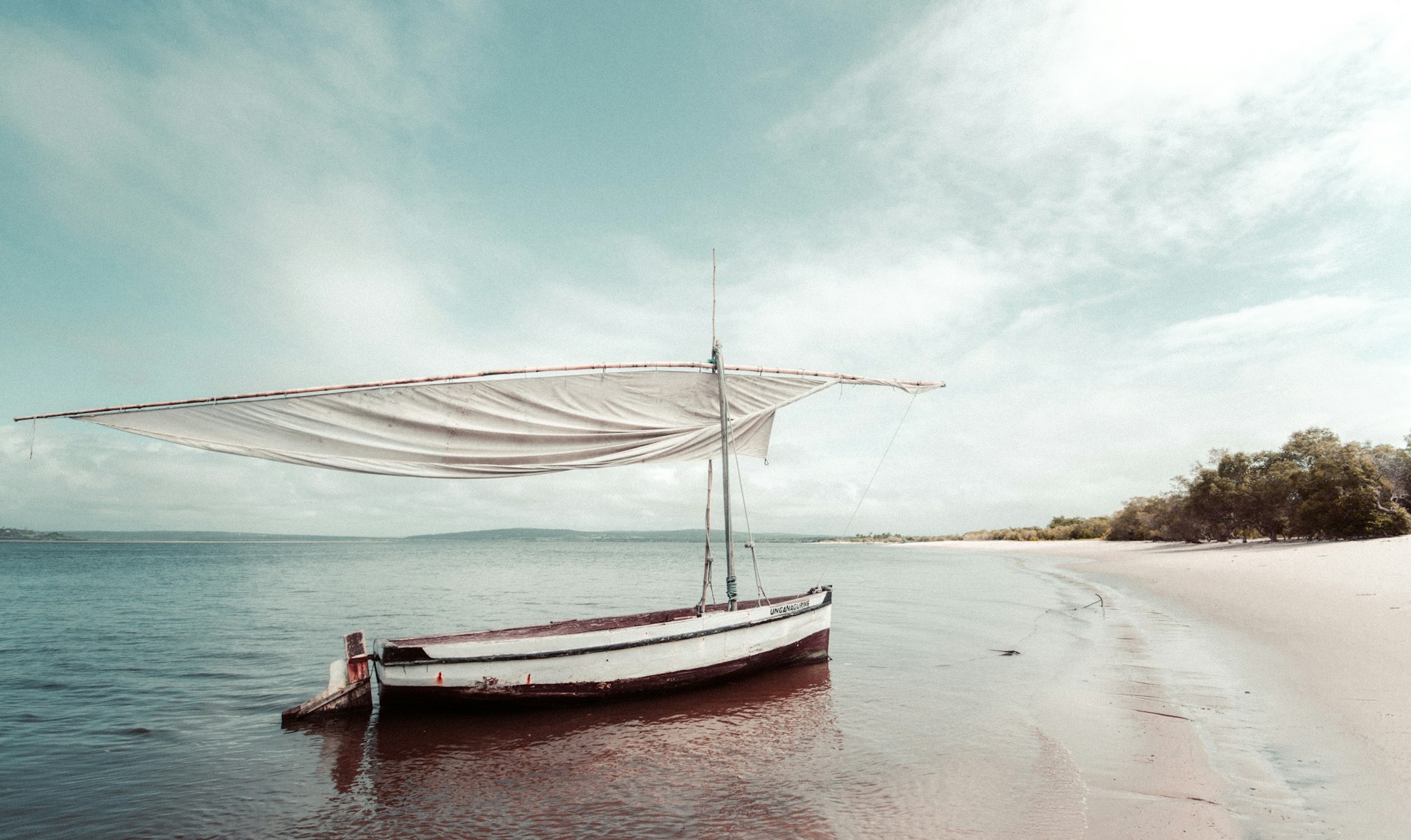
Bilene & the Uembje Lagoon
A 27km calm-water lagoon separated from the Indian Ocean by sand dunes, the safest swimming destination on the Mozambican coast. Kiteboarding capital, family-friendly resorts, and the Turtle Cliff viewpoint for humpback whale watching from June to November.
Mozambique's Family Lagoon
Photo by redcharlie on Unsplash
About Bilene & the Uembje Lagoon
The Indian Ocean along Mozambique's coast is beautiful, powerful, and not always safe for swimming, the open ocean swell and strong currents that feed the productivity at Tofo and the Bazaruto Archipelago also make casual beach swimming genuinely hazardous in exposed positions. Bilene is the exception. The Uembje Lagoon, a 27km body of brackish water separated from the Indian Ocean by a massive barrier of sand dunes, provides a unique geography: calm, shallow, warm water that is safe for children and non-swimmers, enclosed by dunes that are themselves accessible for hiking and viewpointing. The ocean is there, on the other side of the dune wall; the humpback whales migrating through the Mozambique Channel are visible from the Turtle Cliff viewpoint above the dunes. But in the lagoon itself, the conditions are as controlled as a natural body of water ever gets.
This geography has made Bilene the preferred Mozambican beach destination for South African families and for Mozambican domestic travellers wanting calm-water swimming within reasonable drive distance of Maputo. The lagoon's specific geography, 27km of open water with consistent wind exposure and no dangerous currents or open-ocean swell, creates ideal conditions for wind-powered watersports. Kiteboarding and windsurfing are the primary activities, with local operators providing instruction, equipment hire, and access to the most productive wind corridors. Jet skiing, stand-up paddleboarding, kayaking, and paragliding (launching from the dune crests above the water) round out the activity portfolio, making Bilene genuinely multi-activity for groups with diverse interests.
Turtle Cliff, accessible via a short hike from the lagoon shore or a boat transfer across the water to the dune base, provides a viewpoint above the sand dune barrier with panoramic views of the Indian Ocean on the far side. During the humpback whale migration (June–November), breaching whales are regularly visible from this elevation, an extraordinary sight that requires no boat, no specialist equipment, and no prior booking. During turtle nesting season (November–February), loggerhead and leatherback turtles use the ocean-facing beach immediately below Turtle Cliff as nesting grounds; night walks with local ranger guides are available. Bilene's combination of safe family swimming, world-class wind sports, and dramatic ocean wildlife from a single base, within 2.5 hours of Maputo, is genuinely unusual on the Mozambican coast.
Things to Do in Bilene & the Uembje Lagoon
Swim the lagoon
Bilene's defining feature. Calm, shallow, warm brackish water that is safe for children and non-swimmers. The 27km lagoon length means there is space for everyone; the most productive swimming areas are along the Uembje shore near the resort cluster. Genuinely unusual on the Mozambican coast where most beaches carry significant rip currents.
Kiteboard or windsurf
The lagoon's specific geography produces ideal conditions for wind-powered watersports, 27km of open water with consistent wind exposure and no dangerous currents. Local operators provide instruction, equipment hire, and access to the most productive wind corridors. Most consistent conditions May–October.
Hike Turtle Cliff
A short hike from the lagoon shore or boat transfer across the water to the dune base reaches Turtle Cliff, a viewpoint above the sand dune barrier with panoramic views of the Indian Ocean. Whales visible from June–November; the elevation provides extraordinary vantage on the ocean wildlife.
Watch humpback whales
From June to November, breaching humpback whales are regularly visible from Turtle Cliff during their migration through the Mozambique Channel. No boat, specialist equipment, or prior booking required, bring binoculars and patience for an entirely free, accessible whale-watching experience.
Walk for nesting turtles
Loggerhead and leatherback turtles use the ocean-facing beach below Turtle Cliff as nesting grounds (November–February). Night walks led by local ranger guides provide close observation of nesting and (later in the season) hatching events.
Other lagoon watersports
Beyond kiteboarding, the lagoon supports jet skiing, stand-up paddleboarding, kayaking, and paragliding (launching from the dune crests). Local operators provide instruction and equipment hire for all activities. The combination makes Bilene genuinely multi-activity for groups with diverse interests.
When to Visit Bilene & the Uembje Lagoon
Kiteboarding Peak
May, October
The most consistent kiteboarding wind window. Stable conditions, predictable wind patterns, and warm water. Pleasant air temperatures for non-water activities. Whale watching season opens from June with humpbacks visible from Turtle Cliff.
Family Beach
September, November / March, April
Warm-water swimming in the lagoon at its most pleasant. Lower visitor numbers than December–January peak. Shoulder rates apply at most accommodation. The Turtle Cliff viewpoint is at its most comfortable for hiking in cooler shoulder weather.
South African Holiday Peak
December, January
Bilene fills with South African families during the December–January summer school holiday period. Accommodation books out months in advance; rates increase significantly. Atmosphere shifts to family-resort character. Excellent for families wanting peer activity and social atmosphere; busy for travellers seeking solitude.
Wet Shoulder
February
Wettest month, occasional cyclone risk. Lower rates and visitor numbers but variable conditions. The lagoon remains usable for swimming; outdoor wind sports may be affected by rainfall.
Getting to Bilene & the Uembje Lagoon
From Maputo is approximately 180km northeast, 2.5 hours on the EN1 highway, then a short turn east to the lagoon. Standard vehicles are adequate for the main road access. The route is paved throughout and well-signposted. From the South African border at Lebombo/Ressano Garcia, expect approximately 4 hours including the border crossing.
Where to Stay
Nghunghwa Lodge is the premium option in Bilene, comfortable, well-managed, with direct lagoon frontage and organised watersport access. Multiple self-catering chalets cater to the South African family market that forms the majority of Bilene's visitors, equipped kitchens, braai facilities, and lagoon access. Two to three nights covers the activity range; longer stays for kiteboarding-focused trips or extended family holidays.
Travel Tips for Bilene & the Uembje Lagoon
Frequently Asked Questions
- Is Bilene swimming actually safe for children?
- Yes, the lagoon's enclosed nature, calm water, and shallow shelving make it one of the safest swimming environments on the Mozambican coast. Standard child supervision applies (no unsupervised young children in any open water), but the lagoon eliminates the rip current and ocean swell hazards that make most Mozambican beaches genuinely dangerous for casual swimming.
- How does Bilene compare to Tofo or Bazaruto?
- Different purposes. Tofo is a serious diving destination; Bazaruto is luxury island lodging; Bilene is family beach with kiteboarding. The lagoon's calm water makes Bilene the family choice; Tofo and Bazaruto are not suitable for casual ocean swimming. Many South African families do Bilene because it works for children in a way the other coastal destinations don't.
- Is the kiteboarding world-class?
- It is genuinely good, consistent wind, open water, and an experienced local operator scene make Bilene one of the better southern African kiteboarding destinations. It is not a global top-tier site (Cabarete, Egypt, Brazil) but for southern African travellers, it is the most accessible high-quality option.
- Can I see whales without going on a boat?
- Yes, Turtle Cliff during the June–November humpback migration provides regular surface sightings from the dune-top viewpoint. Boat-based whale watching tours are available but the cliff-top experience is genuinely rewarding without one. Bring binoculars.
Explore More, Bilene & the Uembje Lagoon
Plan Your Trip
More in Mozambique
Bazaruto Archipelago
Five islands and 1,260 square kilometres of protected Indian Ocean off Vilanculos. The last viable dugong population in the western Indian O…
Gorongosa National Park
The Mozambican national park whose 90%+ wildlife loss during the civil war has been reversed by a 20-year science-led restoration project. L…
Tofo Beach & the Manta Coast
A laid-back beach town 22km east of Inhambane on the Manta Coast, sustained by the plankton-rich Mozambique Current that brings whale sharks…
Inhambane City
A 10th-century Swahili port that became a Portuguese colonial hub, now a quiet, palm-shaded city of layered colonial architecture, ancient m…
Maputo
Mozambique's harbour capital, wide, tree-lined avenues, an architectural heritage layering Arab, French, Portuguese, and African influences,…
Ilha de Moçambique
A 3km island off the Nampula coast that served as the capital of Portuguese East Africa for nearly 400 years. The Chapel of Nossa Senhora de…
Ponta do Ouro
Mozambique's southernmost coastal village, a short drive from the Kosi Bay border with South Africa. Ethical wild dolphin snorkelling with r…
Maputo National Park
Proclaimed in 2021, this Peace Parks-managed reserve combines coastal dune forest, lagoons, and grassland with a protected marine zone, habi…
Quirimbas Archipelago
The Quirimbas Archipelago, 32 coral islands off northern Mozambique's Cabo Delgado coast, is currently subject to Level 4 "Do Not Travel" ad…