
Lake Kariba & Matusadona
An inland sea created by one of the world's largest dams, where elephants swim between islands and houseboats double as floating safari lodges. Matusadona National Park on the southern shore protects black rhino and one of the highest lion concentrations in Africa.
Houseboat Safari on an Inland Sea
Photo by Samuel Ngwarai on Unsplash
About Lake Kariba & Matusadona
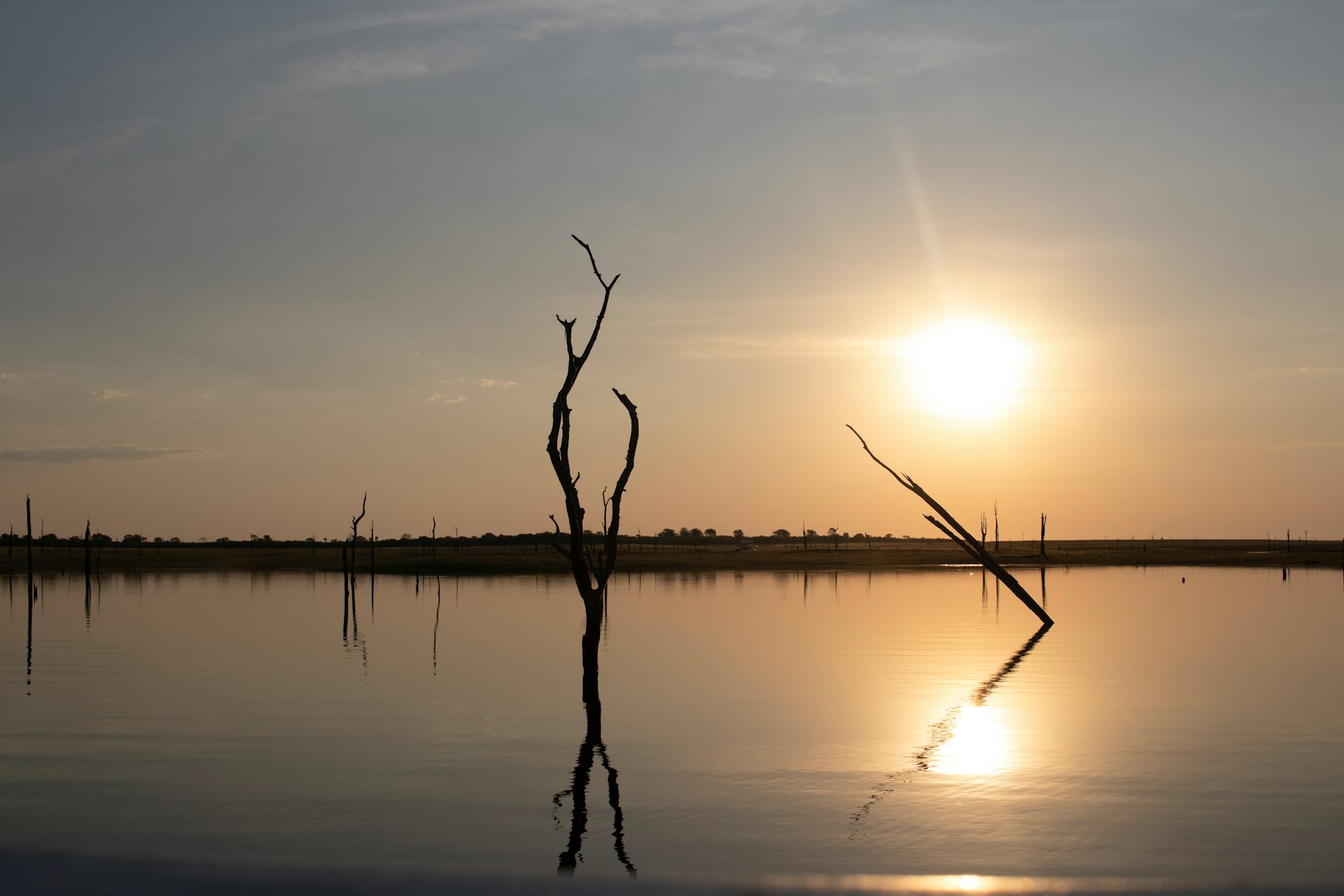
When the Kariba Dam was completed in 1959, it drowned 5,580 square kilometres of the Zambezi valley and created what is still one of the world's largest artificial lakes. The flooding left behind a landscape no engineer designed: a forest of skeletal, bleached trees breaking the surface across the shallows, perches for fish eagles and roosts for cormorants, silent monuments to the savannah that once stood here. Stretching 280 kilometres from the dam wall in the east to the Zambezi escarpment in the west, Lake Kariba is hauntingly beautiful in a way no natural lake on the continent quite matches.
Matusadona National Park occupies 1,470 square kilometres of the lake's southern Zimbabwean shoreline, bounded by the Ume and Sanyati rivers. The park's name derives from the Matuzviadonha Hills, "falling dung," a reference to elephants navigating the steep terrain, and the elephants are still here, alongside one of Zimbabwe's most important black rhino sanctuaries and what is widely considered the second-largest lion concentration in Africa after Tanzania's Ngorongoro Crater. The combination of water-based and land-based safari at Matusadona is one of the most distinctive in the region.
What defines a Kariba trip, though, is the houseboat. Kariba's luxury houseboats are not modest river cruisers; they are multi-deck floating lodges with air-conditioned cabins, panoramic lounges, gourmet galleys, plunge pools and wraparound sun decks. The Matusadona and The Sovereign are the two most established vessels, but the underlying logic of all of them is the same: position yourself wherever the wildlife is. Move with the elephant herds along the shoreline. Anchor in a tiger-fishing channel at dawn. Drift in open water with a drink in hand as the sun sets behind the dead trees and the hippos rise around you. There is no other safari format quite like it.
Things to Do in Lake Kariba & Matusadona
Houseboat safari along the Matusadona shoreline
The signature Kariba experience. Multi-deck luxury vessels move along the southern lake edge as a mobile base for game viewing, fishing, and sundowner cruising. Smaller tenders deploy from the boat to access the shallow inlets where wildlife concentrates.
Boating game drives at the shore
The interface between lake and land creates a unique game-viewing dynamic. Animals pay little attention to a quiet, slow-moving boat, allowing closer and more relaxed observations of elephant drinking and bathing, buffalo clusters, and lions patrolling the water's edge, far less intrusive than vehicle-based viewing.
Tiger fishing at dawn
Lake Kariba and the Zambezi below the dam wall are among the best tiger fishing destinations in Africa. The Zambezi tiger fish is fast, aggressive and acrobatic, with an extraordinary set of interlocking teeth. Dawn starts from purpose-built fishing boats with experienced guides, with peak season from September to December.
Track black rhino in Matusadona
Matusadona protects one of Zimbabwe's critical black rhino populations under an intensive protection zone programme. Guided rhino tracking walks within the IPZ provide a rare, low-density encounter with one of Africa's most endangered species, alongside meaningful conservation context from rangers who monitor the animals daily.
Sundowner pontoon cruise
Kariba's most reliably beautiful ritual. As the sun descends over the lake's western waters, the dead trees turn to silhouettes, fish eagles call their last rounds, and hippos rise in the still water. Drinks and snacks on the deck, no schedule, and the deliberate deceleration that defines the lake's character.
Stay on an island lodge
Several elevated outcrops escaped the original flooding and are now occupied by some of Zimbabwe's most atmospheric island lodges. Properties like Changa, Fothergill, Musango, Bumi Hills, and Rhino Safari Camp combine 360-degree water views with productive game viewing on both the water and the surrounding mainland park.
When to Visit Lake Kariba & Matusadona
Dry Season
May, October
The classic Kariba window. Interior water sources dry up and wildlife concentrates along the lake edge, elephant, buffalo, and lion are all reliable along the Matusadona shoreline. Reliably sunny, low humidity, and the lake is calm enough for daily boating activities. June to August offers cool, comfortable temperatures; September to October is hotter but delivers the densest shoreline wildlife.
Tiger Fishing Peak
September, December
The early rainy season, before the main storms set in, is the prime tiger fishing window. The fish are active and feeding aggressively, the lake is calm, and visitor numbers are still relatively low. For dedicated anglers this is the most productive window; the rest of the lake's offering remains intact.
Green Season
January, April
The main rains make road access into Matusadona difficult and most terrestrial activities scale back. Houseboat operators continue on the lake itself, and birding from the water becomes exceptional as migrant species arrive in force. Limited operators run dedicated green-season trips for serious birders and photographers.
Getting to Lake Kariba & Matusadona
Most visitors fly into Kariba Airport (KAB), a 45-minute scheduled or charter flight from Harare. From the airport, operators arrange boat or vehicle transfers to houseboats and island lodges. Light aircraft also serve individual camp airstrips directly. Self-drive from Harare via Chinhoyi takes around 4.5 hours on tarred road and is reasonable in daylight. Combined fly-in itineraries with Mana Pools (the same Zambezi valley ecosystem, downstream) are common.
Where to Stay
Kariba's accommodation splits into three categories. Luxury houseboats, The Matusadona and The Sovereign are the most established vessels, typically take 8–12 guests on full-private charter or per-cabin basis. Island and shoreline lodges include Changa Safari Camp (canvas-and-thatch under ancient mahogany trees, strong boating programme), Fothergill Island (a classic Kariba island property), Musango Safari Camp (intimate, owner-run, particularly good for birding and tiger fishing), Bumi Hills (a clifftop lodge with commanding lake views), and Rhino Safari Camp (positioned within the rhino intensive protection zone). Zimparks self-catering options are available at Mana camp and a handful of public sites for self-sufficient travellers. Three to five nights is the right length, ideally combining a houseboat segment with an island base.
Travel Tips for Lake Kariba & Matusadona
Frequently Asked Questions
- Is a houseboat or an island lodge the better experience?
- They're different. The houseboat is mobile, more flexible, and delivers the iconic Kariba ritual of moving with the wildlife and the light. The island lodge offers a fixed base with more land-based access to Matusadona, more space ashore, and a more conventional safari rhythm. Many travellers do both, two or three nights on a houseboat and two or three at an island lodge.
- Can I see the Big Five at Matusadona?
- Four reliably, elephant, buffalo, lion, and black rhino (under IPZ programmes). Leopard is present but not commonly seen. Matusadona is not primarily a Big Five destination, its draw is the lake-and-land combination, the rhino conservation experience, and one of the densest lion concentrations in Africa.
- How does Lake Kariba combine with the rest of a Zimbabwe trip?
- Naturally with Mana Pools (same Zambezi ecosystem, an easy charter flight downstream) and with Hwange via Harare. A common 10-day Zimbabwe trip is Victoria Falls, Hwange, Kariba, Mana Pools, all linked by light aircraft. Kariba also pairs well as a slower second-leg destination after the intensity of a Mana walking safari.
- Is tiger fishing accessible to beginners?
- Yes. Most operators provide quality tackle, experienced guides, and an unhurried introduction. The fish are aggressive and the fight is dramatic, which makes the learning curve forgiving. Even one morning on the water is usually enough to land a tiger fish; dedicated anglers typically book two or more dawn sessions.
Explore More, Lake Kariba & Matusadona
Things To Do
Plan Your Trip
More in Zimbabwe
Hwange National Park
Zimbabwe's largest national park and one of Africa's great elephant strongholds. Over 40,000 elephants roam Hwange's pump-fed waterholes alo…
Mana Pools National Park
A UNESCO World Heritage Site on the Zambezi floodplain where elephants stand on their hind legs to reach acacia branches and walking safaris…
Victoria Falls (Zimbabwe Side)
The Zimbabwe side of Victoria Falls offers the broadest panoramic views of all 1.7 kilometres of cascading water, across 16 viewpoints conne…
Great Zimbabwe
The largest stone structure in sub-Saharan Africa south of the pyramids. Built between the 11th and 15th centuries without mortar, Great Zim…
Matobo Hills
A UNESCO World Heritage landscape of impossibly balanced granite boulders, ancient San rock art, and one of the densest leopard populations …
Eastern Highlands
A 300-kilometre belt of cool, green mountain country running along Zimbabwe's border with Mozambique. Hiking, fly-fishing, endemic birds, an…
Gonarezhou National Park
Zimbabwe's most remote major wilderness, in the country's southeastern corner. Big-tusked elephants, the dramatic red sandstone Chilojo Clif…
Bulawayo
Zimbabwe's unhurried second city, founded on the site of the Ndebele royal kraal and gateway to the Matobo Hills. Wide colonial-era avenues,…
Harare
Zimbabwe's leafy capital and primary international entry point. The National Gallery's Shona stone sculpture collection, accessible rock art…