
Great Zimbabwe
The largest stone structure in sub-Saharan Africa south of the pyramids. Built between the 11th and 15th centuries without mortar, Great Zimbabwe was the capital of a trading empire that connected the African interior to the Indian Ocean.
The Stone City of an African Empire
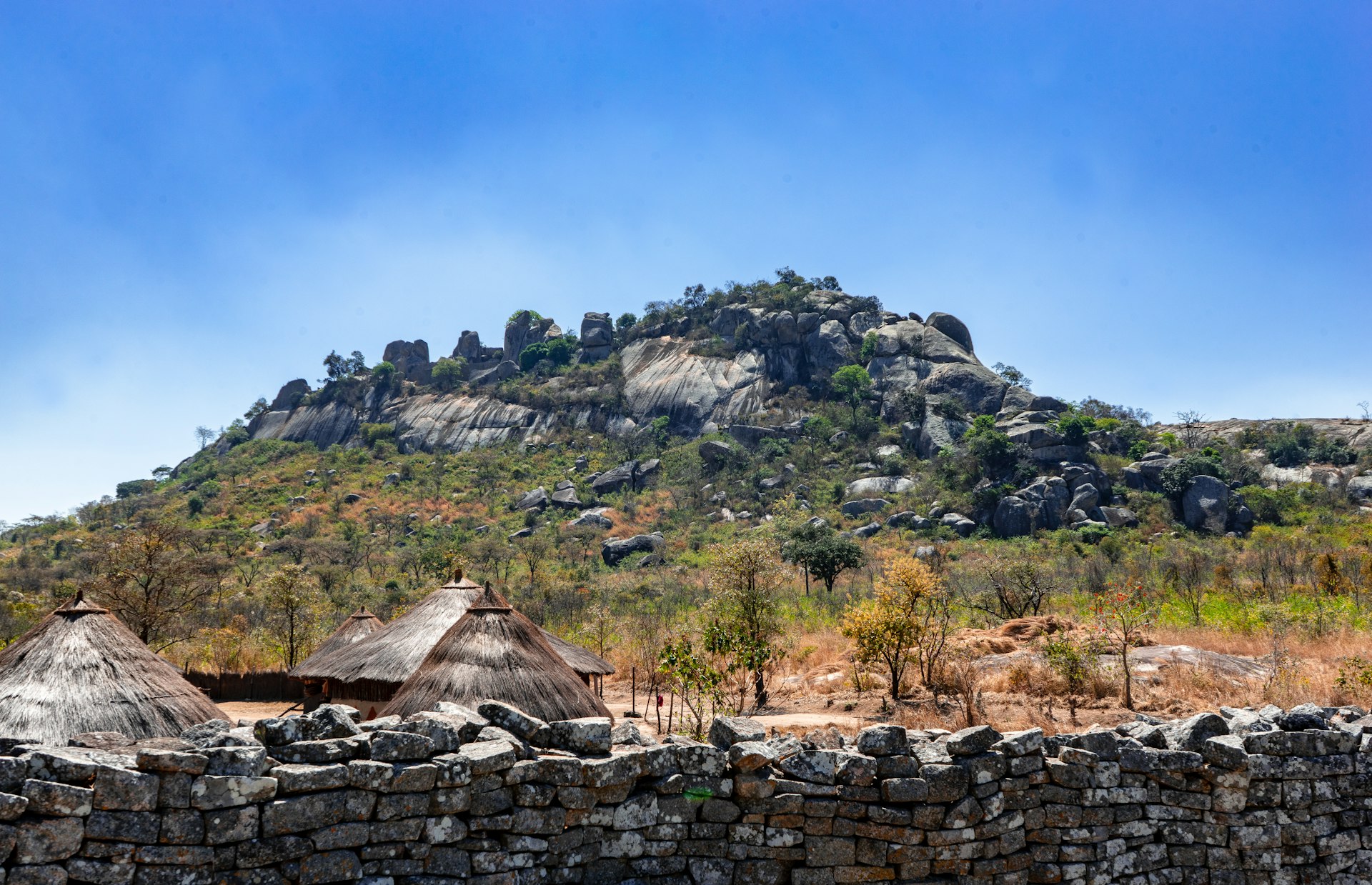
Photo by Ajeet Panesar on Unsplash
About Great Zimbabwe
Great Zimbabwe is the most important pre-colonial monument in southern Africa, and one of the most misunderstood. For decades, Rhodesian authorities suppressed evidence that the stone city had been built by Africans, refusing to accept that a sophisticated civilisation had flourished in the interior centuries before European contact. Today the UNESCO World Heritage site stands as a corrective: a 720-hectare complex of dry-stone walls, conical towers, and terraced enclosures built by the ancestors of the modern Shona people. The country itself takes its name from this place, "Zimbabwe" means "houses of stone" in chiShona.
The site is divided into three main areas. The Hill Complex, perched on a granite kopje, is the oldest section and was likely the seat of the ruling elite, a series of enclosures built into and around natural rock formations. Below it, the Great Enclosure is the most spectacular feature: an elliptical outer wall over 250 metres in circumference and up to 11 metres high, enclosing a famous Conical Tower whose original purpose remains debated. The Valley Ruins, scattered between the two, suggest a town that at its 14th-century peak housed perhaps 18,000 people. The walls were built without mortar, a technique known as ashlar masonry, using carefully shaped granite blocks that interlock through gravity and precision alone.
Great Zimbabwe sits in the southeast of the country near Masvingo, three to four hours' drive from Harare. It is rarely combined with the western safari circuit (Hwange, Victoria Falls), which is why most visitors miss it, but for travellers willing to make the detour, it is one of the most affecting historical sites on the continent. A good guide is essential: the architecture rewards explanation, the colonial-era controversy is part of the story, and the spiritual significance of the place to modern Zimbabweans is something most foreigners only grasp when it is pointed out. Allow at least half a day on site, ideally a full day with the on-site museum and the nearby Lake Mutirikwi.
Things to Do in Great Zimbabwe
Tour the Great Enclosure and Conical Tower
The most photographed section and the largest pre-colonial structure in sub-Saharan Africa. The 250-metre outer wall, the parallel passage, and the 10-metre Conical Tower at its centre repay slow exploration with a knowledgeable guide who can walk you through the construction techniques and the ongoing debates about purpose.
Climb the Hill Complex
The oldest part of the site, perched on a natural granite kopje and reached by a steep path through narrow rock-cut passages. The views back over the Great Enclosure and the surrounding valley are the visual highlight of the visit. Allow 90 minutes for the climb and exploration at the top.
Visit the on-site museum
A small but essential museum that houses the famous Zimbabwe Bird soapstone carvings recovered from the site, the national symbol that appears on the country's flag. Exhibits cover the history, the colonial-era suppression of African authorship, and the trading links that connected Great Zimbabwe to Kilwa, China, and Persia.
Walk the Valley Ruins
The often-overlooked third section of the site, scattered between the Hill Complex and the Great Enclosure. The Valley Ruins are where most of the population lived, and walking through them gives a sense of the scale of the medieval city in a way the headline monuments don't.
Day-trip to Lake Mutirikwi
A 25-minute drive from the ruins, Lake Mutirikwi (formerly Lake Kyle) is a large reservoir surrounded by recreational park with white rhino, giraffe, zebra, and good birding. A relaxing afternoon counterpoint to the historical depth of the morning at the ruins.
Combine with the eastern highlands
Great Zimbabwe pairs naturally with a longer cultural and scenic loop through eastern Zimbabwe, the Eastern Highlands around Nyanga and Chimanimani are three to four hours further north and add waterfalls, cool montane forest, and trout fishing to a non-safari Zimbabwe itinerary.
When to Visit Great Zimbabwe
Cool Dry
May, August
The most comfortable window for exploring the site on foot. Days are sunny and mild, the granite isn't punishingly hot to climb, and the surrounding countryside is at its most photogenic with low golden light. Pack a fleece for early mornings.
Warm Dry
September, October
Days warm up and the Hill Complex becomes hot work in the middle of the day. Go early or late. The miombo woodland around the site begins to flush with new leaves before the rains, giving the landscape an unusual reddish-bronze tone.
Green Season
November, March
The summer rains transform the surrounding countryside into a deep green and Lake Mutirikwi fills. Site visits are still very doable, heavy rain is usually short, and the photography is dramatic with storm light over the granite walls. Some accommodation drops prices.
Getting to Great Zimbabwe
Great Zimbabwe is 30 minutes' drive south of Masvingo, the nearest major town, and roughly four hours from Harare on the tarred A4. There is no airport at Masvingo, most visitors fly into Harare's Robert Gabriel Mugabe International Airport and continue by hire car or private transfer. Charter flights to a small airstrip near Masvingo are possible but rarely used. The drive from Harare is straightforward and scenic; from the western safari circuit (Victoria Falls, Hwange) it's a long road journey via Bulawayo and not commonly combined.
Where to Stay
Accommodation options near Great Zimbabwe are modest by Zimbabwean safari standards but more than adequate for the one or two nights most visitors stay. The Great Zimbabwe Hotel sits at the edge of the site and is the most convenient. Lodge at the Ancient City offers thatched chalets within walking distance of the ruins and stronger atmosphere. Norma Jeane's Lake View Resort on Lake Mutirikwi is a longer drive each morning but combines a lake-side setting with access to the recreational park. For travellers on a tighter budget, Masvingo town has several decent guesthouses 30 minutes away.
Travel Tips for Great Zimbabwe
Frequently Asked Questions
- Who built Great Zimbabwe?
- The ancestors of the modern Shona people, between roughly the 11th and 15th centuries. The site was the political and trading capital of the Kingdom of Zimbabwe, an empire that exported gold, ivory, and copper to Indian Ocean traders in exchange for Chinese porcelain, Persian glass, and Indian beads, all of which have been excavated on site. Rhodesian-era denial of African authorship has been comprehensively disproven by modern archaeology.
- How long do I need at the site?
- A focused visit takes about three to four hours, enough for the Great Enclosure, the Hill Complex, and the museum. A full day with a guide, including the Valley Ruins and a return for late-afternoon light, is more rewarding. Most travellers combine a single overnight in the area with a full day on site.
- Can I combine Great Zimbabwe with Hwange or Victoria Falls?
- Geographically yes, but logistically it's awkward. Great Zimbabwe is in the southeast, Hwange and Victoria Falls are in the northwest. The drive between them is long (10+ hours via Bulawayo) and there are no direct flights. Most travellers either treat Great Zimbabwe as a Harare-based extension, or fly between Harare and Victoria Falls and accept that they're two separate Zimbabwe trips.
- Is Great Zimbabwe safe to visit?
- Yes. The site itself is well-maintained and has on-site guides, security, and a museum. The drive from Harare is on good tarred roads. Standard travel precautions apply in Masvingo town, don't display valuables, use established guesthouses, and avoid driving long distances after dark.
Explore More, Great Zimbabwe
Things To Do
Plan Your Trip
More in Zimbabwe
Hwange National Park
Zimbabwe's largest national park and one of Africa's great elephant strongholds. Over 40,000 elephants roam Hwange's pump-fed waterholes alo…
Mana Pools National Park
A UNESCO World Heritage Site on the Zambezi floodplain where elephants stand on their hind legs to reach acacia branches and walking safaris…
Victoria Falls (Zimbabwe Side)
The Zimbabwe side of Victoria Falls offers the broadest panoramic views of all 1.7 kilometres of cascading water, across 16 viewpoints conne…
Matobo Hills
A UNESCO World Heritage landscape of impossibly balanced granite boulders, ancient San rock art, and one of the densest leopard populations …
Lake Kariba & Matusadona
An inland sea created by one of the world's largest dams, where elephants swim between islands and houseboats double as floating safari lodg…
Eastern Highlands
A 300-kilometre belt of cool, green mountain country running along Zimbabwe's border with Mozambique. Hiking, fly-fishing, endemic birds, an…
Gonarezhou National Park
Zimbabwe's most remote major wilderness, in the country's southeastern corner. Big-tusked elephants, the dramatic red sandstone Chilojo Clif…
Bulawayo
Zimbabwe's unhurried second city, founded on the site of the Ndebele royal kraal and gateway to the Matobo Hills. Wide colonial-era avenues,…
Harare
Zimbabwe's leafy capital and primary international entry point. The National Gallery's Shona stone sculpture collection, accessible rock art…