
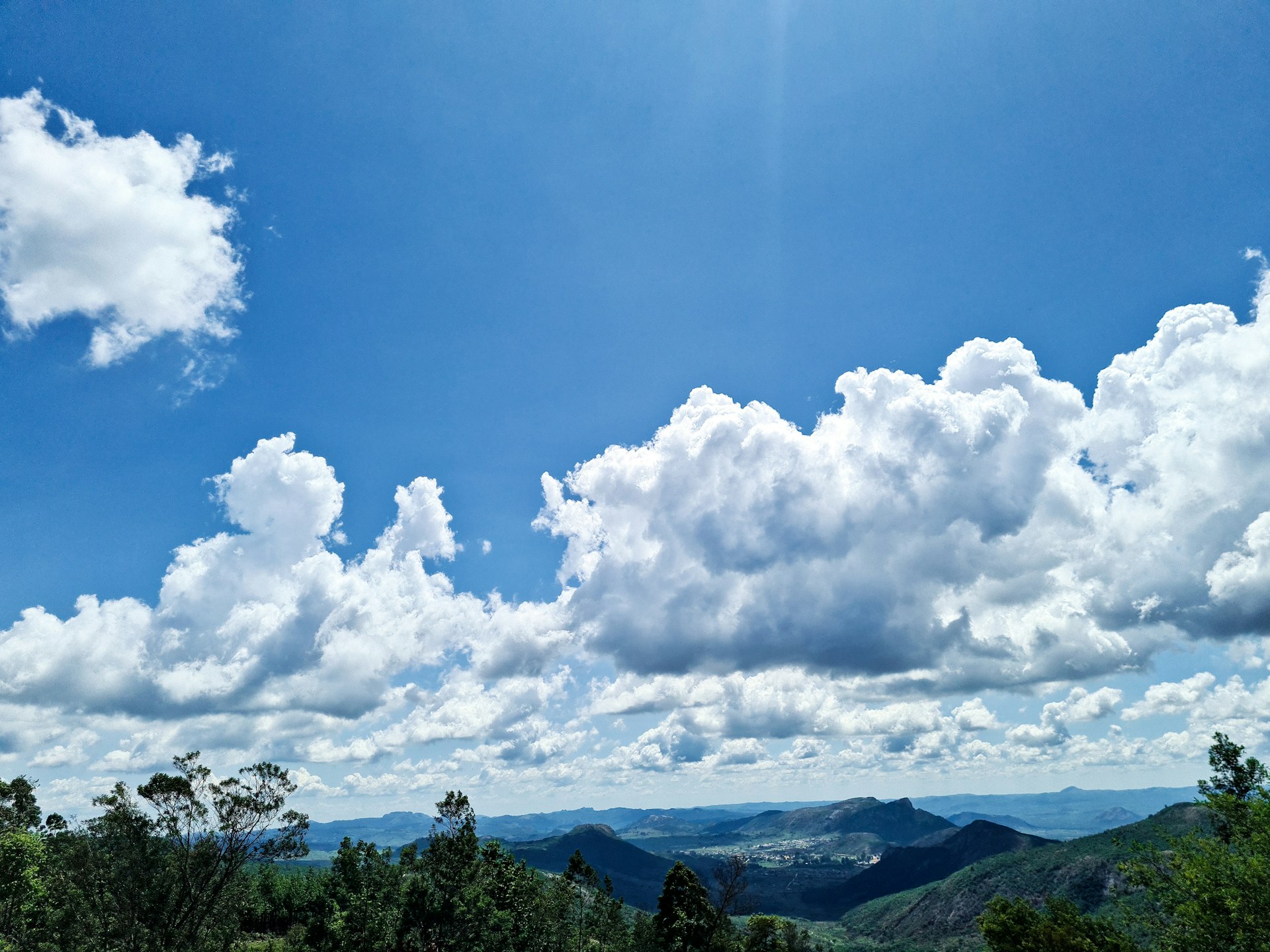
Eastern Highlands
A 300-kilometre belt of cool, green mountain country running along Zimbabwe's border with Mozambique. Hiking, fly-fishing, endemic birds, and tea-plantation slopes that look more like the Scottish Highlands or Sri Lanka than the African bush.
Mountains, Mist, and Endemic Birds
Photo by Rutendo Petros on Unsplash
About Eastern Highlands
Mention Zimbabwe to most travellers and they think savannah: vast, flat, tawny, punctuated by thorn trees and elephants. The Eastern Highlands disrupt that image entirely. Running along Zimbabwe's eastern border with Mozambique for roughly 300 kilometres, the highlands are a world apart from the rest of the country, a high-altitude belt of cool mist, green ridges, plunging waterfalls, montane forest, and tea plantations spreading across slopes that would not look out of place in the Scottish Highlands or Sri Lanka. The highest peak, Mount Nyangani, reaches 2,593 metres, the tallest point in Zimbabwe, and on certain mornings the cloud sits at exactly the level of the ridgeline, creating the strange sensation of walking above the weather.
The highlands divide naturally into three regions. Nyanga in the north combines Zimbabwe's highest peak with Mtarazi Falls, at 762 metres one of the highest waterfalls in Africa, and a network of trout-stocked highland lakes (Mare, Rhodes, Purdon) that hold some of the finest fly-fishing in southern Africa. The Vumba in the centre, whose name translates as "mountains of mist," is the biological heart of the range: dense Afromontane forest cloaks its slopes, and the Seldomseen estate area is the recognized epicentre for one of the highest concentrations of endemic and localized bird species in southern Africa. Chimanimani in the south is the rugged extreme, a quartzite mountain range protected as a wilderness national park, accessible only on foot, where multi-day hiking circuits move between cave shelters and mountain valleys with no roads, no lodges, and no engine noise.
This is a destination for travellers who want to walk in forests, fish cold streams, see bird species that exist nowhere else on earth, and feel a Zimbabwe that whispers rather than thunders. It is understated, unhurried, and quietly beautiful in a way that rewards those who come looking for it. Most international visitors miss it entirely, which is part of why it remains so good.
Things to Do in Eastern Highlands
Climb Mount Nyangani
Zimbabwe's highest peak, reached by a well-maintained 3–4 hour return path from the car park inside Nyanga National Park. Not technical, but the mountain has a reputation for sudden weather changes and disorienting mist, start early and take a guide if it's your first ascent. The summit views run from the Zimbabwe plateau to the Mozambican lowlands on a clear day. The mountain is sacred to surrounding Shona communities; respectful, leave-no-trace hiking is the appropriate posture.
Visit Mtarazi Falls
At 762 metres one of the highest waterfalls in Africa, plunging over the Nyanga escarpment into the gorge below. The cliff-edge viewpoints inside Nyanga National Park are accessible by car and deliver one of the most dramatic panoramas in Zimbabwe, straight down the falls and out across the lowlands toward Mozambique. The base of the falls requires a steep full-day descent.
Fly-fish the highland lakes
Mare Dam, Rhodes Dam, and Purdon Dam in Nyanga are stocked with rainbow and brown trout and represent some of the finest freshwater fly-fishing in southern Africa. Cold, clear high-altitude water and a sporting challenge entirely different from the lowland tiger fishing. Permits through Zimbabwe Parks; the cooler dry months are most consistent.
Bird the Vumba forest
The dense Afromontane forest of the Vumba supports one of the most localized bird assemblages in southern Africa. The Seldomseen estate area is the recognized epicentre, the Cinnamon-breasted Tit is found in very few other places on earth, alongside Roberts' Warbler, Chirinda Apalis, Swynnerton's Robin, and Livingstone's Turaco. For dedicated birders this is one of the most productive single locations on the continent.
Multi-day hike in Chimanimani
The Chimanimani range in the southeast is the rugged extreme of the Eastern Highlands, quartzite ridges and peaks protected as a wilderness park where you walk in carrying tent, food, and water and move between cave shelters over 2–4 days. Mutekeswane (Chimanimani) Base Camp is the practical starting point. Demanding but extraordinary; this is genuine wilderness mountain country.
Walk to Bridal Veil Falls
For visitors who want the Chimanimani landscape without the multi-day commitment, the 50-metre Bridal Veil cascade is an accessible 2–3 hour return walk from Chimanimani village through indigenous forest. A satisfying introduction to the lower forested slopes of the range.
Visit Chirinda Forest Reserve
Near Chipinge in the southern Highlands, Chirinda protects one of Zimbabwe's last remaining patches of indigenous subtropical forest, including red mahoganies estimated at 1,000 years old. A cathedral-like canopy, cool air, and a forest type that has been almost entirely lost to agricultural expansion elsewhere in the region.
Tour a working tea estate
The Honde Valley below Nyanga and the slopes around Chipinge support active tea estates that welcome visitors. A guided plantation tour, watching the plucking and processing, then tasting the output, is a pleasant half-day addition that grounds the highland landscape in its actual agricultural economy.
When to Visit Eastern Highlands
Cool Dry
April, September
The recommended window. Highland temperatures are comfortable for walking (15–22°C in lower areas, cooler at altitude), the mist clears for clean views from the ridgelines, and the trail conditions are at their best. Mornings are cold, 7–10°C is normal, with frost possible on the higher dwalas in June and July. The most reliable period for resident bird species.
Hot Shoulder
October, November
Pre-rain warmth. Skies are still clear in the mornings and migratory birds begin to arrive, adding to the resident species list. Afternoon clouds build over the higher peaks and the first storms of the season can break with little warning. Less crowded than peak dry but with most of the same rewards.
Rainy Season
December, March
Highland rains can be heavy and persistent in January and February. The landscape is extraordinarily green, the waterfalls run at maximum volume, and the migratory bird season is at its peak, making this the most diverse window ornithologically. Hiking is harder and Chimanimani's high circuits become risky in heavy rain. Lower visitor numbers and significant accommodation reductions.
Getting to Eastern Highlands
No commercial flights serve the highlands directly. From Harare, Nyanga is roughly 3.5–4 hours northeast on the A14 via Rusape; Mutare (the gateway to the Vumba and Chimanimani) is about 3 hours east on the A3. Self-drive is the most practical approach, the road network is suitable for standard vehicles, though mountain roads to higher elevations require care on steep narrow sections. From Bulawayo expect a 5–6 hour drive, which makes the highlands a dedicated multi-night excursion rather than a side trip from the western circuit. Charter flights to Mutare are possible but rarely used.
Where to Stay
Accommodation is divided across the three regions. In Nyanga, Troutbeck Resort is the most established option (chalets, golf, fishing, horse riding); Rhodes Nyanga Hotel is a more characterful park-side property; Zimbabwe Parks operates well-equipped self-catering chalets within the national park itself. In the Vumba, Seldomseen Birding Lodge is the base of choice for serious birders, Inn on the Vumba is a comfortable general option, and the colonial-era Leopard Rock Hotel is the most upscale property in the region. Around Chimanimani, Frog and Fern Cottages in the village serves as the practical base for day hikes and multi-day expeditions. Plan three to five nights spread across at least two of the three regions for a coherent highlands trip.
Travel Tips for Eastern Highlands
Frequently Asked Questions
- How long do I need in the Eastern Highlands?
- Three nights minimum to do justice to one of the three regions; five nights to combine two; a week or more if you intend to hike the Chimanimani circuits. Most international travellers fit the highlands into 3–4 nights split between Nyanga and the Vumba, with Chimanimani as a separate, dedicated trip for keen hikers.
- How do the Eastern Highlands compare with the Drakensberg or the Rwenzoris?
- Smaller in scale and less famous than either, but with a more accessible profile (good roads, established self-drive infrastructure, comfortable lodges) and a different ecological character. The Vumba forest birding alone has very few peers in southern Africa. For ridge-line hiking, the Drakensberg is bigger; for genuine wilderness walking, Chimanimani is closer in feel to the Rwenzoris than its size suggests.
- Can I combine the highlands with a safari?
- Geographically, yes, but logistically the highlands are on the opposite side of the country from the western safari circuit (Hwange, Victoria Falls). The natural pairing is with Harare and Great Zimbabwe in a non-safari eastern Zimbabwe loop. Combining with Hwange typically means flying back through Harare, which works but requires planning.
- Is it safe to hike alone?
- The Vumba and Nyanga day-trail networks are generally safe for solo walking with normal precautions. Mount Nyangani and the Chimanimani wilderness are different, both have records of hikers getting lost in mist and bad weather, and a guide is strongly recommended for first-time visitors. Register with the park authorities before any multi-day Chimanimani hike.
Explore More, Eastern Highlands
Plan Your Trip
More in Zimbabwe
Hwange National Park
Zimbabwe's largest national park and one of Africa's great elephant strongholds. Over 40,000 elephants roam Hwange's pump-fed waterholes alo…
Mana Pools National Park
A UNESCO World Heritage Site on the Zambezi floodplain where elephants stand on their hind legs to reach acacia branches and walking safaris…
Victoria Falls (Zimbabwe Side)
The Zimbabwe side of Victoria Falls offers the broadest panoramic views of all 1.7 kilometres of cascading water, across 16 viewpoints conne…
Great Zimbabwe
The largest stone structure in sub-Saharan Africa south of the pyramids. Built between the 11th and 15th centuries without mortar, Great Zim…
Matobo Hills
A UNESCO World Heritage landscape of impossibly balanced granite boulders, ancient San rock art, and one of the densest leopard populations …
Lake Kariba & Matusadona
An inland sea created by one of the world's largest dams, where elephants swim between islands and houseboats double as floating safari lodg…
Gonarezhou National Park
Zimbabwe's most remote major wilderness, in the country's southeastern corner. Big-tusked elephants, the dramatic red sandstone Chilojo Clif…
Bulawayo
Zimbabwe's unhurried second city, founded on the site of the Ndebele royal kraal and gateway to the Matobo Hills. Wide colonial-era avenues,…
Harare
Zimbabwe's leafy capital and primary international entry point. The National Gallery's Shona stone sculpture collection, accessible rock art…