
Harare
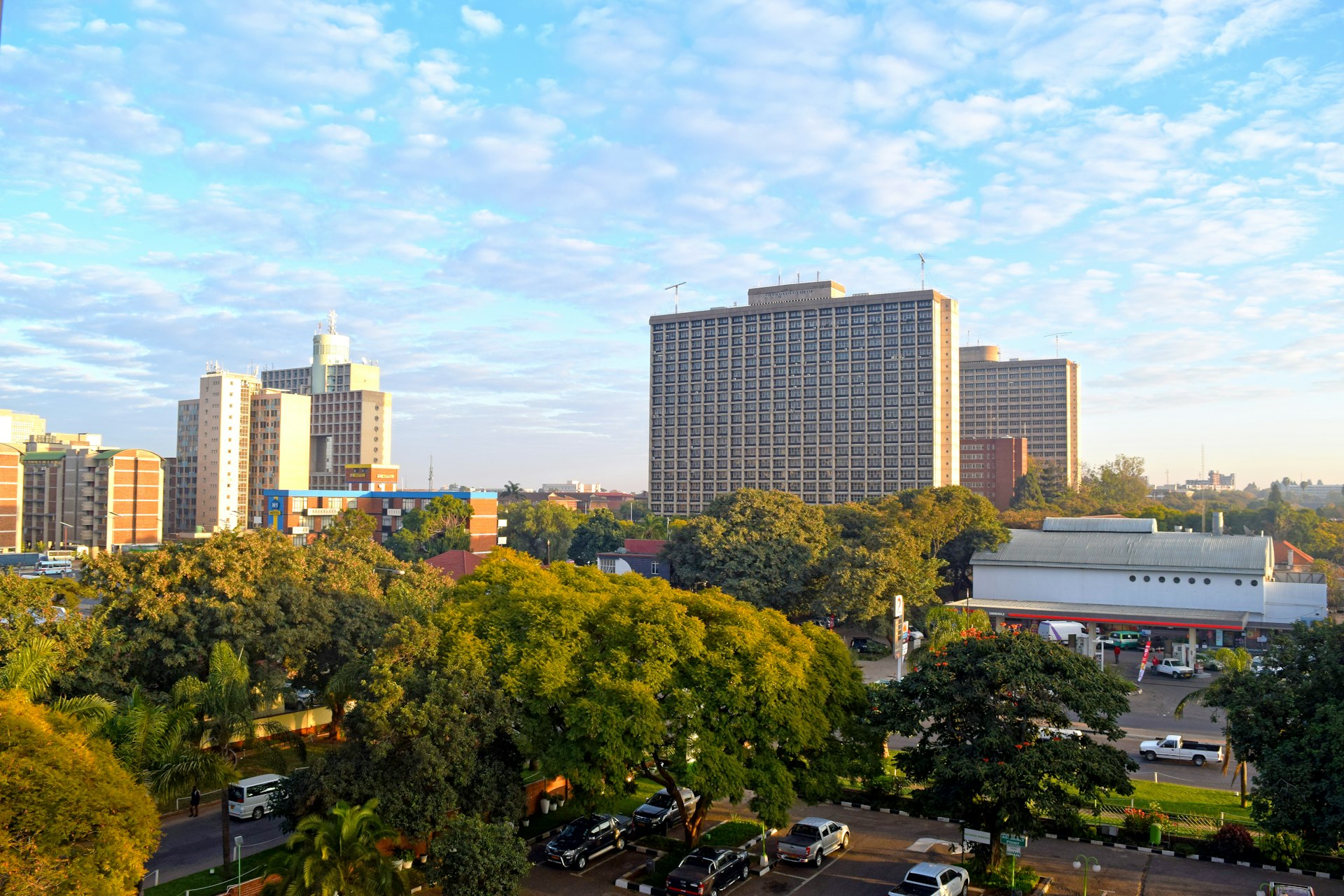
Zimbabwe's leafy capital and primary international entry point. The National Gallery's Shona stone sculpture collection, accessible rock art at Domboshava, and a northern-suburb café and arts scene that rewards travellers willing to stay more than one night.
The Cosmopolitan Gateway
Photo by Omoniyi David on Unsplash
About Harare
Most travellers arrive in Harare by international flight, spend a single night, and move on the following morning toward the bush. This is entirely understandable, Zimbabwe's wilderness is the primary draw, and the capital is rarely the reason anyone boards a plane to southern Africa. But it is also a mild miscalculation.
Harare is a city that rewards at least two nights and a curious attitude. Its leafy northern suburbs, Borrowdale, Avondale, Alexandra Park, shade pleasant café terraces and art galleries. Its street artists sell work of genuine quality at roadside stands. The National Gallery houses a collection of Shona stone sculpture that has achieved serious international critical recognition. And within an hour's drive, accessible rock art galleries at Domboshava and introductory game parks like Umfurudzi and Eco Nyathi open the wider Zimbabwean experience before you have left the city's sphere of influence.
The capital is also, practically, the logistical nerve centre of the entire country. International flights arrive here. Domestic connections to Hwange, Mana Pools, Kariba, and Victoria Falls depart from here. The country's best-stocked supermarkets and pharmacies, essential for provisioning before heading to remote areas, are in the northern suburbs. The city sits on the Highveld plateau at 1,483 metres, which gives it a climate that is genuinely pleasant: warm and sunny in the dry season, wet and green in the rainy months, almost never extreme. Give Harare its two nights. Use them actively. Then head to the wilderness properly provisioned and oriented.
Things to Do in Harare
Visit the National Gallery of Zimbabwe
Harare's most significant cultural institution and the best introduction to Shona stone sculpture, an art form developed in the post-independence period that is now represented in the Louvre, the British Museum, and major collections worldwide. The gallery's collection spans pioneering figures from the 1960s to contemporary practitioners and the gift shop sells work directly from represented sculptors.
Day-trip to Domboshava
Thirty kilometres north of the city, Domboshava preserves some of the most accessible San rock art in Zimbabwe, paintings of humans, animals, and spiritual figures on granite overhangs that sheltered the San people for thousands of years. The granite kopje landscape is a miniature version of the Matobo Hills terrain. A licensed guide from the site entrance provides the interpretive context that elevates the visit.
Tour the Avondale and Borrowdale gallery scene
Harare's Northern Suburbs house a cluster of commercial galleries, studios, and craft spaces that represent the most dynamic contemporary section of Zimbabwe's art market. Several galleries offer artist studio visits by arrangement, meeting the sculptor at work, watching the grinding and polishing process, and understanding the decisions behind a specific piece adds considerable depth to any purchase.
Walk the Harare Botanical Gardens
Established 1900, 58 hectares of cultivated and indigenous gardens with over 900 plant species, including a significant indigenous Zimbabwean flora collection. Particularly beautiful during the spring flowering season (September–November), and a popular morning walk with local birdwatchers for its garden and woodland species. Adjacent to the national herbarium.
Take a guided walk through Mbare Musika
Harare's largest and most chaotic market, in the city's oldest township. Fresh produce, traditional herbs and medicines, second-hand clothes, hardware. Mbare is not a tourist market, it is where Harare shops, feeds itself, and conducts daily commerce. A guided walk with a Harare-based operator offers a more honest picture of contemporary urban Zimbabwean life than any gallery or hotel can provide.
Visit Umfurudzi or Eco Nyathi for an introductory game drive
Wildlife reserves within 1–2 hours of the city offer accessible game viewing without a full safari commitment. Umfurudzi (160km northeast) supports sable, roan, and eland alongside the more common savannah species; Eco Nyathi closer to the city is suitable for brief stopovers. Not comparable to the major reserves, but a useful orientation for first-time visitors before the deep wilderness.
Eat in the northern suburbs
Harare has the most developed restaurant scene in Zimbabwe, concentrated in Borrowdale and Avondale. Amanzi (upscale contemporary in a garden setting) is the most consistently acclaimed; The Boma at Meikles is the theatrical traditional-cuisine option; Pariah State Café is the creative-community institution for breakfast and coffee; Gava's is the relaxed Avondale local favourite for honest Zimbabwean cooking.
When to Visit Harare
Cool Dry
May, August
The most comfortable window. Sunny days, cool mornings and evenings, no humidity, and the city at its most pleasant for walking the gallery district and the Botanical Gardens. The same window pairs perfectly with the country's safari peak season, most visitors transit Harare in this period.
Warm Dry
September, October
Hotter days, particularly in October, but mornings and evenings remain pleasant and the Botanical Gardens hit their spring flowering peak. Skies are still clear in the mornings; afternoon clouds build pre-rains. A good shoulder window with most of the dry-season rewards.
Rainy Season
November, March
Summer rains turn the city green and Harare's tree-lined avenues at their best. Showers tend to be afternoon thunderstorms rather than persistent rain, and city activities are largely unaffected. Lower visitor numbers and modest accommodation reductions; an underrated time to spend a few days in the capital.
Getting to Harare
Robert Gabriel Mugabe International Airport (HRE) is Zimbabwe's main international hub, 15km from the city centre. Direct flights operate from Johannesburg (the most-used connection on South African Airways and FlySafair), Nairobi, Addis Ababa, Dubai, and Lusaka. Pre-arranged hotel transfers are the easiest airport pickup; ride-hailing apps Vaya and Hwindi also operate at the airport with transparent pricing. The domestic terminal is adjacent to the international terminal and handles Fastjet and Air Zimbabwe connections to Bulawayo, Victoria Falls, and Kariba, most safari itineraries fly into Harare and connect onward by domestic charter.
Where to Stay
Harare's accommodation splits cleanly between the historic city-centre options and the more contemporary northern suburbs. Meikles Hotel is the city's grande dame, a 5-star property with history dating to 1915 and the most prestigious address in Harare. Bronte Hotel & Garden is a colonial-era property on a tree-lined avenue in the northern suburbs, more intimate and popular with long-stay guests for its garden setting. Cresta Jameson Hotel is the reliable central business option with a useful rooftop bar for arrival orientation. In the mid-range, Palm Rock Villa in Borrowdale and Imba Matombo (which incorporates Shona stone sculpture into its architecture) are both strong characterful choices. Backpacker-oriented guesthouses operate in Avondale and Belgravia at competitive rates.
Travel Tips for Harare
Frequently Asked Questions
- Is one night in Harare enough?
- It's enough to transit and provision but not enough to engage with the city. Two nights covers the National Gallery, a Domboshava day trip, and a meal in the northern suburbs, and is the right minimum for travellers who want to do more than just sleep on either side of an international flight. Three nights gives you the city plus a slower introduction to the surrounding countryside.
- Is Harare safe for international visitors?
- Yes, with standard urban precautions. The northern suburbs (Borrowdale, Avondale, Alexandra Park) are particularly safe and where most international visitors spend their time. Avoid the central business district after dark, don't display expensive equipment conspicuously, use registered taxis or ride-hailing apps rather than flagging unmarked vehicles, and Mbare market is best visited with a local guide.
- How does Harare compare to Cape Town or Johannesburg as a base?
- Smaller, less developed, with much less international hotel inventory than either, but with a more compact, navigable centre and a more characterful colonial-era residential architecture. Harare functions more like a regional capital than a global city. As a logistics hub it's perfectly capable; as a destination in its own right it's understated and rewards the patient.
- Can I see Shona stone sculpture being made?
- Yes, several galleries in Avondale and Borrowdale arrange artist studio visits, and the Mbare and Chitungwiza sculpture areas are home to substantial communities of working sculptors who sell directly from open-air studios. Tengenenge, the most famous sculpture community, is a 150km drive from Harare and is feasible as a long day trip with a knowledgeable guide.
Explore More, Harare
Things To Do
Plan Your Trip
More in Zimbabwe
Hwange National Park
Zimbabwe's largest national park and one of Africa's great elephant strongholds. Over 40,000 elephants roam Hwange's pump-fed waterholes alo…
Mana Pools National Park
A UNESCO World Heritage Site on the Zambezi floodplain where elephants stand on their hind legs to reach acacia branches and walking safaris…
Victoria Falls (Zimbabwe Side)
The Zimbabwe side of Victoria Falls offers the broadest panoramic views of all 1.7 kilometres of cascading water, across 16 viewpoints conne…
Great Zimbabwe
The largest stone structure in sub-Saharan Africa south of the pyramids. Built between the 11th and 15th centuries without mortar, Great Zim…
Matobo Hills
A UNESCO World Heritage landscape of impossibly balanced granite boulders, ancient San rock art, and one of the densest leopard populations …
Lake Kariba & Matusadona
An inland sea created by one of the world's largest dams, where elephants swim between islands and houseboats double as floating safari lodg…
Eastern Highlands
A 300-kilometre belt of cool, green mountain country running along Zimbabwe's border with Mozambique. Hiking, fly-fishing, endemic birds, an…
Gonarezhou National Park
Zimbabwe's most remote major wilderness, in the country's southeastern corner. Big-tusked elephants, the dramatic red sandstone Chilojo Clif…
Bulawayo
Zimbabwe's unhurried second city, founded on the site of the Ndebele royal kraal and gateway to the Matobo Hills. Wide colonial-era avenues,…