
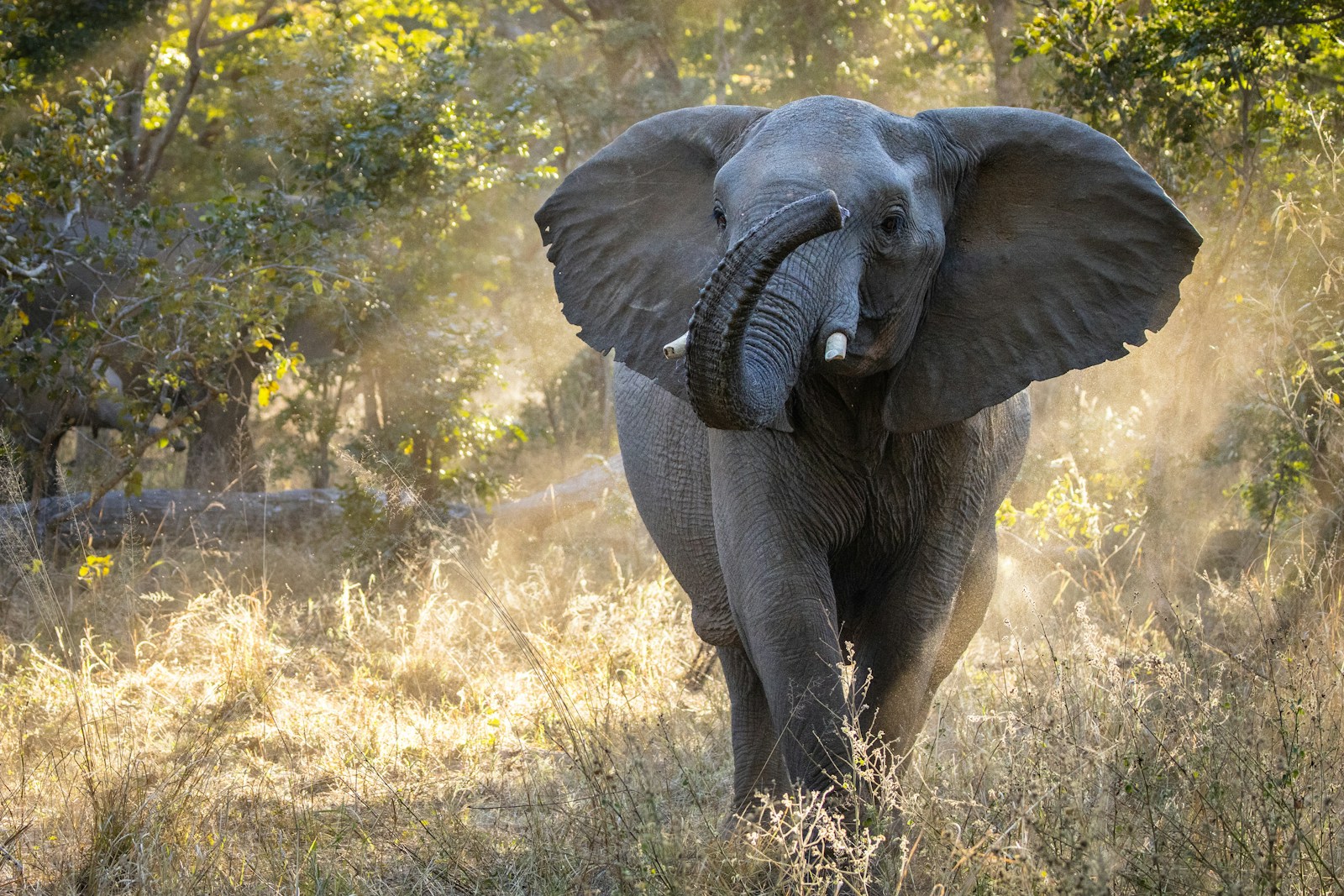
Hwange National Park
Zimbabwe's largest national park and one of Africa's great elephant strongholds. Over 40,000 elephants roam Hwange's pump-fed waterholes alongside lion, wild dog, and one of the continent's richest bird populations.
Home of the Elephant Herds
Photo by Ian Mackey on Unsplash
About Hwange National Park
Hwange National Park is the largest game reserve in Zimbabwe, 14,650 square kilometres of teak woodland, mopane scrub, and Kalahari sandveld stretching from the Botswana border eastward. The park has no major rivers and very little surface water; what makes wildlife survive here is a network of pumped waterholes, originally established in the 1930s and maintained today by a coalition of camps and conservation NGOs. In the dry season, when the natural pans dry up, the pumped waterholes pull in some of the densest concentrations of game on the continent, and one of the largest free-roaming elephant populations anywhere on Earth.
The headline figure is roughly 40,000 elephants, but Hwange is far more than that. The park has all the major predators, lion, leopard, cheetah, spotted hyena, and one of the largest African wild dog populations in the region. The bird list runs to over 400 species. Buffalo and sable antelope are common. And because the park is large and the visitor numbers comparatively modest, the experience is uncrowded even at popular waterholes during the peak winter months.
The defining experience of Hwange is sitting at a pumped waterhole at dusk during the dry season and watching a procession of elephant herds arrive, sometimes 200 at a time, to drink, bathe, and play. Many of the best camps are built around hides at these waterholes, and several offer overnight hides or stilted treehouses where you sleep above the water and listen to lions and elephants through the night. Combined with the strong walking safari tradition (Zimbabwean guides are among the best-trained in Africa), Hwange delivers an experience that rewards travellers willing to look past Botswana and pay a third of the price.
Things to Do in Hwange National Park
Waterhole vigil at dusk during dry season
The defining Hwange experience. Many of the best camps are built around pumped waterholes, and an afternoon spent sitting in a hide as the elephant procession arrives is unforgettable. Lions, hyena, sable, and buffalo also come through.
Walking safari with a Zimbabwean guide
Zimbabwean professional guides are among the most rigorously trained in Africa, and Hwange has a strong walking safari tradition. Half-day walks let you track elephant on foot and learn the bush in a way no game drive teaches.
Sleep in a treehouse or sky hide
Several Hwange camps run elevated sleep-out platforms and treehouse rooms above active waterholes. Falling asleep to the sound of elephants drinking below you is one of the great African safari experiences.
Game drive across the diverse habitats
Hwange is huge and varied, teak woodland in the north, open Kalahari sandveld in the south, mopane scrub in between. Multi-day itineraries that move between camps in different sections expose you to genuinely different landscapes and wildlife.
Visit Painted Dog Conservation
Hwange has one of Africa's largest African wild dog populations, and the Painted Dog Conservation centre near the park boundary runs an excellent visitor centre, rehabilitation facility, and educational programme. A meaningful half-day for wildlife enthusiasts.
Combine with Victoria Falls
Hwange is a 90-minute drive from Victoria Falls and they are almost always combined. A classic Zimbabwe itinerary spends 2-3 nights at the falls and 3-4 nights at one or two Hwange camps, often with a charter flight between them.
When to Visit Hwange National Park
Peak Dry
July, October
The classic Hwange window. Natural water sources have dried up and elephant herds congregate around the pumped waterholes in extraordinary numbers. The bush is open, sightings are predictable, and the weather is cool and dry. October is the hottest and most intense.
Early Dry
May, June
The bush is still green from the rains, the waterholes are starting to draw game, and the temperatures are pleasant. A lower-pressure shoulder season with most of the dry-season rewards.
Green Season
November, March
The rains transform the park. Game disperses across the natural water sources but the bush is lush, calving brings predator action, and migratory birds arrive in force. Some camps close due to road conditions; others stay open and offer significant discounts.
Late Shoulder
April
The rains taper off and the roads start to dry. Game viewing improves rapidly. April is a sweet spot for travellers who want the green landscapes without the access challenges of the wet season.
Getting to Hwange National Park
Most visitors fly into Victoria Falls Airport (VFA) and either drive (90 minutes to the main park gate) or take a short charter flight to one of Hwange's airstrips. Self-drive from Victoria Falls is straightforward on the tarred A8 road. Some operators run road transfers from Bulawayo Airport in the south. Internal charter flights connect Hwange to Mana Pools, Lake Kariba, and the Lower Zambezi for combined itineraries.
Where to Stay
Hwange has a wider range of accommodation than most Zimbabwean parks, from public Zimparks chalets at Main Camp and Sinamatella (basic, affordable, self-catered) to high-end private lodges in the surrounding concessions (Linkwasha, Little Makalolo, Davison's, Camp Hwange, The Hide, Bomani). The private camps offer the best guiding, the most exclusive game-viewing, and the iconic waterhole hides. Three to four nights minimum, ideally split between two camps in different sections of the park.
Travel Tips for Hwange National Park
Frequently Asked Questions
- Hwange or Kruger?
- Hwange is wilder, less developed, far less crowded, and much cheaper at the high end. Kruger has better infrastructure, more accessibility, and slightly more reliable Big Five sightings. For an authentic, uncrowded safari, Hwange wins. For a first-time, easy-access safari, Kruger is hard to beat.
- When is the best time to see elephants?
- August to October. The natural waterholes have dried up and the elephants concentrate around the pumped waterholes in extraordinary numbers, herds of 100 or more arriving at a single hide in an afternoon are normal in peak dry season.
- How many days do I need at Hwange?
- Three to four nights minimum. The park is huge and the experience is built around quiet waterhole vigils that reward patience. Less than three feels rushed; five to six lets you split between two camps in different sections.
- Is Hwange safe given the political situation in Zimbabwe?
- Yes, tourism areas in Zimbabwe have a long track record of safety, and the safari sector operates independently of broader political concerns. Most travellers report Hwange and Victoria Falls as some of the warmest and most professional safari experiences in Africa.
Explore More, Hwange National Park
Things To Do
Plan Your Trip
More in Zimbabwe
Mana Pools National Park
A UNESCO World Heritage Site on the Zambezi floodplain where elephants stand on their hind legs to reach acacia branches and walking safaris…
Victoria Falls (Zimbabwe Side)
The Zimbabwe side of Victoria Falls offers the broadest panoramic views of all 1.7 kilometres of cascading water, across 16 viewpoints conne…
Great Zimbabwe
The largest stone structure in sub-Saharan Africa south of the pyramids. Built between the 11th and 15th centuries without mortar, Great Zim…
Matobo Hills
A UNESCO World Heritage landscape of impossibly balanced granite boulders, ancient San rock art, and one of the densest leopard populations …
Lake Kariba & Matusadona
An inland sea created by one of the world's largest dams, where elephants swim between islands and houseboats double as floating safari lodg…
Eastern Highlands
A 300-kilometre belt of cool, green mountain country running along Zimbabwe's border with Mozambique. Hiking, fly-fishing, endemic birds, an…
Gonarezhou National Park
Zimbabwe's most remote major wilderness, in the country's southeastern corner. Big-tusked elephants, the dramatic red sandstone Chilojo Clif…
Bulawayo
Zimbabwe's unhurried second city, founded on the site of the Ndebele royal kraal and gateway to the Matobo Hills. Wide colonial-era avenues,…
Harare
Zimbabwe's leafy capital and primary international entry point. The National Gallery's Shona stone sculpture collection, accessible rock art…