
Gonarezhou National Park
Zimbabwe's most remote major wilderness, in the country's southeastern corner. Big-tusked elephants, the dramatic red sandstone Chilojo Cliffs above the Runde River, and walking safaris in country that still feels genuinely untouched.
The Place of Many Elephants
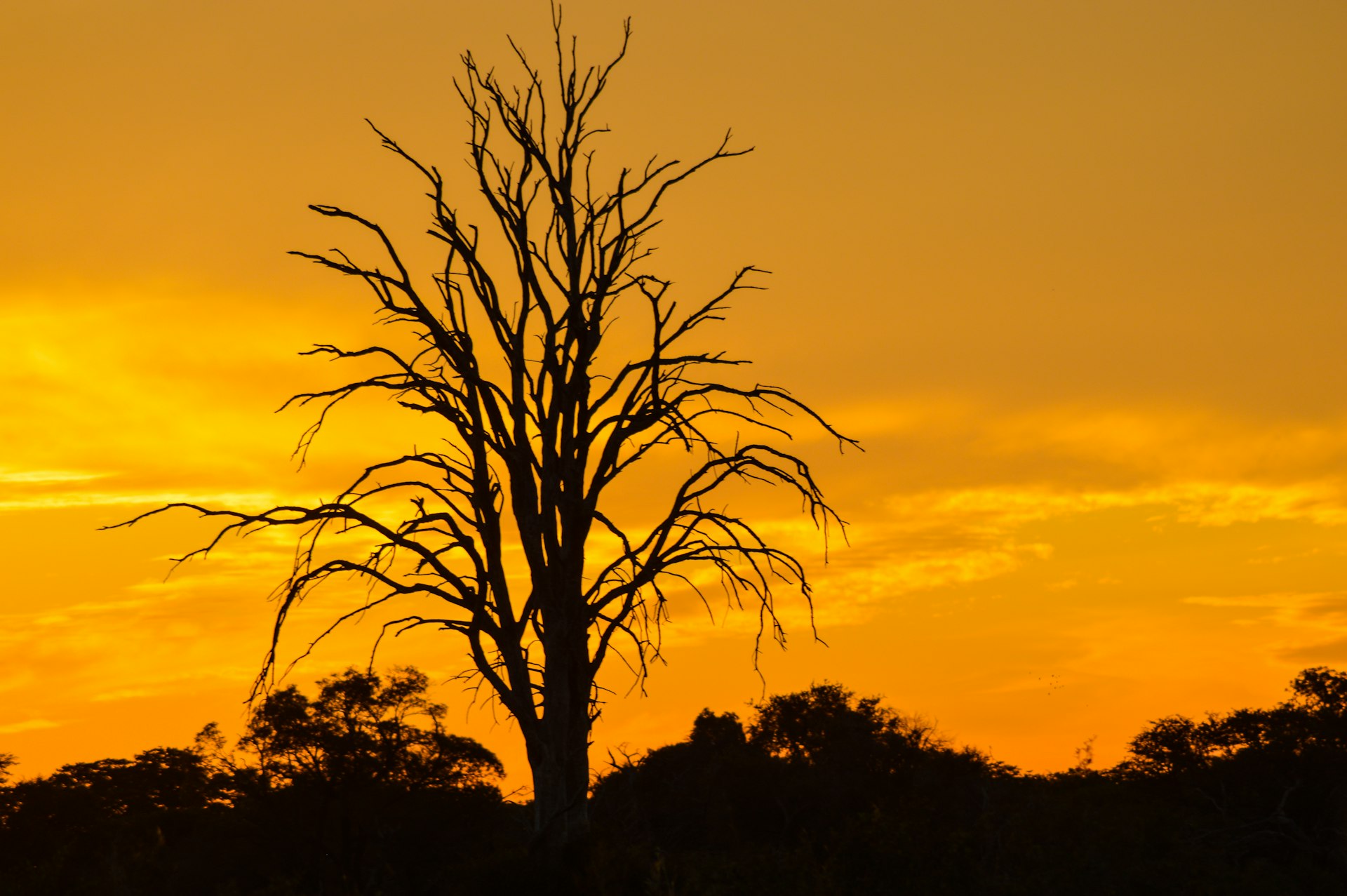
Photo by Patricia Chapple on Unsplash
About Gonarezhou National Park
Gonarezhou sits in the extreme southeastern corner of Zimbabwe, sharing borders with Mozambique and South Africa as part of the Great Limpopo Transfrontier Conservation Area, one of the largest contiguous protected wildernesses on the continent. Across 5,053 square kilometres of mopane woodland, riverine forest, sandy river channels, and red sandstone country, the park preserves a kind of safari that has become genuinely rare: low-density, lightly travelled, and demanding enough that the visitors who reach it tend to know what they came for.
The park's name translates from Shona as Gona reZhou, the Place of Many Elephants, and the name is not metaphorical. Gonarezhou hosts some of the largest and most impressive elephant herds in Zimbabwe, including a disproportionate number of the continent's remaining big-tusked bulls. These are animals whose ivory sweeps close to the ground, the genetic legacy of populations that were never fully subjected to the selective poaching pressure of the 1970s and 1980s that eliminated large-tusked genes elsewhere. The bulls are not habituated to vehicles in the way Hwange's elephants are; encounters require experienced management and respectful approach distances. This is part of what makes the park feel different.
Gonarezhou's defining geological feature is the Chilojo Cliffs, massive vertical faces of red and ochre sandstone rising above the broad sandy bed of the Runde River. The cliffs glow in the late afternoon light, the colour shifting from rust to amber to a molten scarlet against the green band of riverine vegetation along the Runde and the blue sky above. Experienced travel photographers rank it among the great sunset landscapes on the continent. Beyond the cliffs, the park supports Africa's full predator suite, a reintroduced rhino population whose numbers are still building, the largest populations of nyala in Zimbabwe, exceptional sable and eland, and a bird list shaped by the park's biogeographic position close to the Mozambican coastal plain, Pel's fishing owl, Narina trogon, racket-tailed roller, African broadbill. Gonarezhou is genuine wilderness, and it asks something of the people who travel through it.
Things to Do in Gonarezhou National Park
Walking safari with an experienced Gonarezhou guide
Gonarezhou is fundamentally a walking park. The terrain, riverine forest, open mopane, sandy river channels, is ideally suited to exploration on foot, and the park's isolation makes walking here feel genuinely removed from the rest of the world. Mobile multi-day walking safaris between wilderness camps are the pinnacle of the experience; fixed-camp half-day and full-day walks are also widely available.
Watch sunset at the Chilojo Cliffs
The defining Gonarezhou ritual. The red sandstone cliffs above the Runde River glow as the sun drops, the colour shifting from rust to amber to scarlet. Best viewed from the southern bank near Chipinda Pools, typically combined with an early-evening game drive along the river, a productive zone where elephant, buffalo, and lion converge as the day cools.
Encounter Africa's big-tusked elephants
Gonarezhou's bulls are famous among wildlife researchers for their extraordinary genetic legacy, tusks that sweep close to the ground, the kind of ivory architecture that was largely eliminated elsewhere by poaching. The herds move freely across the unfenced transfrontier border with Mozambique and South Africa. These animals are not habituated to vehicles in the way Hwange's are; experienced operator management is essential.
Game drive the river corridors
The Save, Runde, and Mwenezi rivers are the arteries of Gonarezhou's wildlife system. Vehicle-based drives following these corridors at dawn and dusk produce excellent sightings in genuinely dramatic settings, sandy river beds, large riparian trees, and the red sandstone country rising above. Chipinda Pools in the north and Mabalauta in the south offer different ecological perspectives on the park.
Bird the lowveld specialists
Gonarezhou lies within a biogeographically significant zone close to the Mozambican coastal plain, supporting bird species not reliably found elsewhere in Zimbabwe. Highlights include Pel's fishing owl, Narina trogon, racket-tailed roller, African broadbill, and the chance of nyala, one of the few reliable Zimbabwean locations for this densely shaggy antelope.
Fish the Save and Runde
The river systems support tiger fish, catfish, and bream. Bank fishing and shallow-channel fishing in the dry-season rivers is a characteristic activity of several Gonarezhou camps, particularly in the cool early dry months when the rivers run low and clear.
When to Visit Gonarezhou National Park
Cool Dry
May, July
The most comfortable window for walking and game drives. Cooler temperatures, the bush is opening up as ephemeral water sources dry, and wildlife begins to concentrate along the river corridors. Camps are fully open and roads are firm. An excellent shoulder window for travellers who want most of the dry-season rewards without the late-season heat.
Peak Dry
August, October
The most intense game-viewing period. Wildlife concentration along the rivers is at its maximum, elephant, buffalo, lion, and wild dog all converge on the remaining water. Daytime temperatures regularly exceed 38–40°C in September and October, which is part of why the park rewards experienced safari travellers. The Chilojo Cliffs at sunset are at their most photogenic in this window.
Closed Season
November, April
Significant rainfall makes the clay-soil road network impassable to all but the most capable 4WD vehicles, and most camps close. Gonarezhou is not a green-season destination in any practical sense for mainstream tourism. A handful of operators run highly specialized green-season trips for serious wildlife photographers and birders willing to accept the access challenges.
Getting to Gonarezhou National Park
Gonarezhou's remoteness is part of its character but it requires planning. Light aircraft charter is the strongly recommended access, flights operate from Harare (1.5–2 hours) and from Masvingo to camp airstrips inside the park, and most luxury camps include charters in their rates. Self-driving from Harare to Chipinda Pools (the main northern entrance) takes 6–7 hours via Masvingo and Chiredzi on a mix of tarred and unpaved road. A 4WD with high clearance is mandatory inside the park, there are no exceptions, and roads should be checked for current condition before departure. There is no fuel inside the park; fill comprehensively in Chiredzi. All accommodation and activities must be pre-booked through your operator or directly with the Gonarezhou Conservation Trust.
Where to Stay
Accommodation is deliberately limited, reflecting the park's low-density philosophy. Chilo Gorge Safari Lodge is the premier property, tented chalets on raised decking in a clifftop position above the Runde, with commanding views toward the Chilojo Cliffs and a guiding team widely regarded as among the finest in Zimbabwe. Gonarezhou Bush Camp is a more intimate fly-camp-style operation for travellers seeking the full immersive wilderness experience. Zimparks campsites at Chipinda Pools and Mabalauta serve self-sufficient overlanders with their own gear, frontier-grade facilities suitable only for experienced bush campers. Three to five nights is the right length, ideally combining the Chipinda Pools northern sector with at least one night of mobile walking.
Travel Tips for Gonarezhou National Park
Frequently Asked Questions
- Is Gonarezhou for first-time safari travellers?
- Generally no. Gonarezhou rewards travellers who already have at least one safari behind them and want a more remote, walking-focused experience. First-timers will get more out of Hwange or Kruger. Save Gonarezhou for a return trip when you want to step beyond mainstream safari infrastructure.
- Hwange or Gonarezhou?
- They are different ends of the spectrum. Hwange is more accessible, more comfortable, and delivers the iconic waterhole-and-elephant experience with reliable infrastructure. Gonarezhou is wilder, harder to reach, less comfortable, and feels genuinely remote in a way Hwange does not. Many serious safari travellers do both on the same trip.
- How likely am I to see big-tusked elephants?
- Reliably, in the right conditions. The river corridors during the dry season produce regular bull sightings, and Chilo Gorge's guiding team in particular knows the resident animals well. Gonarezhou is one of the best places in Africa to encounter bulls with this kind of ivory architecture, but the encounters are managed carefully, these are not the relaxed approaches of Hwange.
- Is Gonarezhou safe to visit?
- Yes, with the right operator. The park is well-managed, the guiding standards are high, and the camps run robust safety protocols around walking and elephant encounters. The risks are practical (vehicle breakdown in remote terrain, weather, the demands of walking safari) rather than security-based, and they are managed by booking through experienced operators.
Explore More, Gonarezhou National Park
Plan Your Trip
More in Zimbabwe
Hwange National Park
Zimbabwe's largest national park and one of Africa's great elephant strongholds. Over 40,000 elephants roam Hwange's pump-fed waterholes alo…
Mana Pools National Park
A UNESCO World Heritage Site on the Zambezi floodplain where elephants stand on their hind legs to reach acacia branches and walking safaris…
Victoria Falls (Zimbabwe Side)
The Zimbabwe side of Victoria Falls offers the broadest panoramic views of all 1.7 kilometres of cascading water, across 16 viewpoints conne…
Great Zimbabwe
The largest stone structure in sub-Saharan Africa south of the pyramids. Built between the 11th and 15th centuries without mortar, Great Zim…
Matobo Hills
A UNESCO World Heritage landscape of impossibly balanced granite boulders, ancient San rock art, and one of the densest leopard populations …
Lake Kariba & Matusadona
An inland sea created by one of the world's largest dams, where elephants swim between islands and houseboats double as floating safari lodg…
Eastern Highlands
A 300-kilometre belt of cool, green mountain country running along Zimbabwe's border with Mozambique. Hiking, fly-fishing, endemic birds, an…
Bulawayo
Zimbabwe's unhurried second city, founded on the site of the Ndebele royal kraal and gateway to the Matobo Hills. Wide colonial-era avenues,…
Harare
Zimbabwe's leafy capital and primary international entry point. The National Gallery's Shona stone sculpture collection, accessible rock art…