
Bulawayo
Zimbabwe's unhurried second city, founded on the site of the Ndebele royal kraal and gateway to the Matobo Hills. Wide colonial-era avenues, the country's best museums, and a cultural depth that rewards more than the single overnight most visitors give it.
The City of Kings
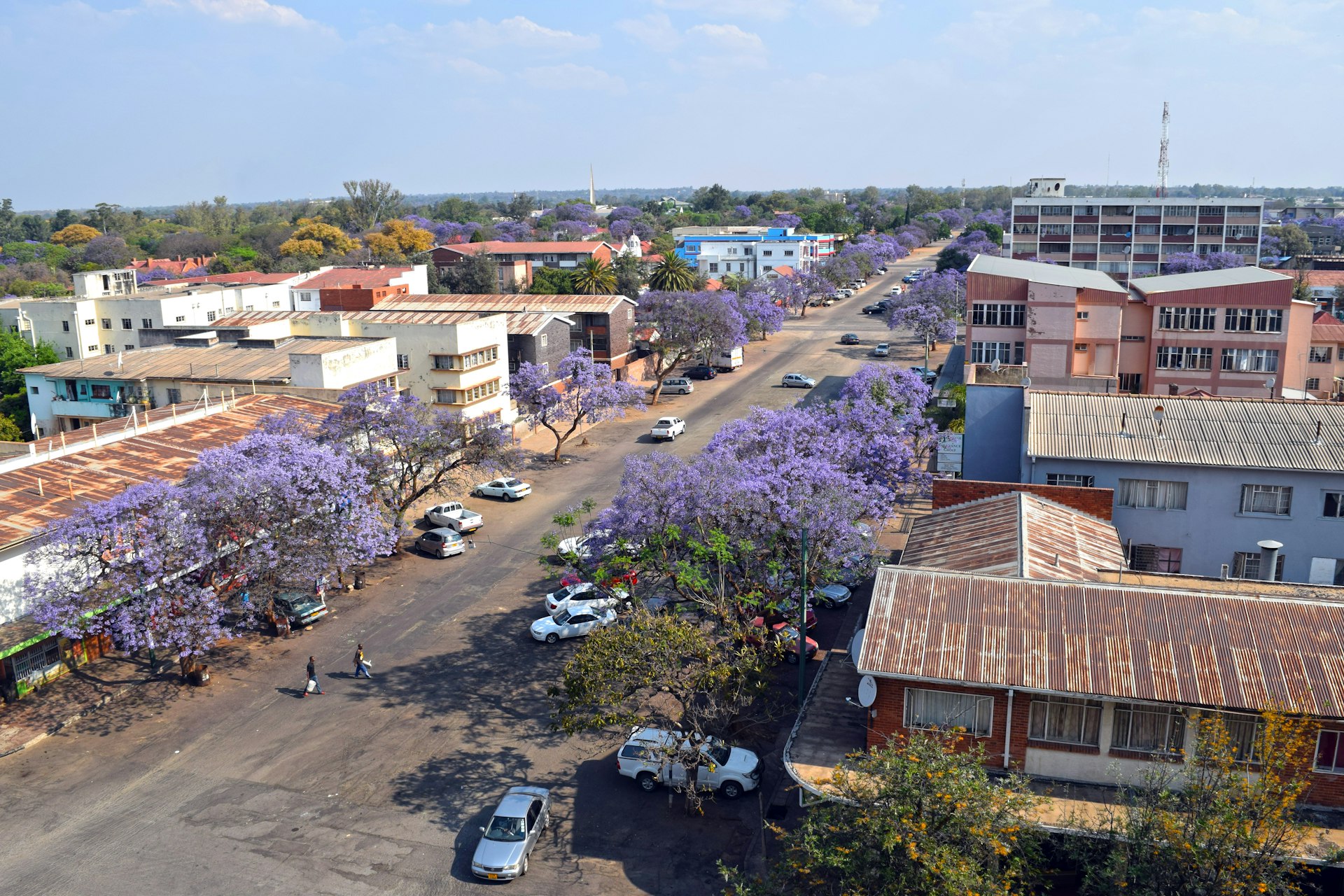
Photo by Omoniyi David on Unsplash
About Bulawayo
Bulawayo moves differently from Harare. The traffic is lighter, the pace more deliberate, and the wide colonial-era avenues, originally engineered broad enough to turn an ox-wagon, give the city centre an openness that feels more like a large provincial town than Zimbabwe's second-largest city. This is not a criticism. It is, for the traveller passing through, a genuine relief.
Founded in 1893 on the site of the former royal kraal of the Ndebele king Lobengula, KoBulawayo, "the place of slaughter," a reference to the political violence through which royal power was asserted and maintained, the city carries its history lightly but wears it everywhere. The Victorian commercial buildings of the central business district sit in the same streetscape as the institutions that document the civilizations the city was built upon: the Natural History Museum (the finest in Zimbabwe), the Railway Museum (a remarkably complete record of the Cape-to-Cairo colonial railway project), the National Art Gallery, and the Mzilikazi Arts and Crafts Centre. After independence in 1980 the colonial-era prefix was dropped; the city reclaimed the Ndebele name for the place that was, and remains, the cultural heartland of the Ndebele people.
For international travellers Bulawayo is primarily a logistical gateway, to the Matobo Hills, 34 kilometres south, and to Hwange and Victoria Falls via the direct Fastjet flight (Mon/Wed/Fri/Sun) that makes a clean southwestern Zimbabwe loop possible without doubling back through Harare. But to treat the city purely as a staging post is to miss something genuine. It has cultural depth, a functioning arts scene built around Shona stone sculpture and contemporary Zimbabwean painting, and a human scale that makes it one of the more enjoyable urban experiences in southern Africa. Two nights, one for the city and one as a Matobo day trip, or the full Matobo experience based in the hills themselves, is the right minimum.
Things to Do in Bulawayo
Visit the Natural History Museum of Zimbabwe
The finest museum in Zimbabwe and one of the better collections in southern Africa. Geology, paleontology, and an extensive mammal gallery that provides excellent context for safari travellers, alongside thoughtful coverage of pre-colonial cultures including the Ndebele kingdom and its relationship with surrounding Shona civilizations. Allow 2–3 hours.
Tour the Bulawayo Railway Museum
Operating since 1972, the railway museum documents Zimbabwe's industrial and colonial history through one of the most complete steam-locomotive collections in southern Africa, including engines dating to 1896 and the private carriage used by Cecil Rhodes. A compelling collection for travellers interested in the practical mechanics of colonial expansion rather than the abstractions.
See the Bulawayo National Art Gallery and Mzilikazi Arts Centre
The National Art Gallery (housed in a former town hall) anchors a city-wide arts scene focused on Zimbabwean contemporary art and traditional Shona stone sculpture. The Mzilikazi Arts and Crafts Centre is a working studio complex where potters, weavers, stone carvers, and batik artists work and sell in the same space, a far more interesting experience than a purely retail gallery.
Day-trip to the Matobo Hills
Bulawayo's primary draw lies 34 kilometres south. UNESCO-listed granite landscape, San rock art at Nswatugi and Bambata, foot-rhino tracking with armed scouts, and Cecil Rhodes' grave at World's View. A dedicated 2-night Matobo experience (based at Amalinda or Big Cave) is the more rewarding format, but a full day trip from Bulawayo is workable for tighter schedules.
Walk the Hillside Dams Conservancy
Within the city's southern suburbs, the Hillside Dams Conservancy offers a compact wildlife and walking experience without leaving the urban periphery. Two dams attract good birdlife and the surrounding granite kopje terrain is a miniature preview of the Matobo Hills landscape, an excellent early-morning walk before the day's main activities.
Game drive at Tshabalala Sanctuary
Just beyond the city's southern boundary, Tshabalala is a fenced conservancy with giraffe, zebra, wildebeest, impala, and various antelope species. Game drives, walking safaris, and horseback safaris are available, the latter being an unusually enjoyable way to cover the sanctuary's grassland terrain.
When to Visit Bulawayo
Cool Dry
May, August
The most comfortable window. Sunny days, cool to mild temperatures, no humidity, and the wide avenues at their most pleasant for walking. Mornings can be cold, pack a fleece. The same dry-season weather is ideal for Matobo Hills day-tripping.
Warm Dry
September, October
The shoulder window before the rains arrive. Days warm up significantly and afternoons can be hot, but mornings and evenings remain comfortable. A quieter month for visitor numbers; late October pre-empts the rains with bigger skies and sometimes dramatic storm light.
Rainy Season
November, March
The summer rains transform the surrounding granite and miombo landscapes, Matobo and the Tshabalala Sanctuary look their best, and the dwalas catch dramatic storm light. City visits are unaffected by occasional showers. Lower visitor numbers and significant accommodation reductions during this period.
Getting to Bulawayo
Joshua Mqabuko Nkomo International Airport (BUQ) receives daily Fastjet and Air Zimbabwe flights from Harare (about 1 hour) and a direct Fastjet service to Victoria Falls four times weekly, the operationally significant route that makes a Bulawayo–Matobo–Hwange–Victoria Falls loop possible without backtracking through Harare. By road from Harare, the A5 connects the two cities in 4.5–5 hours over 440 kilometres of reasonable tarred road; from Victoria Falls expect a similar time southeast through Hwange's eastern boundary. The overnight Harare–Bulawayo train is a classic, slow Zimbabwean experience for travellers who enjoy rail journeys as the experience itself.
Where to Stay
Bulawayo's accommodation is modest in scale but covers the spectrum. The Bulawayo Club, operating since 1895 and now accepting non-member guests, is the most characterful option in the city centre, dark wood, ceiling fans, veranda dining, time moving differently. Cresta Churchill Hotel is the reliable business-class central option. Nesbitt Castle is a quirky castle-themed guesthouse on the suburban edge that is more interesting than the description suggests. For travellers whose primary purpose is the hills rather than the city, Amalinda Lodge or Big Cave Camp inside the Matobo Hills area eliminates the daily 34km transfer and gives you more time in the landscape that matters most.
Travel Tips for Bulawayo
Frequently Asked Questions
- How does Bulawayo compare with Harare?
- Bulawayo is smaller, slower, more orderly, and easier to navigate than Harare. Harare has a richer restaurant scene and more weight as the country's commercial centre; Bulawayo has better museums, a more characterful colonial-era streetscape, and direct access to the Matobo Hills. Most international Zimbabwe trips include both, Harare for the international flight, Bulawayo for the cultural and Matobo content.
- How long should I spend in Bulawayo?
- One night for the city's museums and central sites if you're tight on time; two nights to combine the city with a Matobo day trip; three nights with the Matobo nights spent inside the hills is the most rewarding format. Travellers using the direct Fastjet flight to Victoria Falls typically structure a 2–3 night Matobo segment around it.
- Is the Bulawayo Club really worth staying at?
- If you respond to old colonial-era atmosphere and don't need contemporary international hotel standards, yes, it's one of the more characterful places to sleep in Zimbabwe. If you need 5-star international standards, Cresta Churchill or one of the Matobo lodges will suit better. The Club is best understood as accommodation as cultural experience rather than just a place to spend the night.
- Can I do Matobo as a day trip from Bulawayo?
- Yes, but it will feel rushed. The 34km transfer each way burns time, and rhino tracking and rock art visits both reward an unhurried pace. If you're tight on time the day trip is workable; if you have a choice, a 2-night stay inside the hills at Amalinda or Big Cave gives you dawn and dusk in the landscape, which is when it's at its best.
Explore More, Bulawayo
Things To Do
Plan Your Trip
More in Zimbabwe
Hwange National Park
Zimbabwe's largest national park and one of Africa's great elephant strongholds. Over 40,000 elephants roam Hwange's pump-fed waterholes alo…
Mana Pools National Park
A UNESCO World Heritage Site on the Zambezi floodplain where elephants stand on their hind legs to reach acacia branches and walking safaris…
Victoria Falls (Zimbabwe Side)
The Zimbabwe side of Victoria Falls offers the broadest panoramic views of all 1.7 kilometres of cascading water, across 16 viewpoints conne…
Great Zimbabwe
The largest stone structure in sub-Saharan Africa south of the pyramids. Built between the 11th and 15th centuries without mortar, Great Zim…
Matobo Hills
A UNESCO World Heritage landscape of impossibly balanced granite boulders, ancient San rock art, and one of the densest leopard populations …
Lake Kariba & Matusadona
An inland sea created by one of the world's largest dams, where elephants swim between islands and houseboats double as floating safari lodg…
Eastern Highlands
A 300-kilometre belt of cool, green mountain country running along Zimbabwe's border with Mozambique. Hiking, fly-fishing, endemic birds, an…
Gonarezhou National Park
Zimbabwe's most remote major wilderness, in the country's southeastern corner. Big-tusked elephants, the dramatic red sandstone Chilojo Clif…
Harare
Zimbabwe's leafy capital and primary international entry point. The National Gallery's Shona stone sculpture collection, accessible rock art…