
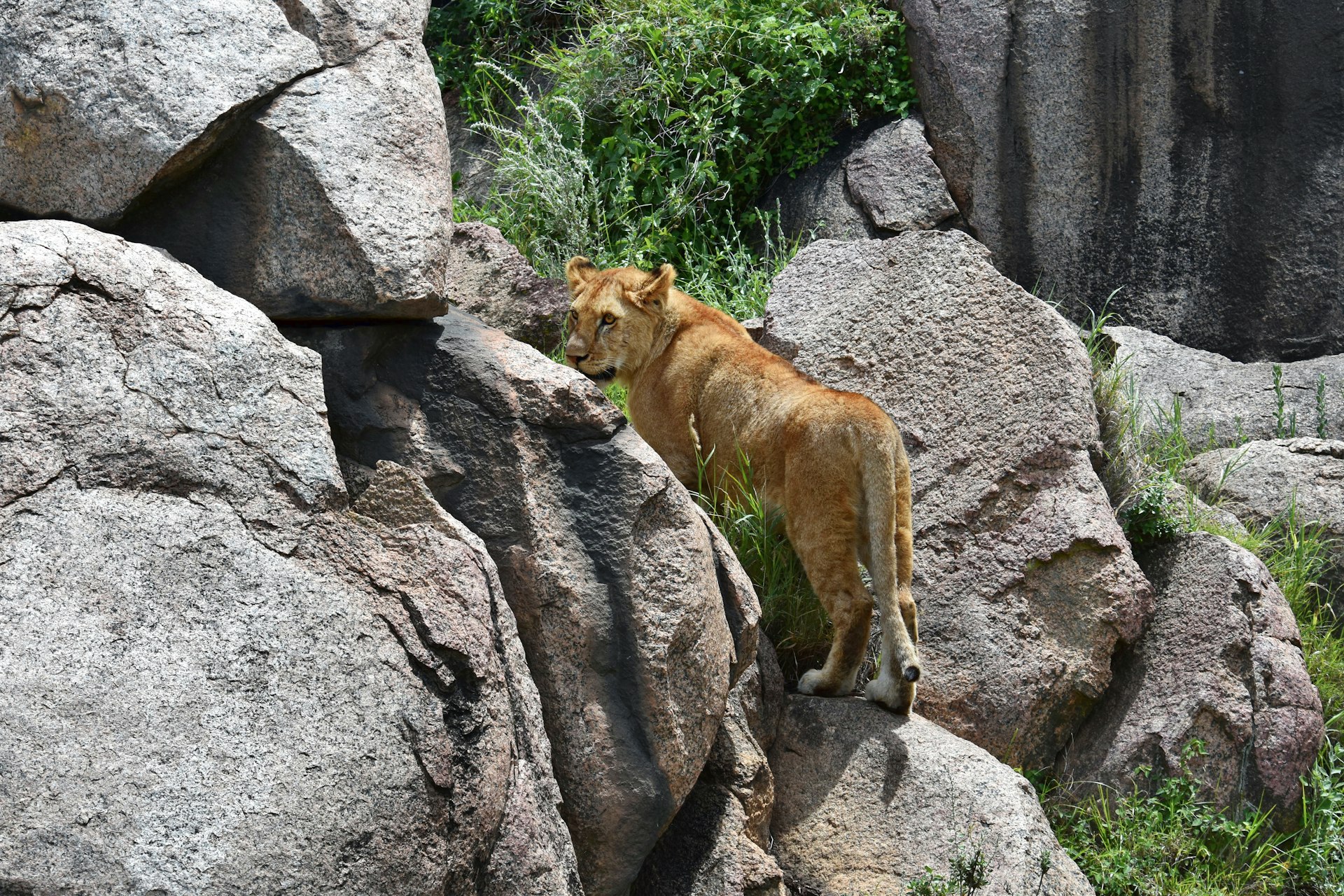
Majete Wildlife Reserve
Malawi's first Big Five reserve, rebuilt from complete depletion by African Parks since 2003. Lions, black rhinos, elephants, leopards, buffalo, and (since 2018) giraffes in a granite-hill landscape at the confluence of the Mkulumadzi and Shire rivers.
Africa's Greatest Conservation Comeback
Photo by Catherine Merlin on Unsplash
About Majete Wildlife Reserve
By the late 1990s, Majete Wildlife Reserve was empty. Not depleted, empty. Decades of commercial poaching had systematically removed every large mammal from a landscape that the ecosystem had sustained for millennia. What remained was the terrain, rugged granite hills, the dramatic convergence of the Mkulumadzi and Shire rivers, dense riverine forest, and the legal designation of a reserve that held, in practice, nothing worth protecting.
In 2003, African Parks assumed management. What followed is one of the most comprehensive and inspiring stories in contemporary African conservation. Over the next decade, 142 kilometres of electrified perimeter fencing were erected, anti-poaching infrastructure was rebuilt, law enforcement was overhauled, and over 2,500 animals were translocated into the reserve from across the region: lions, black rhinos, elephants, leopards, buffalo, sable antelope, eland, zebra. In 2012, Majete became Malawi's first and only Big Five reserve. In 2018, giraffes arrived, the first in the reserve's history. What visitors encounter today is not a curated wildlife display; it is an ecosystem in active, accelerating recovery, animals establishing territories in terrain that is learning, generation by generation, to be wild again.
Most wildlife reserves are managed to protect what remains of a pre-existing ecosystem. Majete was rebuilt from a baseline of zero, and that distinction shapes everything about the experience, the relationship between animal populations and terrain, the active presence of conservation staff, and the particular intensity of encountering a lion or black rhino in a landscape that, within living memory, had neither. The conservation narrative is not background context here; it is the primary story. Many lodge activities include explicit engagement with the programme: meeting the anti-poaching teams, understanding the monitoring systems, visiting the community projects that have transformed the relationship between the reserve and the 200,000 people living around it. Visiting Majete is participation, however brief, in one of the most serious ecological restoration projects in Africa.
Things to Do in Majete Wildlife Reserve
Game drive across Majete's varied terrain
The standard circuit covers granite kopje country in the central areas, riverine woodland along the Mkulumadzi and Shire, and open woodland plains where larger herds concentrate in the dry season. Lion sightings are increasingly reliable. Black rhino, monitored closely by dedicated rangers, are encountered with growing frequency. Giraffe, introduced in 2018, are now regularly encountered in the acacia woodland.
Walk the granite kopje terrain
The granite kopje country of Majete's central areas is well-suited to walking safaris, rocky outcrops and elevated ridgelines provide exceptional vantage points, the vegetation is varied, and the tracking conditions in the sandy paths between the kopjes are excellent. Half-day morning walks under experienced guide and armed ranger escort cover 5–10 kilometres in the cool early hours.
Visit the Mkulumadzi-Shire confluence
The convergence of the Mkulumadzi River and the massive Shire River at the reserve's southern boundary creates a dramatic visual backdrop and a productive wildlife corridor. The Shire within Majete supports hippo and crocodile populations, accessible by guided boat for a lower-intensity complement to the game drive programme. The Mkulumadzi gorge above the confluence is some of the most scenic terrain in the reserve.
Engage with the conservation programme
African Parks' community engagement programme around Majete is one of the most developed in southern Africa. Organised visits to local communities, accessing schools, health clinics, and agricultural projects funded by tourism revenue, provide a concrete illustration of the relationship between conservation success and community development. Ask your guide about the translocation, the community programme, and what the reserve looked like before 2003.
Track black rhino with rangers
Majete's black rhino population is small but growing. Encounters on game drives with ranger teams tracking individuals are increasingly common, and every sighting is significant given the species' status across the continent. The conservation philosophy of the reserve is most visible during these encounters.
Look for the new giraffes
Giraffe arrived in Majete in 2018, the first in the reserve's history, and have established themselves in the acacia woodland of the open plains. Their presence is a genuine surprise for first-time visitors who do not expect them, and the dramatic backdrop of granite hills behind a giraffe herd makes for distinctive photography.
When to Visit Majete Wildlife Reserve
Peak Season
July, October
The dry season delivers optimal game viewing, vegetation thins, water sources concentrate wildlife along the rivers, and tracks are accessible throughout the reserve. September and October are the most intense for wildlife activity and also the hottest. July and August offer more comfortable temperatures with excellent viewing.
Green Season
November, April
Majete operates year-round. The green season brings dramatic landscape transformation, excellent birding, and a quieter reserve. Roads in the granite terrain are largely maintainable in 4WD vehicles. The Lower Shire Valley remains warm; the river confluence stays visually spectacular through the rains.
Shoulder
May, June
The rains have receded, vegetation is starting to thin, and tracks reopen across the reserve. Pleasant temperatures, good visibility, and improving wildlife concentrations along the rivers. An excellent value window with most of the dry-season rewards.
Getting to Majete Wildlife Reserve
Majete is approximately 75km from Blantyre, a 1.5 to 2-hour drive via Chikwawa. The main road is tarred to Chikwawa; thereafter a good gravel road to the reserve entrance. A 4WD is advisable for internal park tracks. Chileka International Airport (BLZ) in Blantyre receives flights from Lilongwe and Johannesburg. Charter flights to a Majete bush airstrip can be arranged for guests staying at Mkulumadzi Lodge.
Where to Stay
Mkulumadzi Lodge is the premier property in Majete, operated in partnership with African Parks. Chalets are positioned dramatically above the rapids where the Mkulumadzi River meets the Shire, the most scenically spectacular lodge position in Malawi's safari circuit. Excellent guiding, genuine conservation engagement, and exceptional food. Booking here directly contributes to the reserve's management budget. Game Capture Campsite is the rustic, raised tented option for self-driving overlanders seeking a more budget-conscious experience.
Travel Tips for Majete Wildlife Reserve
Frequently Asked Questions
- Is Majete really a complete Big Five experience?
- Yes, with the caveat that wildlife densities are still building. All five species are present and reliably encountered, lions in growing prides, black rhino under careful monitoring, elephants in healthy herds along the rivers, leopards in the granite terrain, buffalo in significant herds. The conservation context makes the experience richer rather than diminished.
- What's the giraffe story?
- Giraffes were not historically present in this part of Malawi within recent memory. African Parks introduced them in 2018 as part of the reserve's broader rebuilding programme; the population has established successfully in the acacia woodland and is now reliably encountered. Their presence is one of the more visible signals of how active the recovery still is.
- Majete or Kruger?
- Different scales. Kruger is much larger and more developed, with reliable Big Five infrastructure and significant traffic. Majete is smaller, far less crowded, and its conservation comeback story is the differentiator. For travellers who want to feel that their safari fee directly funds active restoration, Majete is unique.
- How many days do I need?
- Two to three nights minimum at Mkulumadzi. Longer stays let you cover the granite terrain, the river confluence, and the community programme without rushing. Combining with Liwonde for a 5–6 night southern Malawi safari is the standard format for international visitors.
Explore More, Majete Wildlife Reserve
Things To Do
Plan Your Trip
More in Malawi
Lake Malawi
A 580-kilometre UNESCO-inscribed rift lake holding more fish species than any other lake on earth. Snorkelling and diving on Cape Maclear's …
Liwonde National Park
Malawi's premier Big Five safari, transformed by African Parks from a depleted reserve into a functioning ecosystem with rhino tracking, boa…
Nyika National Park
Malawi's largest park, 3,134 square kilometres of high-altitude montane grassland averaging 2,000 metres. Roan antelope, leopards, 213 orchi…
Mount Mulanje
A 3,002-metre granite massif rising abruptly from the tea estates of southern Malawi. Twenty distinct peaks, the critically endangered Mulan…
Lilongwe
Malawi's primary international entry point and a sprawling, low-rise capital with a wildlife sanctuary in its centre, an Old Town market tha…
Nkhotakota Wildlife Reserve
Malawi's largest reserve and the recipient of the largest wildlife translocation in African history, 500 elephants and 2,000 other animals m…
Likoma Island
A 17-square-kilometre Malawian sovereign island in the middle of Mozambican lake waters. St Peter's Cathedral, completed 1905, larger in foo…
Zomba Plateau
An 1,800-metre forested plateau above Malawi's former colonial capital. Hiking and mountain biking on the forestry trail network, escarpment…
Livingstonia & Chongoni
Two cultural anchors at opposite ends of the Malawian timeline. Livingstonia, a 19th-century Scottish missionary town perched 700 metres abo…