
Liwonde National Park
Malawi's premier Big Five safari, transformed by African Parks from a depleted reserve into a functioning ecosystem with rhino tracking, boat safaris on the Shire River, and elephant herds bathing within metres of the boat.
The Shire River Big Five Safari
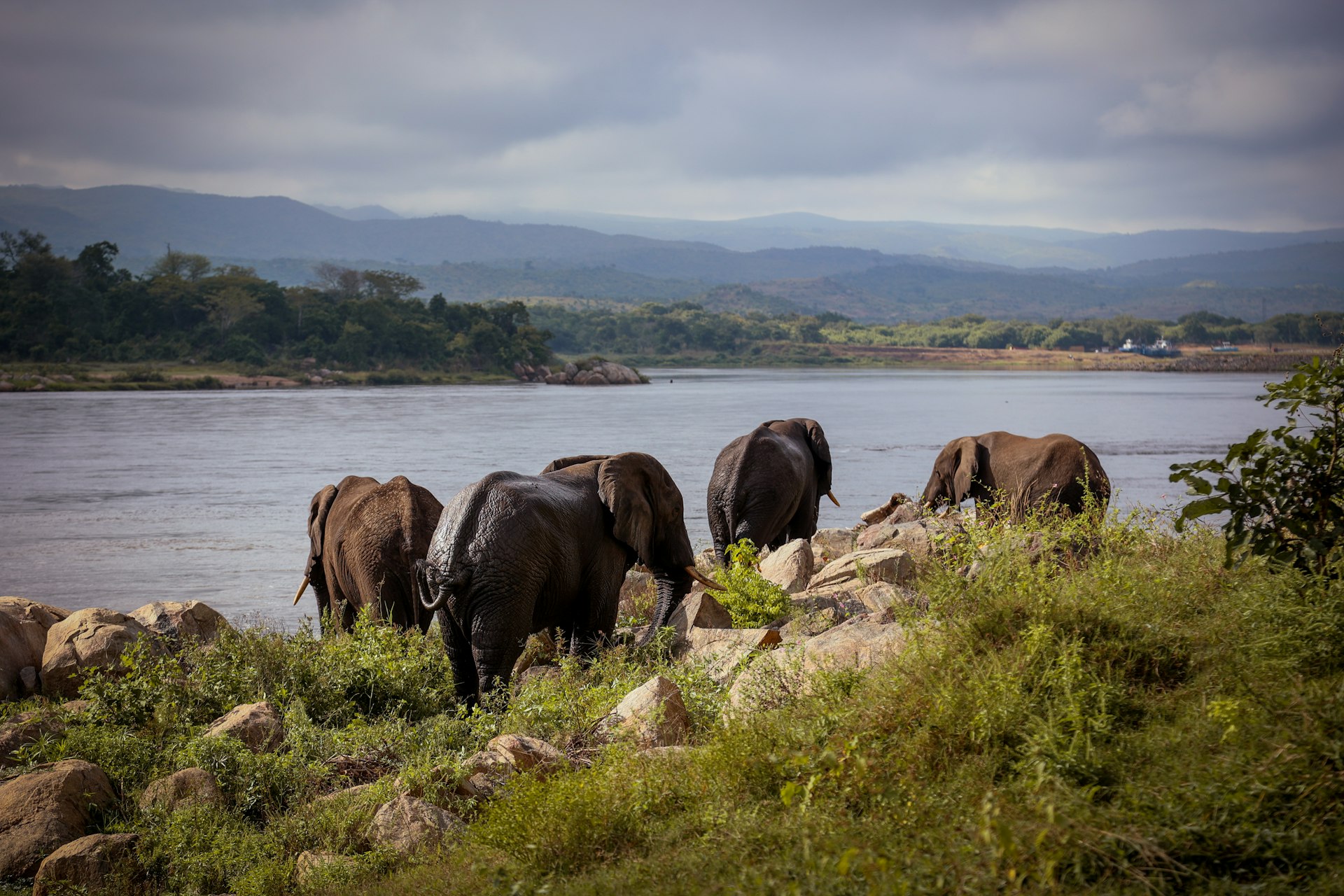
Photo by Ismail Abubakar on Unsplash
About Liwonde National Park
A decade ago, Liwonde was a cautionary tale, a reserve on paper, depleted in practice, where poaching had reduced wildlife to a shadow of what the Shire River ecosystem could support. Today it is Malawi's premier Big Five safari destination, managed by African Parks since 2015 with a conservation intensity that has produced one of the most dramatic wildlife recoveries on the continent. The turnaround is not merely statistical, it is visible. Black rhinos move through the mopane woodland in numbers that would have been unimaginable fifteen years ago. Cheetahs have been reintroduced and are establishing territories. Lions are heard from camps at night. And the elephants, always present in numbers on the Shire's banks, have become the defining image of a park whose recovery continues to accelerate year by year.
Liwonde's landscape is defined by the upper Shire River, which cuts through the park's western boundary and creates a corridor of dense riverine vegetation, raffia palms, winterthorn, ancient baobabs, transitioning into expansive mopane woodland and palm savannah inland. The river is not background scenery; it is the organising principle of the entire ecosystem, the water source that concentrates wildlife, the corridor for boat safaris, and the setting for some of the most intimate wildlife encounters in Malawi. Boat safaris on the Shire are what Liwonde does that nowhere else in Malawi replicates. From a flat-bottomed motorised boat you drift along the river at water level, below the height of the bankside vegetation, approaching animals that come to drink and bathe from a perspective no vehicle can achieve. Breeding herds of elephants bathing in the shallows show no concern for the quiet boat 30 metres offshore.
Beyond the boats, the park's most remarkable activity is rhino tracking on foot. Liwonde's reintroduced black rhino population can be tracked with specialist guides and anti-poaching rangers in a structured programme, conducted in silence, reading signs and following movements communicated by the monitoring team. The eventual approach to a black rhino on foot is conducted with the careful expertise of guides who know the specific individuals. Birding adds another dimension: 400+ species, four flagship rarities (Pel's fishing-owl, Lilian's lovebird, brown-breasted barbet, Böhm's bee-eater), and the chance of encountering all of them in a single intensive itinerary. Three to four nights covers Liwonde properly.
Things to Do in Liwonde National Park
Dawn boat safari on the Shire River
The defining Liwonde experience. A dawn departure puts the boat on the main river channel as the light builds, frequently the morning's best sightings as nocturnal animals make their last movements and the day's first hippos emerge. Elephant herds bathing in the shallows show no concern for the quiet boat 30 metres offshore.
Track black rhino on foot
Liwonde's reintroduced black rhino population can be tracked with specialist guides and anti-poaching rangers in a structured programme through Kuthengo Camp. The tracking is intense, conducted in silence; the eventual approach to a rhino on foot is conducted with the careful expertise of guides who know the specific individuals. Numbers per session are strictly limited, book this directly with Kuthengo well in advance.
Game drive the woodland and palm savannah
Vehicle-based drives cover the inland areas the boat safaris cannot access, mopane woodlands, palm savannahs, and seasonal drainage lines. These drives target lions (increasingly well-established), leopards, sable antelope, and the recovering cheetah population. Night drives in the private concession around Kuthengo Camp add the nocturnal dimension: civets, genets, African wild cats, and the chance of a leopard moving through the dark with a spotlight.
Walking safari away from the river
Guided walking safaris in Liwonde focus on areas where elephant and hippo density does not create unnecessary risk. The walks emphasise ecological literacy, reading spoor, identifying plants, understanding species relationships, and represent a genuinely different quality of engagement from the boat or vehicle experience.
Bird the four flagship rarities
Liwonde is one of Malawi's premier birdwatching destinations with 400+ species. Four draw dedicated ornithologists specifically: Pel's fishing-owl (large nocturnal owl roosting in riverside trees), brown-breasted barbet (localised), Lilian's lovebird (endemic to a narrow Malawi–Mozambique mopane range), and Böhm's bee-eater (riverine specialist).
Combine with Majete
The standard Malawi southern safari circuit pairs Liwonde (2–3 nights) with Majete (2–3 nights) for a complete Big Five experience across two complementary ecosystems. Both managed by African Parks; the guiding philosophy is consistent. Lake Malawi provides the natural third stop on a longer trip.
When to Visit Liwonde National Park
Peak Season
July, October
The dry season delivers the best boat safari conditions, clear water, predictable wildlife concentrations along the river, and comfortable temperatures for morning activities. September and October see the most intense aggregation along the Shire as inland water sources dry up. October can be extremely hot (35°C+); early-morning and late-afternoon activities are essential.
Green Season
November, April
Liwonde operates year-round; most camps maintain programming through the green season with modified scheduling. The riverine habitat retains its birdlife appeal throughout, and the green season brings dramatic landscape colour and the arrival of migratory bird species. Roads within the park are mostly maintained; some areas become wetter and trickier to access.
Shoulder
May, June
The roads dry out, the bush is still relatively green, and game viewing improves quickly. Cooler weather makes activities more comfortable than peak season. Excellent value with most of the dry-season rewards.
Getting to Liwonde National Park
Charter flights operate from Lilongwe and Blantyre to Liwonde airstrip, the most practical option, particularly for guests staying at Kuthengo Camp. Flight time is approximately 45–60 minutes from either city. By road, Liwonde is approximately 2 hours northeast of Blantyre via the M3, or 3.5 hours south of Lilongwe via the M1 and M3. A standard vehicle handles the main road; 4WD is advisable for internal park tracks in the wet season.
Where to Stay
Kuthengo Camp is the apex of Liwonde's accommodation, a small, exclusive tented camp on a riverine concession with exceptional guiding and direct access to the rhino tracking programme. Booking here directly funds the African Parks operation. Mvuu Lodge is a well-established, larger property at the confluence of the Liwonde Barrage and the Shire River, with stronger facilities than Kuthengo and a good option for families. Mvuu Camp serves the budget tier with basic chalets and camping access to the same boat safari infrastructure as the lodges.
Travel Tips for Liwonde National Park
Frequently Asked Questions
- Is Liwonde really a Big Five park?
- Yes, all five species are present and increasingly reliable to encounter. Black rhino under the dedicated tracking programme; lion in growing prides; elephant in healthy herds along the river; leopard in the woodland (less reliable but present); buffalo in significant herds. The park does not feel as dense as Kruger or Serengeti, but the experience is richer and far less crowded.
- How does Liwonde compare to Majete?
- Complementary rather than comparable. Liwonde's signature is the boat safari and the river ecosystem; Majete's is the granite-hill landscape and the giraffe (introduced in 2018). Both are African Parks success stories. The standard circuit does both with 2–3 nights at each.
- Can I see a leopard?
- Less reliably than at South Luangwa, but yes. Liwonde's leopard population is present across the woodland; night drives in the Kuthengo concession improve sighting frequency significantly. Most multi-night visits encounter at least one. Don't book the trip around it, the rhino tracking and boat safari are the more distinctive experiences.
- How many days do I need at Liwonde?
- Three to four nights minimum. Less than three risks missing the rhino tracking window or being weathered out of a key boat safari. Five nights gives you the full activity range with time to settle into the rhythm. Combining with Majete adds another three nights for a complete southern Malawi safari trip.
Explore More, Liwonde National Park
Things To Do
Plan Your Trip
More in Malawi
Lake Malawi
A 580-kilometre UNESCO-inscribed rift lake holding more fish species than any other lake on earth. Snorkelling and diving on Cape Maclear's …
Majete Wildlife Reserve
Malawi's first Big Five reserve, rebuilt from complete depletion by African Parks since 2003. Lions, black rhinos, elephants, leopards, buff…
Nyika National Park
Malawi's largest park, 3,134 square kilometres of high-altitude montane grassland averaging 2,000 metres. Roan antelope, leopards, 213 orchi…
Mount Mulanje
A 3,002-metre granite massif rising abruptly from the tea estates of southern Malawi. Twenty distinct peaks, the critically endangered Mulan…
Lilongwe
Malawi's primary international entry point and a sprawling, low-rise capital with a wildlife sanctuary in its centre, an Old Town market tha…
Nkhotakota Wildlife Reserve
Malawi's largest reserve and the recipient of the largest wildlife translocation in African history, 500 elephants and 2,000 other animals m…
Likoma Island
A 17-square-kilometre Malawian sovereign island in the middle of Mozambican lake waters. St Peter's Cathedral, completed 1905, larger in foo…
Zomba Plateau
An 1,800-metre forested plateau above Malawi's former colonial capital. Hiking and mountain biking on the forestry trail network, escarpment…
Livingstonia & Chongoni
Two cultural anchors at opposite ends of the Malawian timeline. Livingstonia, a 19th-century Scottish missionary town perched 700 metres abo…