
Livingstonia & Chongoni
Two cultural anchors at opposite ends of the Malawian timeline. Livingstonia, a 19th-century Scottish missionary town perched 700 metres above Lake Malawi on the Rift Valley escarpment, and the Chongoni Rock Art Area, a UNESCO site with 127 granite shelters of paintings spanning 2,000 years of continuous artistic tradition.
Cliff-edge Mission and UNESCO Rock Art
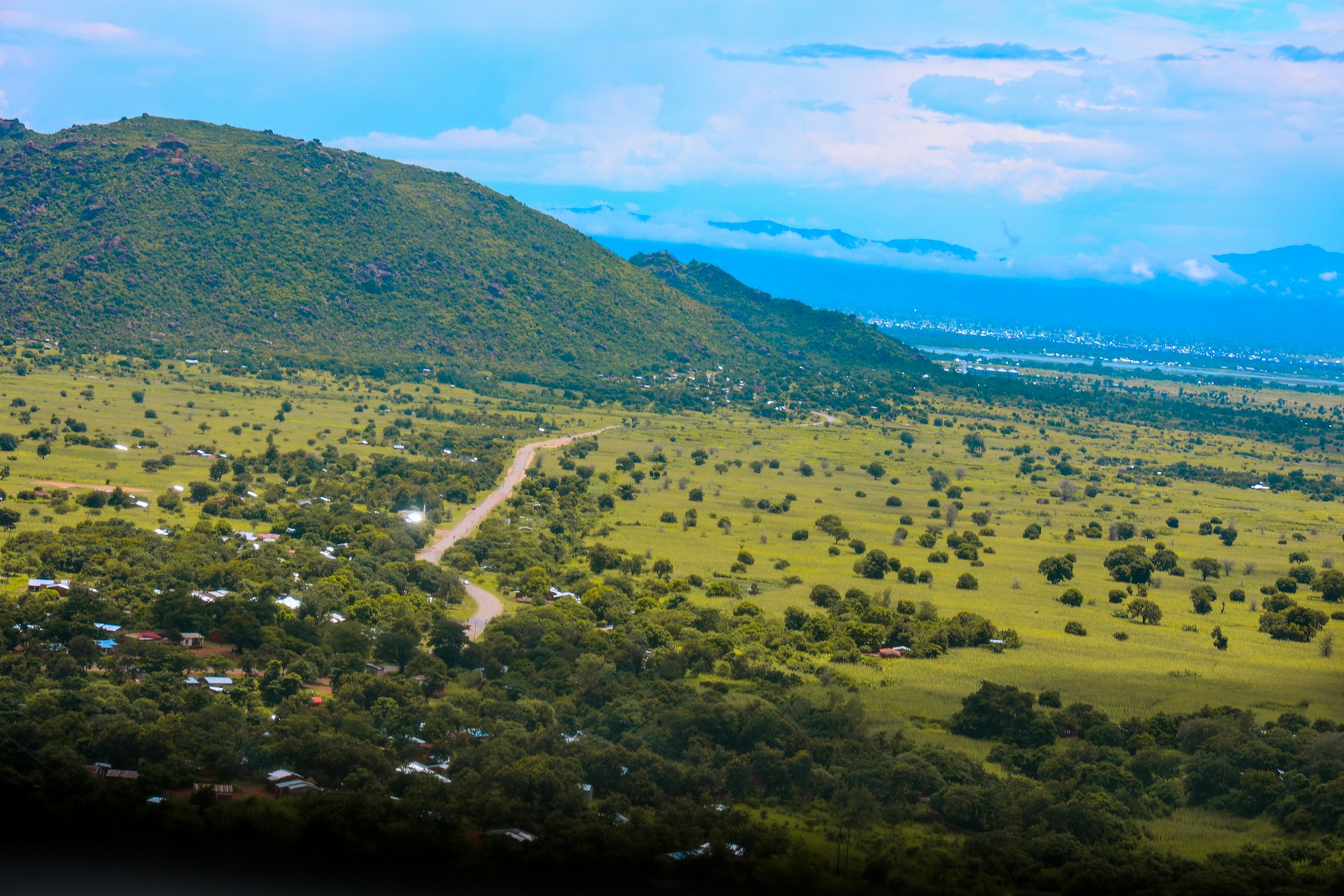
Photo by Ismail Abubakar on Unsplash
About Livingstonia & Chongoni
There are two experiences in Malawi that no amount of safari excellence or lake beauty replicates: standing on the escarpment at Livingstonia, 700 metres above the lake, at a town that exists because earlier settlements kept killing their inhabitants with malaria; and crouching in a granite shelter at Chongoni, in front of paintings made 2,000 years ago by people who are in no meaningful way less sophisticated than the civilization that would later come to "discover" them. Together, these two destinations provide the historical and cultural depth that completes the Malawi travel narrative, the human timeline stretching from ancient rock artists through Scottish missionaries to the independent nation that emerged in 1964.
Livingstonia was founded in 1894 by the Universities' Mission to Central Africa under Dr. Robert Laws, after malaria devastated earlier mission attempts at Cape Maclear and Bandawe. The solution was altitude. The town that exists today is a direct continuation of what was built then, a functioning community of approximately 2,000 people organised around the Livingstonia University, the hospital, and the Presbyterian church with its famous stained-glass window depicting David Livingstone kneeling in prayer. It functions as a living museum of colonial missionary enterprise without being museumified. Getting there is half the experience: from the lakeshore village of Chitimba, a notorious dirt road ascends the escarpment in 20 kilometres of steep switchbacks, 21 hairpin bends, some so tight that long-wheelbase vehicles need three-point turns. A capable 4WD in low-range is mandatory; the road is impassable for standard vehicles in wet conditions.
Chongoni Rock Art Area, in the granite hills near Dedza south of Lilongwe, encompasses 127 granite rock shelters and caves containing some of the most significant prehistoric rock art in central Africa, designated UNESCO in 2006 in recognition of an exceptionally dense concentration of paintings produced by BaTwa hunter-gatherers and Chewa farmers across 2,000 years of continuous artistic activity. The paintings document girls' initiation ceremonies, rainmaking rituals, and funeral traditions whose spiritual descendants still live in the surrounding area. When a guide explains that the white finger-painting technique visible in the 2,000-year-old art is the same technique used in contemporary chinamwali ceremonies, the paintings stop being archaeological artefacts and become documents of cultural continuity. The site receives very few visitors. There is no visitor centre, no café, no gift shop. You walk to the shelters with a local guide and sit in the same granite shade where the artists sat.
Things to Do in Livingstonia & Chongoni
Climb the Livingstonia escarpment
From Chitimba on the lakeshore, the escarpment road ascends 700 metres over 20 kilometres in 21 hairpin switchbacks, a dramatic and demanding 4WD route with extraordinary views back over Lake Malawi and the Rift Valley floor. The ascent takes 45 minutes to 1.5 hours depending on conditions. The journey is part of the destination. Many visitors prefer to ascend by road and descend on foot via the Manchewe Falls trail.
Visit the Stone House Museum
Dr. Robert Laws' original residence, maintained as a small but informative museum documenting the mission's history, the medical and educational work, and the lives of the missionaries who built and lived here. The most direct way to engage with the human history of the town's founding.
Attend a service at Livingstonia Church
The Presbyterian church at the town's centre, with the celebrated stained-glass window depicting Livingstone kneeling in prayer. The window's craftsmanship and its incongruous presence in this remote highland settlement create a quality of disorientation similar to Likoma's cathedral. Still in active use for Sunday services; the acoustic in the stone nave is exceptional.
Hike Manchewe Falls
The alternative ascent, a 3–4 hour hike from Chitimba that passes Manchewe Falls (a single dramatic plunge over the escarpment edge) before arriving at Livingstonia from below. The more dramatic and more memorable approach. Most visitors ascend by road and descend on foot via this trail the following morning.
Tour Chongoni Rock Art with a local guide
A half-day visit to multiple granite shelters in the hills south of Dedza, with a knowledgeable local guide who can explain the ceremonial significance of the paintings, the connection between 2,000-year-old art and contemporary chinamwali, rainmaking, and funeral traditions still practised by the surrounding Chewa community. The guide is the most important decision; ask the Dedza Pottery centre for a recommendation.
Visit Dedza Pottery
Adjacent to the Chongoni rock-art area, the Dedza Pottery centre is one of Malawi's finest craft institutions, a working pottery combining traditional African decorative motifs with modern utility, producing ceramics sold both locally and internationally. Watch production, purchase directly from the kiln, and arrange your Chongoni guide here. An excellent morning stop before or after the rock-art visit.
When to Visit Livingstonia & Chongoni
Dry Season
May, October
The only practical window for the Livingstonia escarpment road, the steep switchback ascent is dangerous and frequently impassable in wet conditions. Cool to warm days, cold nights at Livingstonia's altitude (the Mushroom Farm cliff-edge terrace can drop to 10°C). Chongoni is accessible year-round but at its most pleasant in the dry-cool months.
Late Dry
September, October
Warmer days but still dry. The Livingstonia road remains passable. Chongoni is hot at midday, start early. The escarpment views from Mushroom Farm sharpen with the pre-rain clarity.
Wet Season
November, April
The Livingstonia escarpment road becomes impassable for periods. Chongoni remains accessible (the rock shelters provide their own weather protection). Avoid attempting Livingstonia in heavy rain, the dirt switchbacks have caused accidents and the descent is more dangerous than the ascent.
Getting to Livingstonia & Chongoni
Chongoni is approximately 90km south of Lilongwe, a 1.5-hour drive to Dedza, easily combined with Dedza Pottery as a full-day excursion from the capital. Livingstonia requires a dedicated 2–3 night trip to the north, integrating naturally into a northern Malawi loop with the Viphya Plateau, Nkhata Bay lakeshore, and Nyika National Park. The escarpment road from Chitimba is the practical access; the alternative is the Manchewe Falls trail on foot. From Lilongwe to Livingstonia is a long day's drive (8–9 hours), most travellers break the journey at Mzuzu or Nkhata Bay.
Where to Stay
At Livingstonia, the Mushroom Farm Eco Lodge is the definitive staging post, positioned on the very cliff edge of the escarpment, with vertiginous views, intense sustainability commitment, and widely praised vegetarian gastronomy. Staying here, with the Rift Valley floor 700 metres below and Lake Malawi silver in the morning light, is one of the great Malawi accommodation experiences. At Chongoni, accommodation is in Dedza town, modest guesthouses and the Dedza Pottery's own small lodgings, or as a day trip from Lilongwe. The rock-art area itself does not have visitor accommodation.
Travel Tips for Livingstonia & Chongoni
Frequently Asked Questions
- Are Livingstonia and Chongoni really day-trip-able?
- Chongoni: yes, easily, as a day trip from Lilongwe via Dedza. Livingstonia: no, the escarpment road and the experience itself require a minimum of one night, ideally two, at Mushroom Farm. Combining both in a single trip means treating them as separate northern and central excursions rather than as a paired itinerary.
- Is Mushroom Farm worth the journey alone?
- For the right traveller, yes. The cliff-edge position, the sustainability commitment, the vegetarian food, and the sunset over the Rift Valley combine into one of the most distinctive accommodation experiences in Malawi. It anchors a Livingstonia visit but is also part of why the visit is worth making.
- How does Chongoni compare to other African rock art?
- Less visually spectacular than the Drakensberg or Tassili n'Ajjer, but more culturally continuous. The Chongoni paintings are still part of a living tradition, the same techniques, symbols, and ceremonial contexts are used in contemporary Chewa practice. For travellers interested in the connection between archaeological art and current culture, Chongoni is one of the most significant rock-art sites in Africa.
- Can I combine Livingstonia with Nyika and the Viphya?
- Yes, they form the natural northern Malawi circuit. Mzuzu as the gateway, then Nkhata Bay (or the Viphya Plateau), Livingstonia, and Nyika in some order, depending on routing. Allow 7–10 days for the full northern loop. This is the most rewarding way to experience these culturally and ecologically distinct destinations.
Explore More, Livingstonia & Chongoni
More in Malawi
Lake Malawi
A 580-kilometre UNESCO-inscribed rift lake holding more fish species than any other lake on earth. Snorkelling and diving on Cape Maclear's …
Liwonde National Park
Malawi's premier Big Five safari, transformed by African Parks from a depleted reserve into a functioning ecosystem with rhino tracking, boa…
Majete Wildlife Reserve
Malawi's first Big Five reserve, rebuilt from complete depletion by African Parks since 2003. Lions, black rhinos, elephants, leopards, buff…
Nyika National Park
Malawi's largest park, 3,134 square kilometres of high-altitude montane grassland averaging 2,000 metres. Roan antelope, leopards, 213 orchi…
Mount Mulanje
A 3,002-metre granite massif rising abruptly from the tea estates of southern Malawi. Twenty distinct peaks, the critically endangered Mulan…
Lilongwe
Malawi's primary international entry point and a sprawling, low-rise capital with a wildlife sanctuary in its centre, an Old Town market tha…
Nkhotakota Wildlife Reserve
Malawi's largest reserve and the recipient of the largest wildlife translocation in African history, 500 elephants and 2,000 other animals m…
Likoma Island
A 17-square-kilometre Malawian sovereign island in the middle of Mozambican lake waters. St Peter's Cathedral, completed 1905, larger in foo…
Zomba Plateau
An 1,800-metre forested plateau above Malawi's former colonial capital. Hiking and mountain biking on the forestry trail network, escarpment…