
Thaba-Bosiu
The flat-topped sandstone mesa where King Moshoeshoe I founded the Basotho nation in the 1820s and successfully defended it against Zulu, Ndebele, Boer, and British attacks. Royal burial ground and spiritual anchor of modern Lesotho.
The Mountain That Founded a Nation
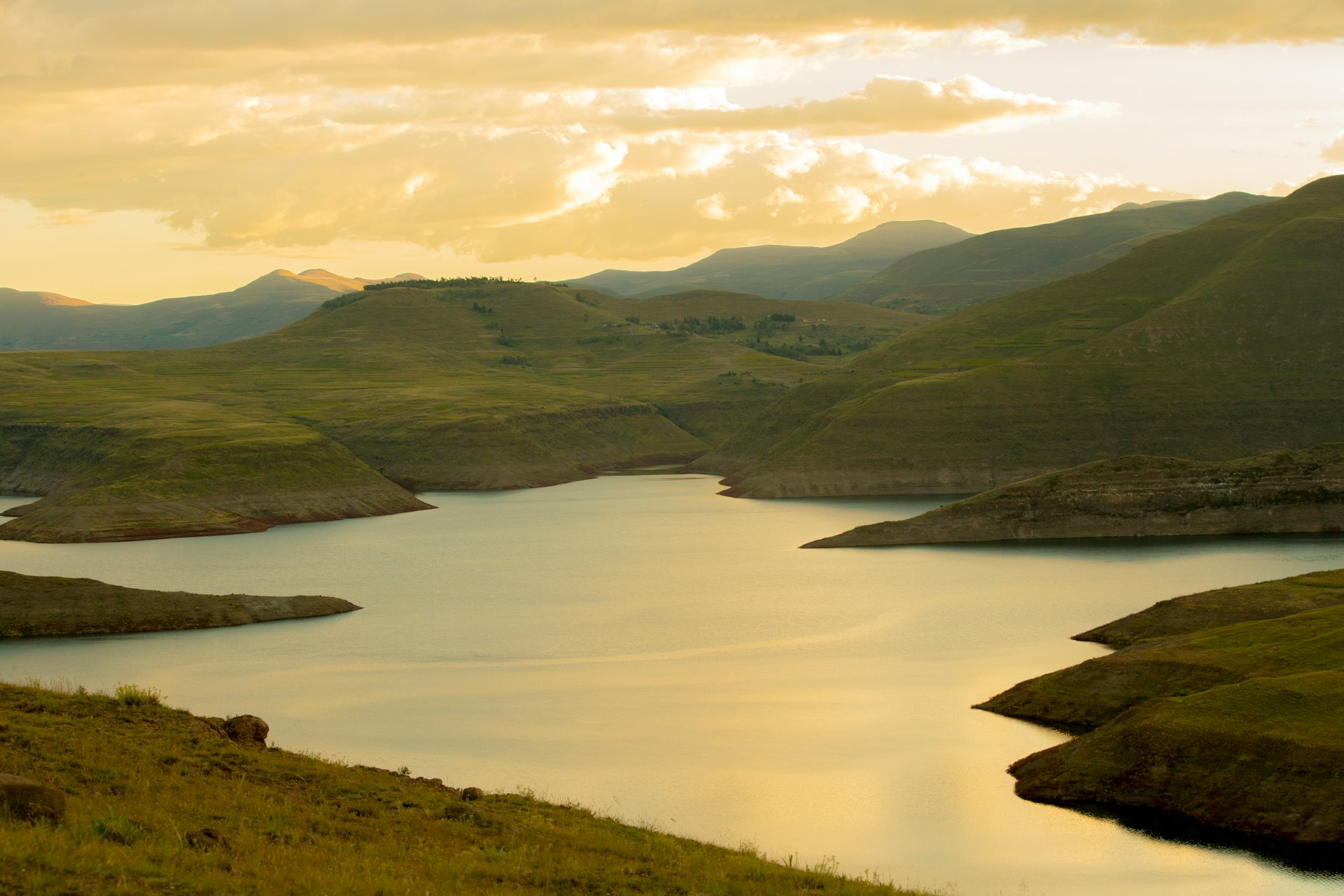
Photo by Tatenda Mapigoti on Unsplash
About Thaba-Bosiu
Twenty-four kilometres from Maseru, a flat-topped sandstone mesa rises from the surrounding lowlands. Its Sesotho name means "Mountain That Grows at Night", a reference to the supernatural quality its sheer, impregnable cliffs seemed to possess during the sieges of the early 19th century, when the mesa appeared to grow larger and more formidable as attackers approached in darkness. This is Thaba-Bosiu: the strategic refuge, the founding citadel, and the spiritual anchor of the Basotho nation.
In the chaotic, violent lifaqane period of the 1820s, when the wars and migrations triggered by the Zulu expansion under Shaka were displacing, consuming, and destroying peoples across southern Africa, King Moshoeshoe I chose this mesa as his mountain fortress. From its summit, defended by the natural barrier of sheer cliffs accessible only through narrow, defensible passes, he repelled successive attacks: Zulu impis, Ndebele warriors, Boer settlers, British colonial forces. The nation that exists today was forged in those defences. Moshoeshoe navigated the period with a combination of military resourcefulness, diplomatic genius, and a specific tactical insight: high ground was survival. The defences held. Repeated sieges failed. And the nation that emerged retained its political coherence through colonial pressure that absorbed all of its neighbours, eventually becoming the independent Kingdom of Lesotho in 1966.
No other site in Lesotho carries this weight of historical significance. Thaba-Bosiu is the foundational act of Basotho political identity, the point at which a people chose sovereignty over assimilation, and held it. Moshoeshoe I is buried on the summit he defended; so are subsequent kings. It remains the royal burial ground of the Basotho monarchy. Access to the summit is strictly controlled and requires a mandatory local guide, appropriate, given the sacred status, and the oral history delivered by trained guides is the primary content of the visit. The ascent climbs through one of the original defensive passes; the summit holds the ruins of Moshoeshoe's village and the enclosed royal burial ground. From the access road, the basalt pinnacle of Mount Qiloane to the northeast, the direct inspiration for the Mokorotlo hat on Lesotho's national flag, is visible, completing a symbolic landscape that maps directly onto the country's identity.
Things to Do in Thaba-Bosiu
Climb the summit with a guide
Mandatory guided ascent through one of the original defensive passes, narrow, steep, and still imposing as a defensive feature, emerging on the flat summit plateau. Ruins of Moshoeshoe's original village and the enclosed royal burial ground occupy the centre. Guides deliver the history with a passion and specificity that transforms the site from a pile of ruins into a living narrative.
Photograph Mount Qiloane
From the summit and the access road, the basalt pinnacle of Mount Qiloane is visible to the northeast, a perfectly conical rock tower that was the direct inspiration for the Mokorotlo hat on Lesotho's national flag. Looking at Mount Qiloane and then at a Mokorotlo is one of those moments where a culture's symbolic vocabulary becomes immediately legible.
Visit the Thaba Bosiu Cultural Village
At the base of the mountain, the cultural village offers educational tours covering Basotho traditional architecture, crafts, food, and ceremonial culture. Traditional meals are available, and craft demonstrations provide context for the material culture that the summit's history explains. A useful complement for travellers wanting broader cultural grounding.
Combine with Morija
The 40km drive from Thaba-Bosiu to Morija's museum and archives creates a coherent cultural day, the founding military event at Thaba-Bosiu, the educational and artistic institutions at Morija, providing a thorough introduction to Basotho cultural history.
Engage with the oral history
This site's content is almost entirely in the oral history. A visitor who listens carefully will leave with a completely different understanding of Lesotho and southern African history than one who merely walks up and looks at ruins. The story of the lifaqane, the specific sieges, and the tactical brilliance of the defence are told as personal history because for the Basotho guides it is.
Buy a Mokorotlo at the cultural village
The traditional grass-woven hat is sold at the cultural village, directly from the makers, with regional and family pattern variations explained by the staff. Understanding the geometric link between Mount Qiloane and the hat transforms the purchase from souvenir into something layered with meaning.
When to Visit Thaba-Bosiu
Cool Dry
April, September
The most pleasant window for the summit ascent. Mild days, cool evenings, dry conditions, and clear views across the surrounding landscape. The mesa is at its most photogenic in low-angle morning or late-afternoon light.
Warm
October, November
Warmer days but still dry and pleasant for hiking. Spring brings green to the surrounding lowlands and the Mount Qiloane silhouette is at its most distinctive against the recovering grassland.
Summer Storms
December, March
The summer rains bring afternoon thunderstorms and dramatic skies. The mesa is fully accessible but exposed; lightning risk demands early starts. The cultural village programme operates year-round and is largely unaffected by weather.
Getting to Thaba-Bosiu
From Maseru is 24km east on a well-maintained tarred road, approximately 30–40 minutes from central Maseru. Standard vehicles are entirely adequate. The site is well signposted from the main road. Thaba-Bosiu is Maseru's most compelling day excursion, close enough to visit in a half-day, significant enough to justify a full day when combined with the Cultural Village and the Morija circuit.
Where to Stay
Most visitors stay in Maseru and visit Thaba-Bosiu as a day excursion, the 30–40 minute drive each way fits easily into a half- or full-day itinerary. Avani Lesotho Hotel and other Maseru properties serve as the natural base. The Thaba Bosiu Cultural Village area itself does not offer accommodation; the Botleng Guest House at nearby Ha Kome is an alternative for travellers wanting to combine sites without returning to the capital.
Travel Tips for Thaba-Bosiu
Frequently Asked Questions
- Why is a guide mandatory?
- Two reasons: the summit is a sacred royal burial ground requiring respectful navigation, and the site's significance is almost entirely in the oral history that trained guides deliver. Independent visits would miss the entire content of the place. The guide system is appropriate, not bureaucratic obstruction.
- How does Thaba-Bosiu compare to other African historical sites?
- Closest in spirit to Great Zimbabwe, both are founding sites of pre-colonial African polities that resisted assimilation. Thaba-Bosiu is more recent (19th-century rather than medieval) and the oral tradition remains stronger because the political continuity has been unbroken, Moshoeshoe's lineage still occupies the throne.
- Can I do this as a half-day from Maseru?
- Yes. Half a day covers the summit ascent and a quick cultural village visit. A full day allows time for both, plus a meal at the cultural village and the drive to Morija for the museum. The full-day format gets significantly more out of the cultural circuit.
- Are there active royal events at the site?
- Yes, the burial ground is in active use for state occasions and royal funerals. Visitors should expect occasional access restrictions during ceremonies; the site managers communicate these clearly. Witnessing a royal event from a respectful distance, if it coincides with your visit, is a privilege rather than an inconvenience.
Explore More, Thaba-Bosiu
Things To Do
Plan Your Trip
More in Lesotho
Maletsunyane Falls & Semonkong
A 192-metre uninterrupted plunge into a basalt gorge in central Lesotho, the tallest single-drop waterfall in southern Africa, and host to t…
Sehlabathebe National Park
Lesotho's oldest park and part of the UNESCO Maloti-Drakensberg Transfrontier site. Sandstone monoliths, natural rock arches, 65+ San rock a…
Afriski Mountain Resort
Africa's only fully functional ski resort, in the Maluti Mountains of northern Lesotho. Genuine slopes from late June to August, mountain bi…
Katse Dam
A 185-metre double-curvature arch dam at the heart of the Lesotho Highlands Water Project, holding back 1.95 billion cubic metres in a flood…
Sani Pass
The most famous 4x4 mountain pass in southern Africa, 8 kilometres of severe switchbacks ascending from KwaZulu-Natal to 2,865 metres on the…
Ts'ehlanyane National Park
A rare patch of indigenous Afromontane forest preserved in a sheltered valley of the front-range Maluti Mountains. Multi-day treks to Afrisk…
Malealea Valley
Lesotho's premier hub for community-based tourism and Basotho pony trekking. Multi-day treks reach hidden waterfalls, San rock art galleries…
Morija & Ha Kome
Lesotho's cultural and intellectual capital, site of the country's oldest standing building (1833), 200-million-year-old dinosaur footprints…
Maseru & the Highlands Circular Route
Lesotho's capital city and primary entry point, plus the spectacular Highlands Circular Route, some of the highest surfaced roads in souther…