
Maseru & the Highlands Circular Route
Lesotho's capital city and primary entry point, plus the spectacular Highlands Circular Route, some of the highest surfaced roads in southern Africa, crossing 3,090m at the Mafika Lisiu Pass and looping past Bokong's freezing falls and the Liphofung rock overhang.
The Capital and the Great Highland Drive
Photo by Tatenda Mapigoti on Unsplash
About Maseru & the Highlands Circular Route
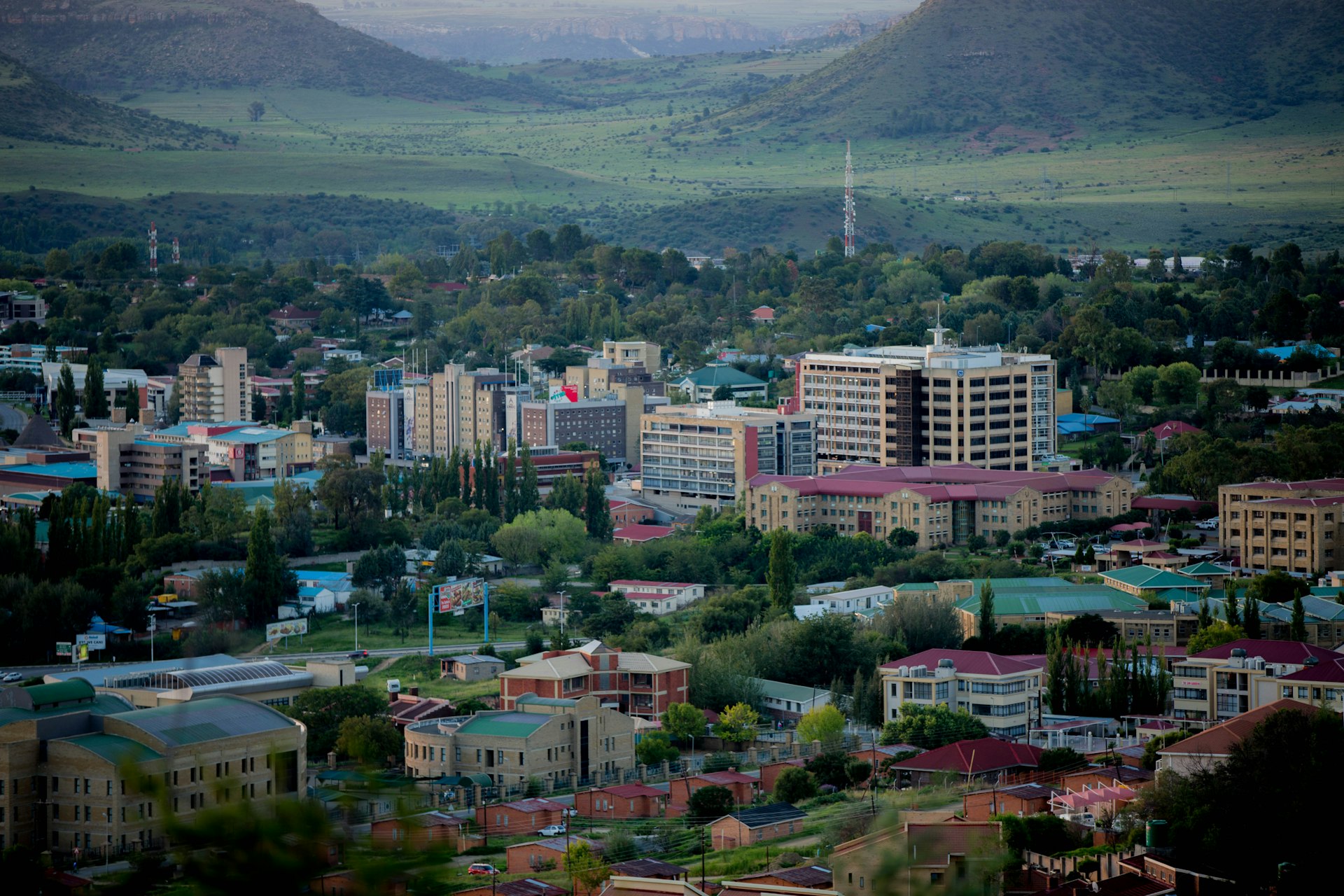
Maseru is the unavoidable first chapter of any Lesotho journey. It is the capital city, the main border crossing from South Africa, the location of the international airport, the country's commercial centre, and the place where every highland expedition begins and most end. It is also, for a capital city that sees a fraction of the visitor numbers of comparable southern African cities, a genuinely underestimated urban environment, not a highlight in itself, but more than the pure transit point that rushed itineraries reduce it to.
The visual anchor of central Maseru is the Basotho Hat building, a large commercial structure built in the form of the traditional woven Mokorotlo, the national symbol that appears on the country's flag. Inside, a cooperative craft market sells authentic grass-woven hats, wool blankets, woven tapestries, and wooden carvings. Pioneer Mall handles the practical needs of international visitors: currency exchange, ATMs, pharmacy, international retail. Kick4Life F.C., a professional football club operating as a social development centre for vulnerable young people, runs a restaurant worth visiting both for the food and as a demonstration of integrated sport-and-social-impact work in southern Africa.
Departing Maseru northward, the Highlands Circular Route uses some of the highest surfaced roads in southern Africa to cross the Maluti mountain range, constructed initially to service the Lesotho Highlands Water Project infrastructure and now providing civilian access to a highland interior previously reachable only on foot or horseback. The route's centrepiece is the Mafika Lisiu Pass at 3,090 metres, a tarred road of steep switchbacks and exposed ridge-line driving with views across the Pitseng Valley and the highland plateau. In spring (September–October), the Pitseng Valley below the pass turns pink with thousands of wild and cultivated peach blossoms, a spectacle of considerable unexpectedness in a highland environment more typically associated with austere basalt and brown grassland. Bokong Nature Reserve's Lepaqoa Falls drops 60 metres into a gorge; in winter (June–August) it frequently freezes into a solid column of ice. Liphofung Nature Reserve protects a rock overhang used by Moshoeshoe I in his formative years before the establishment of Thaba-Bosiu. The full circuit can be done as a long day or, more rewardingly, as a two-day loop with an overnight at Bokong or Katse Dam.
Things to Do in Maseru & the Highlands Circular Route
Drive the Mafika Lisiu Pass
The route's dramatic centrepiece, ascending to 3,090 metres above sea level on a tarred road of steep switchbacks and exposed ridge-line driving. Views from the summit across the Pitseng Valley and the highland plateau are among the most expansive in Lesotho. Drive in the morning before afternoon haze builds.
See the Bokong Falls (frozen in winter)
The Lepaqoa Falls in Bokong Nature Reserve drop 60 metres into a gorge. In summer (November–March), the falls run at full volume, a significant cascade in a scenic gorge. In winter (June–August), the falls frequently freeze, transforming into a solid column of ice hanging from the cliff edge, one of the more extraordinary natural phenomena in the Lesotho highlands.
Visit Liphofung Nature Reserve
Lesotho's smallest national reserve protects a rock overhang of significant historical importance, a shelter used by Moshoeshoe I during his formative years before Thaba-Bosiu. A short, accessible hike through highland grassland reaches the overhang and its interpretive site. Self-catering accommodation is available within the reserve. Two to three hours including the hike.
Buy a Mokorotlo at the Basotho Hat Building
Central Maseru's iconic commercial structure, built in the form of the traditional woven Mokorotlo hat, houses a cooperative craft market selling authentic grass-woven hats, wool blankets, woven tapestries, and wooden carvings. The best single location in the capital for purchasing genuine Basotho crafts directly from producers.
Eat at Kick4Life F.C.
Lesotho's most remarkable social enterprise, a professional football club operating with a dedicated social development centre providing vocational training, health education, and youth support. The restaurant and social space serves food while operating as a visible demonstration of the organisation's impact. Worth a lunch or evening meal for travellers interested in sport, social enterprise, and community development.
Time the Pitseng peach blossom
In September–October, the valley below the Mafika Lisiu Pass turns pink with the blossom of thousands of wild and cultivated peach trees. The contrast between the austere highland setting and the soft pink valley below is unexpected and photographically extraordinary. The window is short, a 2–3 week peak.
When to Visit Maseru & the Highlands Circular Route
Cool Dry
April, September
The most reliable window for the Highlands Circular Route. Clear morning visibility, dry tarred surface across the passes, and stable conditions. June–August can carry snow on the higher passes, the Mafika Lisiu can require winter tyres or chains after heavy snowfall, but the views are spectacular. Bokong's frozen falls is a winter-specific phenomenon.
Spring Blossom
September, October
The Pitseng Valley below the Mafika Lisiu Pass turns pink with wild peach blossom, a spectacle of considerable unexpectedness. Warming temperatures, settled weather before the rains, and the highlands at their most visually transitional. An optimal window for first-time visitors.
Summer Storms
November, March
Summer rains bring afternoon thunderstorms across the highlands. The tarred routes remain passable but visibility deteriorates rapidly when storms arrive. Lightning risk on the exposed Mafika Lisiu summit demands early starts. Bokong Falls runs at maximum volume.
Getting to Maseru & the Highlands Circular Route
Maseru Bridge is the primary border crossing from South Africa, open 24 hours, connecting to South Africa's Free State province. Moshoeshoe I International Airport handles domestic connections and regional charters. From Johannesburg expect a 4-hour drive via Bloemfontein and Maseru Bridge. The Highlands Circular Route departs Maseru northward, the full circuit (Maseru → Mafika Lisiu → Bokong → Liphofung → Katse Dam → return) covers significant distance with mountain driving and is achievable as a long single day (departing 07:00, returning by evening) or more rewardingly as a two-day version with an overnight at Bokong or Katse Dam.
Where to Stay
Avani Lesotho Hotel & Casino is Maseru's leading international property, standardised corporate hospitality with reliable wifi, secure parking, and a casino. The benchmark urban address for business and transit guests. Avani Maseru Hotel is the secondary Avani property with comparable standards and slightly more central positioning. Chabza's Villa and City Stay West are highly rated Airbnb-style guesthouses offering modern comforts at significantly lower price points, good options for independent travellers comfortable with a more local urban experience. Two nights minimum in Maseru if combining the city with a Highlands Circular Route day.
Travel Tips for Maseru & the Highlands Circular Route
Frequently Asked Questions
- Is Maseru worth more than a transit night?
- For travellers interested in the country's commercial and cultural anchor, two nights are reasonable, one to settle and provision, one to explore the Basotho Hat market, Pioneer Mall, and Kick4Life. For pure transit, one night is sufficient. Most travellers find Maseru rewards the time given to it without being a destination in its own right.
- Can I do the Highlands Circular Route in one day?
- Yes, as a long day from Maseru, depart 07:00, return by evening. The single-day version covers Mafika Lisiu, Bokong Falls, and Liphofung but compresses the experience. A two-day version with an overnight at Bokong or Katse Dam allows proper engagement with each site and is significantly more rewarding.
- What's the urban safety actually like?
- Standard urban precautions are sufficient for daytime activities, markets, malls, restaurants, and registered taxis are safe. Evening activity should be in lit, secure venues; do not walk after dark in unfamiliar areas. Violent crime is concentrated and primarily targets visible wealth, keep electronics out of sight, use hotel safes, and park in guarded compounds.
- How does Maseru compare to other African capitals?
- Smaller and quieter than most. The lack of a dominating skyline and the lateral sprawl across the plateau give it a different urban character, less hustle, more provincial. The proximity to South Africa shapes the commercial environment significantly. As a transit point and provisioning base, it functions well; as a destination in its own right, it is modest.
Explore More, Maseru & the Highlands Circular Route
Things To Do
Plan Your Trip
More in Lesotho
Maletsunyane Falls & Semonkong
A 192-metre uninterrupted plunge into a basalt gorge in central Lesotho, the tallest single-drop waterfall in southern Africa, and host to t…
Sehlabathebe National Park
Lesotho's oldest park and part of the UNESCO Maloti-Drakensberg Transfrontier site. Sandstone monoliths, natural rock arches, 65+ San rock a…
Thaba-Bosiu
The flat-topped sandstone mesa where King Moshoeshoe I founded the Basotho nation in the 1820s and successfully defended it against Zulu, Nd…
Afriski Mountain Resort
Africa's only fully functional ski resort, in the Maluti Mountains of northern Lesotho. Genuine slopes from late June to August, mountain bi…
Katse Dam
A 185-metre double-curvature arch dam at the heart of the Lesotho Highlands Water Project, holding back 1.95 billion cubic metres in a flood…
Sani Pass
The most famous 4x4 mountain pass in southern Africa, 8 kilometres of severe switchbacks ascending from KwaZulu-Natal to 2,865 metres on the…
Ts'ehlanyane National Park
A rare patch of indigenous Afromontane forest preserved in a sheltered valley of the front-range Maluti Mountains. Multi-day treks to Afrisk…
Malealea Valley
Lesotho's premier hub for community-based tourism and Basotho pony trekking. Multi-day treks reach hidden waterfalls, San rock art galleries…
Morija & Ha Kome
Lesotho's cultural and intellectual capital, site of the country's oldest standing building (1833), 200-million-year-old dinosaur footprints…