
Morija & Ha Kome
Lesotho's cultural and intellectual capital, site of the country's oldest standing building (1833), 200-million-year-old dinosaur footprints, and the annual Morija Arts Festival. Twenty minutes north, Ha Kome's cave houses have been continuously inhabited for centuries.
Cultural Heart and Cave Houses
About Morija & Ha Kome
In a country defined by its mountains and outdoor adventure, Morija occupies a different register, quieter, more scholarly, and more historically layered. It is the cultural and intellectual capital of Lesotho: the location of the country's oldest standing building (1833), its most significant museum and archive, and the annual Arts Festival that transforms the small town into the most kinetically alive cultural event in the country.
The museum occupies the oldest building in Lesotho, constructed in 1833 by early Swiss missionaries who established the first formal educational institution in the country. The collections cover Basotho pre-colonial history, missionary encounters, independence-era documentation, and archaeological materials from the surrounding sandstone country. The most arresting exhibits are the actual dinosaur footprints, excavated from surrounding sandstone formations where Late Triassic and Early Jurassic dinosaur tracks have been preserved in the ancient rock. The sandstone of the Lesotho highlands was laid down approximately 200 million years ago, when the landscape was populated by early dinosaur species whose footprints remain in the hardened sediment. Seeing a physical impression left by an animal that lived 200 million years ago, in a museum 40km from Maseru, has the quality of genuine intellectual vertigo.
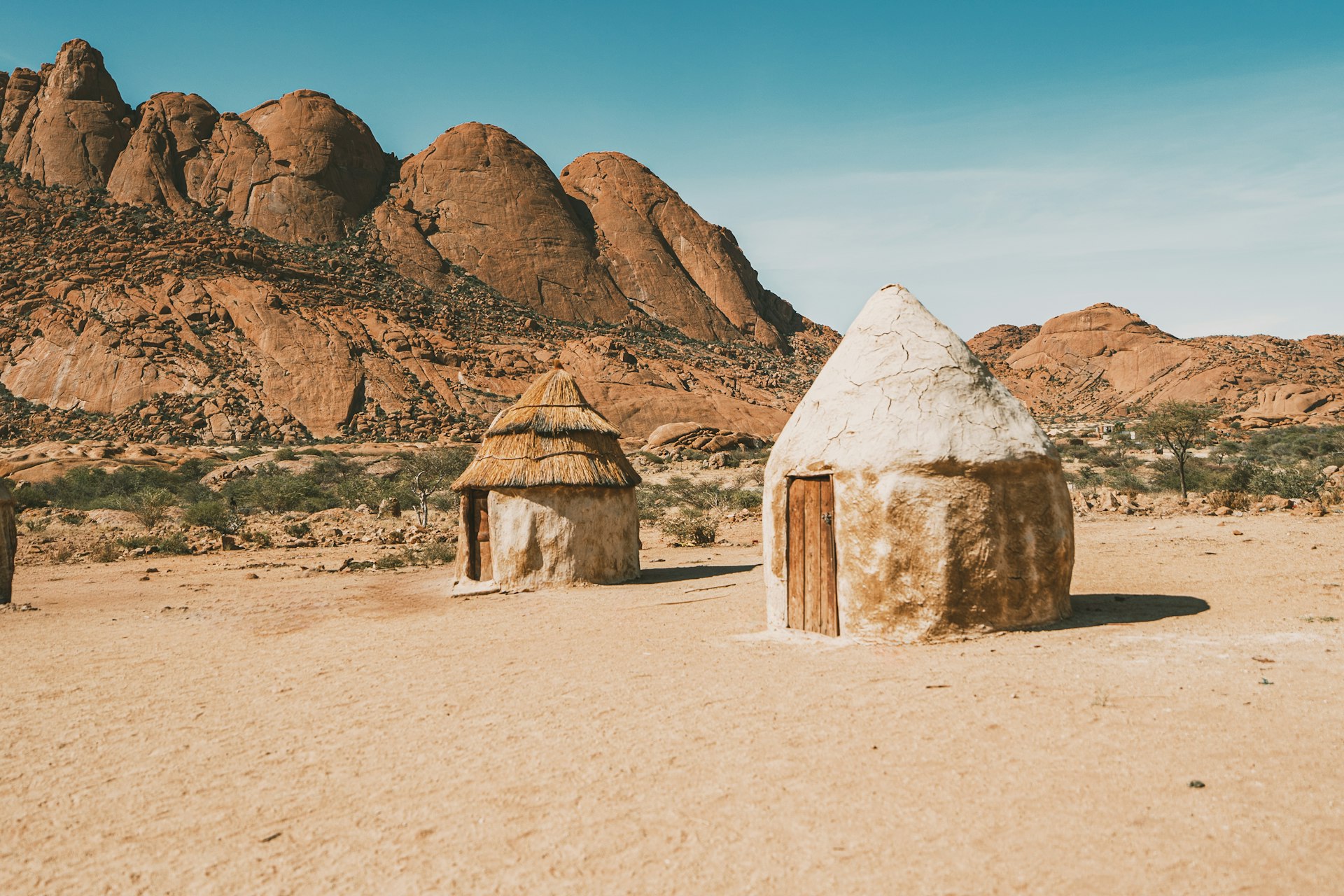
Ha Kome, a short drive to the north, is something else again, an architectural marvel that no amount of historical context quite prepares you for. Families have lived in houses built directly into the rock overhangs of massive sandstone outcrops for centuries. The structures, mud walls, thatched roofs, and rounded doorways, occupy the natural shelter created by the overhanging sandstone, using the rock as back wall and partial ceiling. They were originally constructed as a hidden refuge during the lifaqane wars when the ability to disappear into a rock face was a survival strategy. The descendants of the original builders continue to live here. A guided visit, managed by the resident community with entrance fees benefitting the families directly, takes visitors through the homestead, explaining construction techniques, daily routines, and the settlement's history.
Things to Do in Morija & Ha Kome
Visit the Morija Museum & Archives
The museum occupies the oldest building in Lesotho (1833). Collections cover Basotho pre-colonial history, missionary encounters, independence-era documentation, and archaeological material from the surrounding sandstone country. The dinosaur footprints, actual physical impressions in 200-million-year-old rock, are the most arresting exhibit and worth the visit alone.
Time the Morija Arts Festival
Every September or October, Morija hosts the most significant cultural event in Lesotho. The programme includes Afro-jazz, traditional dance, poetry, storytelling, and an informal late-night music scene that spills into the surrounding town. Not primarily organised for international visitors, a major community event that attracts thousands of Basotho, which is precisely what makes it worth attending. Dates vary; confirm when planning.
Tour Ha Kome cave houses
Twenty minutes' drive north of Morija, families live in mud-and-thatch homes built directly into massive sandstone rock overhangs. Continuously inhabited for centuries, originally constructed as refuge during the lifaqane wars. A guided visit managed by the resident community walks you through the homestead, the construction techniques, daily routines, and the settlement history.
Stay at Botleng Guest House
Adjacent to the cave houses, Botleng Guest House offers accommodation rated 10/10 by guests for its authenticity and warm hospitality. Staying overnight here, rather than day-tripping from Maseru, connects the visit to the rhythm of the cave-house community in a way that a brief tour does not.
Combine Morija and Thaba-Bosiu
The 40km drive between Thaba-Bosiu (the founding military citadel) and Morija (the educational and artistic institutions) creates a powerful cultural arc, the founding event followed by the intellectual and architectural depth that emerged from it. A coherent full-day cultural itinerary from Maseru.
Photograph the dinosaur footprints
Permitted within the museum (no flash). The footprints are extraordinary photographic subjects, physical impressions left by animals that lived 200 million years ago, with a clarity and presence that photographs of fossils rarely capture. Worth the careful, respectful image-making.
When to Visit Morija & Ha Kome
Festival Window
September, October
The Morija Arts and Cultural Festival, Lesotho's most significant cultural event, takes place in this window each year. Exact dates vary annually and are announced relatively close to the event. The town transforms into a multi-day live music, dance, poetry, and storytelling gathering attracting thousands of Basotho from across the country. Plan with flexibility around the announcement.
Spring & Autumn
April, May / November
Pleasant weather, reliable road conditions, and quieter visitor numbers. The Morija museum and Ha Kome cave houses are most enjoyable in mild conditions. Ideal shoulder seasons for travellers wanting the cultural depth without festival-period accommodation pressure.
Year-round Core
December, March / June, August
Both extremes work for the Morija sites, summer brings dramatic skies and lush surroundings; winter brings clear, sharp light and cool temperatures. The museum is climate-controlled and unaffected; Ha Kome's rock-overhang architecture is naturally insulated against temperature extremes. The choice depends on broader Lesotho itinerary timing.
Getting to Morija & Ha Kome
Morija from Maseru is 40km south on the A2 highway, approximately 45 minutes on a well-maintained tarred road. Standard vehicles are entirely adequate. Ha Kome from Morija is approximately 20 minutes north toward Teyateyaneng on the A1, well signposted. Combined as a full day from Maseru: museum in the morning, lunch in Morija or packed, Ha Kome in the afternoon. The combined day with Thaba-Bosiu (40km between sites) creates a powerful cultural arc covering both military foundation and intellectual heritage.
Where to Stay
Most visitors day-trip from Maseru, staying in the capital and using Morija and Ha Kome as a half-day or full-day excursion. For travellers who want to engage more deeply, Botleng Guest House at Ha Kome (rated 10/10 for authenticity) is the recommended stay, a night here connects the visit to the rhythm of the cave-house community. Morija itself has limited accommodation options; the festival period fills available beds across both Morija and surrounding towns.
Travel Tips for Morija & Ha Kome
Frequently Asked Questions
- Are the cave houses still genuinely inhabited?
- Yes. The descendants of the original builders continue to live here, maintaining the structures (mud walls require annual maintenance) and using them as primary residences. The visit is to a working community, not a museum, which is precisely what makes the place authentic in a way that purpose-built cultural villages cannot match.
- Is the Morija Arts Festival worth planning a trip around?
- For travellers interested in genuine African cultural events, yes. The festival is not engineered for tourism, it is a major community event that attracts thousands of Basotho. The programme is rich, the atmosphere is unmanaged in the best sense, and the social experience of being one of few international visitors in a crowd entirely there for its own enjoyment is qualitatively different from staged cultural events.
- How does Ha Kome compare to other African vernacular architecture?
- Closest in spirit to Mali's Bandiagara cliff villages, both involve human settlement directly built into rock geology. Ha Kome's scale is smaller and the community is more intimate; the continuous habitation is the key distinguishing feature. For travellers interested in vernacular architecture, this is one of the more compelling living examples in southern Africa.
- Can I do Morija and Ha Kome in a half-day?
- Yes for a quick visit; a full day rewards the sites significantly more. Half-day covers the museum and a brief Ha Kome stop. Full day allows for proper engagement with the museum's exhibits (especially the dinosaur footprints), a guided cave-house tour with conversation, and time for coffee or lunch. The full-day format is recommended for first-time visitors.
Explore More, Morija & Ha Kome
Things To Do
Plan Your Trip
More in Lesotho
Maletsunyane Falls & Semonkong
A 192-metre uninterrupted plunge into a basalt gorge in central Lesotho, the tallest single-drop waterfall in southern Africa, and host to t…
Sehlabathebe National Park
Lesotho's oldest park and part of the UNESCO Maloti-Drakensberg Transfrontier site. Sandstone monoliths, natural rock arches, 65+ San rock a…
Thaba-Bosiu
The flat-topped sandstone mesa where King Moshoeshoe I founded the Basotho nation in the 1820s and successfully defended it against Zulu, Nd…
Afriski Mountain Resort
Africa's only fully functional ski resort, in the Maluti Mountains of northern Lesotho. Genuine slopes from late June to August, mountain bi…
Katse Dam
A 185-metre double-curvature arch dam at the heart of the Lesotho Highlands Water Project, holding back 1.95 billion cubic metres in a flood…
Sani Pass
The most famous 4x4 mountain pass in southern Africa, 8 kilometres of severe switchbacks ascending from KwaZulu-Natal to 2,865 metres on the…
Ts'ehlanyane National Park
A rare patch of indigenous Afromontane forest preserved in a sheltered valley of the front-range Maluti Mountains. Multi-day treks to Afrisk…
Malealea Valley
Lesotho's premier hub for community-based tourism and Basotho pony trekking. Multi-day treks reach hidden waterfalls, San rock art galleries…
Maseru & the Highlands Circular Route
Lesotho's capital city and primary entry point, plus the spectacular Highlands Circular Route, some of the highest surfaced roads in souther…