
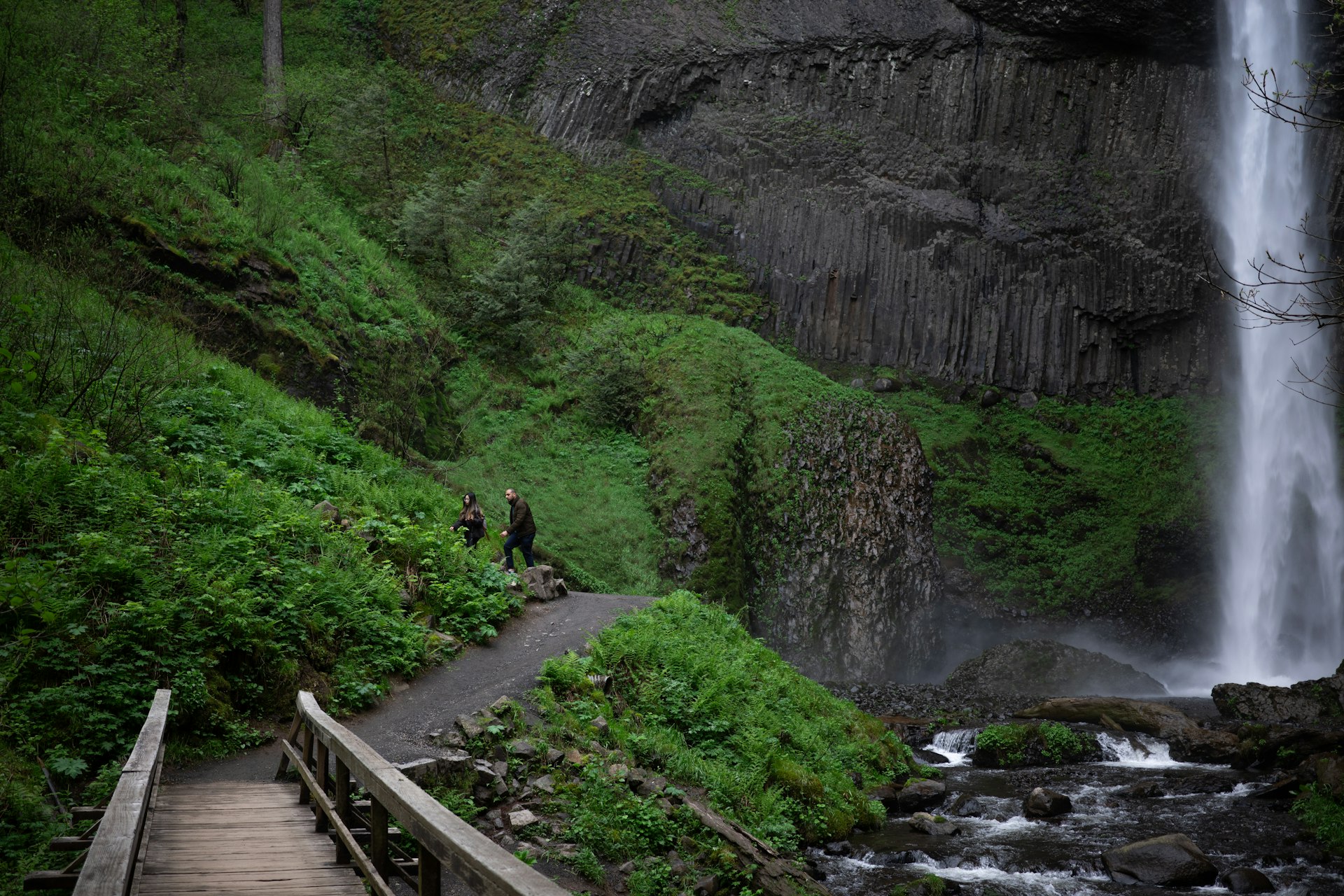
Maletsunyane Falls & Semonkong
A 192-metre uninterrupted plunge into a basalt gorge in central Lesotho, the tallest single-drop waterfall in southern Africa, and host to the Guinness World Record-holding 204-metre commercial abseil. Bearded vultures wheel above the gorge at 2,000 metres altitude.
The World's Longest Single-Drop Abseil
Photo by Yufeng Zhao on Unsplash
About Maletsunyane Falls & Semonkong
The name of the nearby town is honest: Semonkong means "the Place of Smoke." The smoke is the mist, the perpetual column of water vapour rising from the basalt gorge where the Maletsunyane River drops 192 metres in a single, uninterrupted vertical plunge. On a still morning, the spray is visible kilometres away. On a windless afternoon, the roar of the falls carries further than that. Maletsunyane is not the tallest waterfall in Africa, but it is the tallest unbroken, single-drop waterfall south of the equator by a considerable margin, and the combination of the gorge's sheer walls, the volume of the falls, and the remoteness of the setting, accessible by dirt road and river crossing, in a highland bowl at over 2,000 metres, gives it a quality of drama that more easily reached waterfalls cannot match.
The gorge edge is where the record is set. The Guinness World Record for the longest commercially operated single-drop abseil belongs here: 204 metres, measured from the cliff lip to the gorge floor, descending through the mist of the falls in one continuous rope. This is not a gentle experience. It is one of the most extreme commercially operated outdoor activities on the African continent. The 15–30 minute descent passes through the dense mist zone, soaking everything, before emerging below the main waterfall body in the quieter, shadowed lower gorge. The ascent is via a separate fixed route. No previous abseiling experience is required, but a 40–120kg weight range and reasonable general fitness are mandatory.
Beyond the abseil, the destination delivers more than the headline statistic. The gorge rim walk from Semonkong Lodge to the falls viewpoints, through highland grassland, past the cliff-edge Manong Restaurant, is a 1.5–2 hour return walk for those wanting the visual context without the drop. Pony trekking from the lodge reaches remote villages and San rock art sites inaccessible to vehicles. And the Manong Restaurant, named for the bearded vultures (manong in Sesotho) that use the gorge's powerful thermals, offers what may be southern Africa's most dramatically positioned dining: 2.8-metre-wingspan vultures wheeling twenty metres from your table. Two to three nights at Semonkong Lodge, stone rondavels, off-grid at night, a roaring central bar, is the right length.
Things to Do in Maletsunyane Falls & Semonkong
Abseil the world record 204 metres
The Guinness World Record-holding commercial single-drop abseil. Stepping backward over the cliff edge into the void with 204 metres of basalt gorge below and the falls roaring alongside. The descent passes through the mist zone, soaking everything, before emerging into the quieter lower gorge. Operated by certified guides from Semonkong Lodge. Slot numbers per day are limited; book in advance.
Walk the gorge rim
A 1.5–2 hour return walk from Semonkong Lodge to the falls viewpoints, through highland grassland past the Manong Restaurant at the cliff edge. The view from the rim, down into the full 192-metre drop, mist rising, the river a thread of white below, is genuinely extraordinary and entirely free of crowds. Best at dawn before the mist fully disperses.
Eat at the Manong Restaurant
Named for the bearded vultures that use the gorge's thermals, the Manong Restaurant at the cliff edge is one of the most dramatically positioned dining establishments in southern Africa. The vultures (2.8-metre wingspan) are reliably present in the late morning as thermals build. Watching one wheel effortlessly twenty metres from where you are eating requires no embellishment.
Pony trek into the highlands
Semonkong is a secondary pony trekking hub (Malealea is the primary). Multi-day Basotho pony treks from the lodge reach remote highland villages, San rock art galleries, and mountain passes inaccessible to any wheeled vehicle. One-day and half-day rides are also available for those wanting a shorter taste of pony transit.
Time the Maletsunyane Braai Festival
During summer months, the area around the falls hosts the Maletsunyane Braai Festival, a community gathering combining camping, local gastronomy, and socialising between travellers and Basotho locals. A worthwhile date-specific draw for visitors timing their Lesotho trip around live cultural events.
Photograph the gorge at dawn
The light in the gorge in the early morning, before the mist fully disperses, is exceptional. The falls face west, catching the afternoon light most directly, but the soft morning illumination of the gorge walls is worth setting an early alarm. Bring a dry bag, everything in the mist zone gets wet.
When to Visit Maletsunyane Falls & Semonkong
Maximum Volume
November, April
The summer rains drive the falls to maximum capacity, the spray is densest, the roar most thunderous, the abseil's mist zone the most dramatic. Lightning risk in the afternoons demands early starts for the gorge rim walk; the operating rule is up by noon, down by 2pm. This is the most visually intense window for photography.
Clear Skies
June, August
Highland winter delivers clear, dry skies and sharp light. Waterfall volume is reduced but still impressive. The gorge can develop ice formations on its walls in severe cold. The abseil operates year-round in suitable conditions; the gorge rim walk is more comfortable in cool sunshine. Pack for serious cold, overnight temperatures at altitude drop below freezing.
Shoulder
May / September, October
The transition months. Stable weather, cool temperatures, good water flow, and very few visitors. Excellent balance for travellers who want the falls without either the lightning risk of full summer or the cold of mid-winter.
Getting to Maletsunyane Falls & Semonkong
From Maseru is approximately 3–3.5 hours by road. The route runs via Teyateyaneng and Roma, transitioning from tarred main road to a degraded gravel track for the final approach. A standard vehicle with good clearance handles this in dry conditions; 4WD is strongly advisable in or after rain. The road involves river crossings that may be impassable in heavy flood. Public minibuses run from Maseru's central taxi rank to Semonkong town, though waiting times can be long. From Semonkong town the lodge is a short transfer.
Where to Stay
Semonkong Lodge is the centrepiece of the destination, stone rondavels with en-suite bathrooms, a central bar and the Manong Restaurant at the cliff edge, and full activity management. The lodge operates off-grid at night (no generator noise), and the highland sky is extraordinary. Camping is available on lodge grounds for self-sufficient travellers with their own equipment.
Travel Tips for Maletsunyane Falls & Semonkong
Frequently Asked Questions
- Do I need abseiling experience?
- No, the operation is designed for first-timers and certified guides handle all technical aspects. What you do need is reasonable general fitness, comfort with heights, and a body weight between 40–120kg for equipment safety parameters. Vertigo sufferers should assess carefully, the cliff-edge briefing alone is significantly exposed.
- Can I see the falls without doing the abseil?
- Absolutely. The gorge rim walk delivers the visual drama without the commitment, the view from the cliff-edge platforms looks straight down the full 192-metre drop. Many visitors do the rim walk first as a way of deciding whether to commit to the abseil the following day.
- How does Maletsunyane compare to Victoria Falls?
- Different scale, different character. Vic Falls is wider, more touristic, and famous globally. Maletsunyane is taller (192m single drop vs Vic's 108m), much more remote, and entirely uncrowded. For travellers who have seen Vic Falls, Maletsunyane is a different category of experience, more wilderness, more drama, less infrastructure.
- How many days do I need at Semonkong?
- Two nights minimum, one for arrival and the rim walk, one for either the abseil or a full-day pony trek. Three nights gives you both. Less than two feels rushed given the long road approach. Combining with Malealea (pony trekking) for a 4–5 night western highlands circuit is the natural format.
Explore More, Maletsunyane Falls & Semonkong
Plan Your Trip
More in Lesotho
Sehlabathebe National Park
Lesotho's oldest park and part of the UNESCO Maloti-Drakensberg Transfrontier site. Sandstone monoliths, natural rock arches, 65+ San rock a…
Thaba-Bosiu
The flat-topped sandstone mesa where King Moshoeshoe I founded the Basotho nation in the 1820s and successfully defended it against Zulu, Nd…
Afriski Mountain Resort
Africa's only fully functional ski resort, in the Maluti Mountains of northern Lesotho. Genuine slopes from late June to August, mountain bi…
Katse Dam
A 185-metre double-curvature arch dam at the heart of the Lesotho Highlands Water Project, holding back 1.95 billion cubic metres in a flood…
Sani Pass
The most famous 4x4 mountain pass in southern Africa, 8 kilometres of severe switchbacks ascending from KwaZulu-Natal to 2,865 metres on the…
Ts'ehlanyane National Park
A rare patch of indigenous Afromontane forest preserved in a sheltered valley of the front-range Maluti Mountains. Multi-day treks to Afrisk…
Malealea Valley
Lesotho's premier hub for community-based tourism and Basotho pony trekking. Multi-day treks reach hidden waterfalls, San rock art galleries…
Morija & Ha Kome
Lesotho's cultural and intellectual capital, site of the country's oldest standing building (1833), 200-million-year-old dinosaur footprints…
Maseru & the Highlands Circular Route
Lesotho's capital city and primary entry point, plus the spectacular Highlands Circular Route, some of the highest surfaced roads in souther…