
Afriski Mountain Resort
Africa's only fully functional ski resort, in the Maluti Mountains of northern Lesotho. Genuine slopes from late June to August, mountain biking and trail running in summer, and Winterfest, the continent's most unlikely music festival.
Skiing in Africa at 3,222 Metres
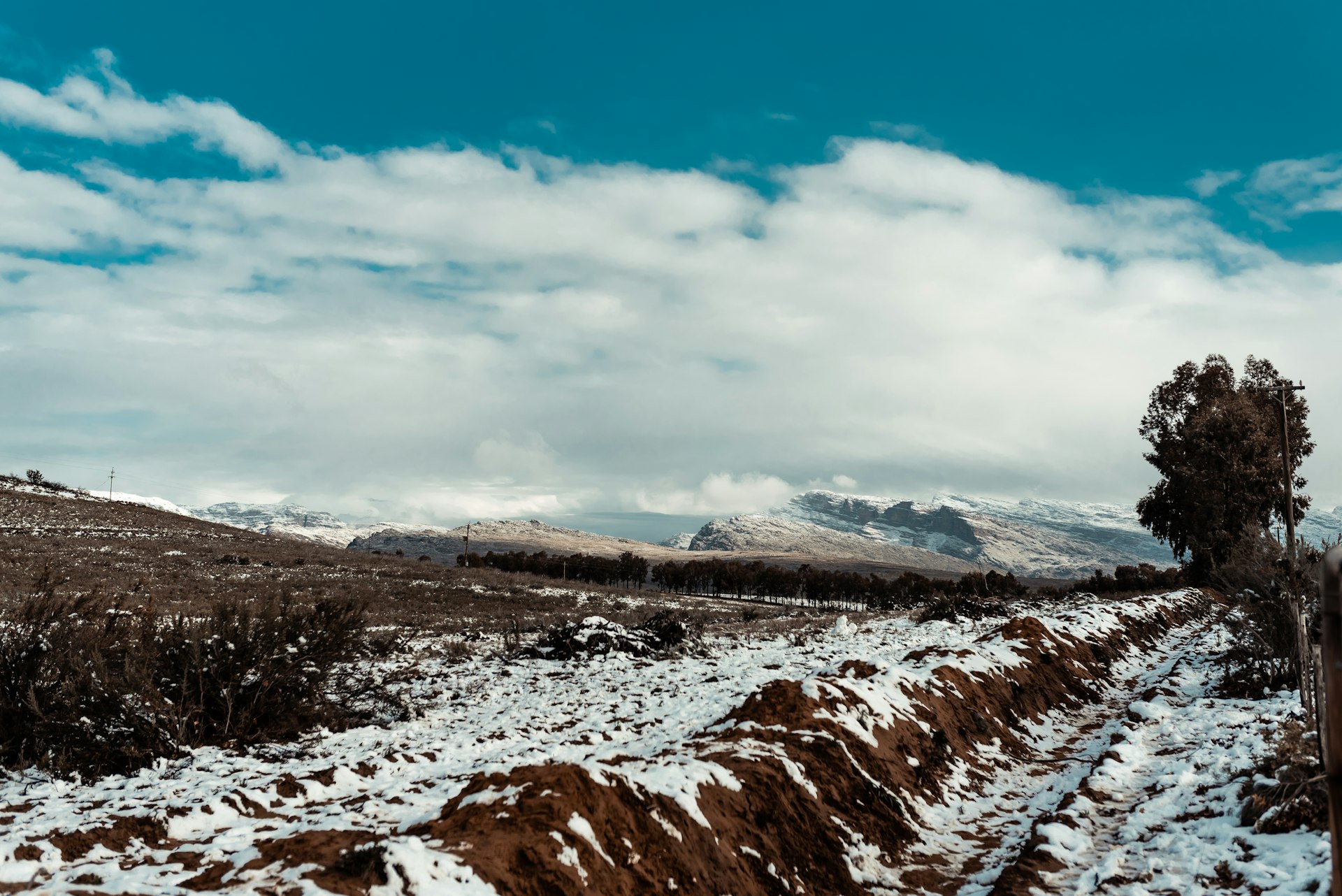
Photo by Wade Lambert on Unsplash
About Afriski Mountain Resort
Africa has a ski resort. It is at 3,222 metres above sea level in the Maluti Mountains of northern Lesotho, and it is entirely functional, genuine slopes, snowmaking equipment, ski school, ski hire, après-ski bar, and a music festival in the dead of winter. Afriski Mountain Resort is not a novelty. It is a properly engineered ski destination that capitalises on the Lesotho highlands' genuine winter climate, cold enough for consistent snowfall from late June through August, and high enough that snowmaking equipment can supplement natural accumulation to maintain adequate slope conditions throughout the season.
The approach is part of the experience. The A1 highway ascends from the lowlands through the Mahlasela Pass, a dramatic tarred mountain road that presents the full scale of the northern Maluti highlands before depositing you at 3,222 metres with snow visible in every direction. The resort maintains a main beginner and intermediate slope, a ski school offering group and private lessons, and equipment hire for those not travelling with their own gear. The tubing run and snow park provide options for non-skiers wanting to engage with the snow environment. For experienced skiers, Afriski is not the Alps, the terrain is limited by the plateau topography rather than dramatic descent. What it offers is skiing in Africa: the novelty is real, the experience is genuine, and the scenery (open highland panoramas in every direction at 3,222m) is extraordinary.
The summer transformation is arguably as compelling as the winter operation. The ski slopes convert to mountain biking tracks of varying difficulty, descent-focused, taking advantage of the significant vertical available. Trail running circuits extend into the surrounding highland plateau. Enduro quad biking excursions operate across the rugged northern terrain. And the resort hosts Winterfest, the continent's most unlikely music festival, multi-day live music with snow activities and a social atmosphere drawn from across southern Africa. Afriski functions equally well as a winter destination in its own right, a summer mountain biking base, or a high-altitude staging post for the broader northern circuit (Ts'ehlanyane National Park is connected by multi-day hike to the south).
Things to Do in Afriski Mountain Resort
Ski or snowboard the slopes
Genuine skiing in Africa. The main beginner and intermediate slope, ski school for first-timers, equipment hire for those without their own gear. Not the Alps, the terrain is limited, but the novelty is real, the experience is genuine, and the scenery from a chairlift on a southern African ski mountain is extraordinary.
Mountain bike the converted ski slopes
The summer transformation. Descent-focused tracks of varying difficulty take advantage of the significant vertical available. The resort's bike park rivals dedicated bike-park operations in southern Africa for terrain quality. Bring your own bike or hire on-site.
Attend Winterfest
The annual multi-day music festival during peak ski season, live music, snow activities, and the social energy of a resort crowd drawn from across southern Africa. Themed snow parties throughout the season create a destination atmosphere that makes Afriski a draw beyond its sporting credentials.
Quad bike the highland plateau
Enduro quad biking excursions operate across the rugged northern terrain, open highland plateau, rocky outcrops, and the extraordinary big-sky environment of the Maluti at 3,000+ metres. A different mode of accessing terrain that hiking cannot cover in a day.
Try the tubing run
For non-skiers and families, the tubing run provides a genuine snow experience without the technical learning curve. Inflatable tubes, a graded run, and the simple physical pleasure of sliding down packed snow. Suitable for kids who haven't seen snow before.
Hike to Ts'ehlanyane National Park
The trail connecting Afriski with Ts'ehlanyane through the Maluti highlands is one of Lesotho's most rewarding multi-day hiking routes, 2–3 days crossing open plateau, descending through forest, and arriving at Maliba Mountain Lodge from above. Requires fitness, mountain gear, and ideally a local guide.
When to Visit Afriski Mountain Resort
Ski Season
Late June, August
The ski operation runs dependent on snowfall and snowmaking capacity. Cold enough for consistent natural snow at 3,222m. Winterfest typically falls in this window. School holidays from South Africa fill weekend capacity rapidly, book well in advance. Genuinely cold: nights drop below -10°C and serious winter clothing is non-negotiable.
Summer Mountain Sport
October, April
The ski slopes convert to mountain biking tracks; trail running circuits extend into the surrounding plateau; quad biking opens the rugged terrain to off-road enthusiasts. The wildflower bloom in November–December and the long daylight hours make this a genuinely beautiful highland summer environment. Lightning risk in the afternoons demands early starts on exposed terrain.
Shoulder
May / September
Quieter transition months between operations. Limited slope availability or none; the resort restaurants and accommodation operate but the main attractions are reduced. Best for travellers wanting the highland setting without the seasonal extremes, clear, cool weather and very few other guests.
Getting to Afriski Mountain Resort
From Maseru is approximately 3.5–4 hours via the A1 highway through Leribe and up the Mahlasela Pass. The road is tarred throughout; standard vehicles are adequate in dry conditions. In winter, snow chains or 4WD traction control may be necessary for the upper sections after heavy snowfall. From Johannesburg, enter at Caledonspoort border post (Butha-Buthe district, opens 06:00) and follow the A1 southward, total drive approximately 4.5 hours. Caledonspoort is the optimal border for Afriski.
Where to Stay
Afriski operates its own on-mountain accommodation, chalets and apartments at altitude, ski-in/ski-out access in winter and direct trail access in summer. Capacity is limited; book well in advance for peak periods. Off-mountain alternatives in Butha-Buthe town add 30–45 minutes' drive each way and are budget-conscious options. Two to three nights covers a winter ski weekend or a summer mountain-biking visit; longer stays let you combine with Ts'ehlanyane.
Travel Tips for Afriski Mountain Resort
Frequently Asked Questions
- Is Afriski really a proper ski resort?
- Yes, with caveats. Genuine slopes, snowmaking, lifts, ski school, and après-ski. Limited terrain compared to the Alps or major North American resorts, the runs are short and the variety is constrained, but the operation itself is properly engineered and the experience is real skiing. For experienced skiers it's a curiosity rather than a destination; for first-timers and intermediate skiers it works well.
- What's the snow really like?
- Variable. Some seasons deliver consistent natural snowfall; others rely heavily on snowmaking. The slopes are maintained throughout the operating window in most years. Don't book Afriski expecting Alpine powder, book it expecting a working ski resort in southern Africa, with the curiosity that implies.
- Should I visit in summer instead?
- Many travellers find it more rewarding. The winter crowds disappear, mountain biking opens up, the wildflowers in November–December are extraordinary, and the highland setting at 3,222m without the cold is genuinely beautiful. Summer is the underrated Afriski experience.
- How does it pair with the rest of Lesotho?
- Naturally with Ts'ehlanyane (connected by the multi-day hike through the highlands), with Katse Dam (90 minutes south on the A1), and with the Highlands Circular Route from Maseru. The northern circuit (Maseru, Katse, Afriski, Ts'ehlanyane) is one of the most rewarding 5–7 day Lesotho itineraries.
Explore More, Afriski Mountain Resort
Things To Do
Plan Your Trip
More in Lesotho
Maletsunyane Falls & Semonkong
A 192-metre uninterrupted plunge into a basalt gorge in central Lesotho, the tallest single-drop waterfall in southern Africa, and host to t…
Sehlabathebe National Park
Lesotho's oldest park and part of the UNESCO Maloti-Drakensberg Transfrontier site. Sandstone monoliths, natural rock arches, 65+ San rock a…
Thaba-Bosiu
The flat-topped sandstone mesa where King Moshoeshoe I founded the Basotho nation in the 1820s and successfully defended it against Zulu, Nd…
Katse Dam
A 185-metre double-curvature arch dam at the heart of the Lesotho Highlands Water Project, holding back 1.95 billion cubic metres in a flood…
Sani Pass
The most famous 4x4 mountain pass in southern Africa, 8 kilometres of severe switchbacks ascending from KwaZulu-Natal to 2,865 metres on the…
Ts'ehlanyane National Park
A rare patch of indigenous Afromontane forest preserved in a sheltered valley of the front-range Maluti Mountains. Multi-day treks to Afrisk…
Malealea Valley
Lesotho's premier hub for community-based tourism and Basotho pony trekking. Multi-day treks reach hidden waterfalls, San rock art galleries…
Morija & Ha Kome
Lesotho's cultural and intellectual capital, site of the country's oldest standing building (1833), 200-million-year-old dinosaur footprints…
Maseru & the Highlands Circular Route
Lesotho's capital city and primary entry point, plus the spectacular Highlands Circular Route, some of the highest surfaced roads in souther…