
Sehlabathebe National Park
Lesotho's oldest park and part of the UNESCO Maloti-Drakensberg Transfrontier site. Sandstone monoliths, natural rock arches, 65+ San rock art sites, endemic water lilies, and bearded vultures soaring on escarpment thermals at 2,400 metres.
Shield of the Plateau
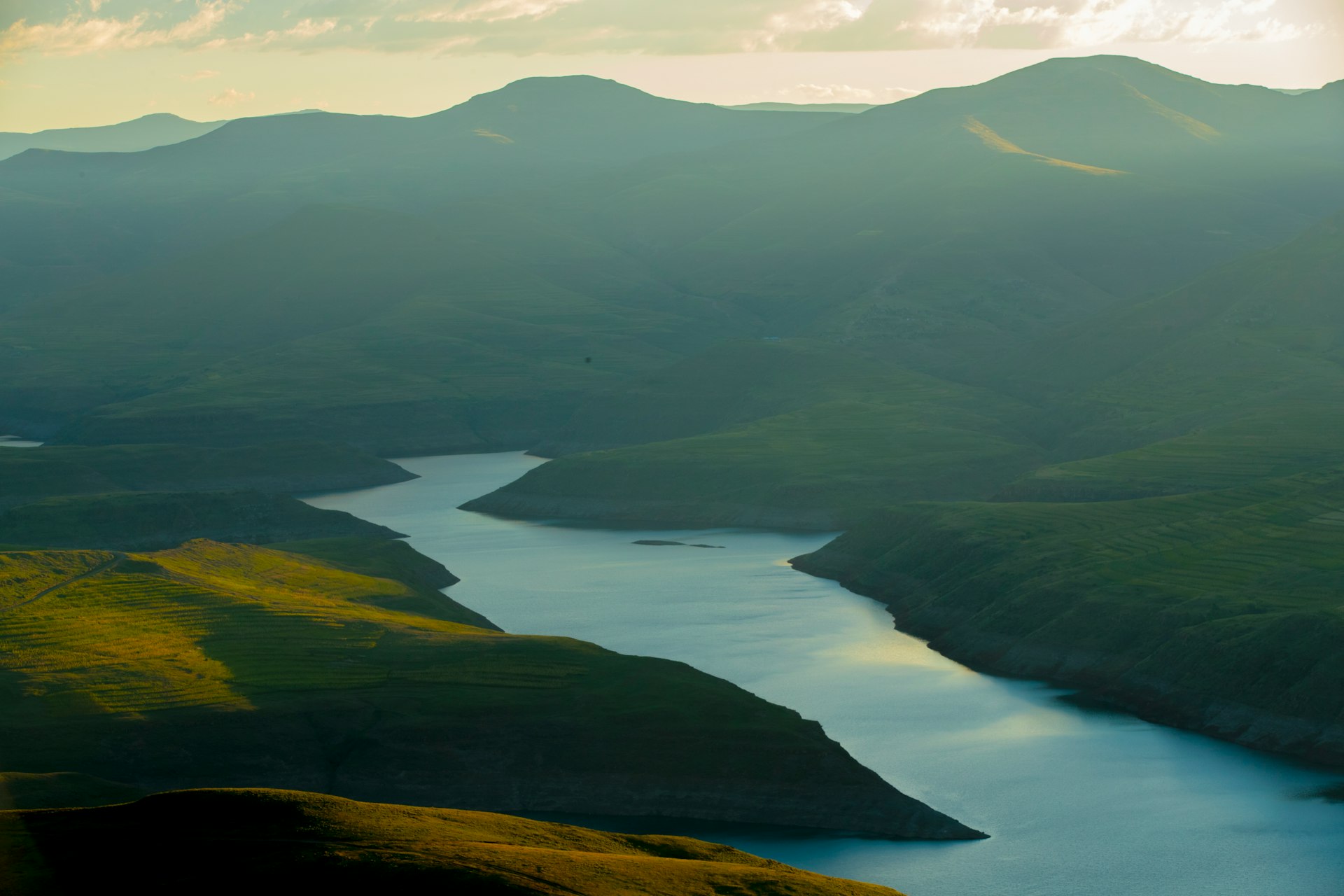
Photo by Tatenda Mapigoti on Unsplash
About Sehlabathebe National Park
Sehlabathebe means "Shield of the Plateau" in Sesotho. The name is geographic fact: this remote highland park at the southeastern tip of Lesotho sits on the very edge of the Drakensberg escarpment, at an average altitude of 2,400 metres, looking out over the KwaZulu-Natal lowlands far below. It is, in every sense, the furthest and most isolated corner of an already remote country.
Getting here is the first test. The Matabeng Pass, the principal 4WD route into the park from the Lesotho interior, is one of the most technically demanding tracks in the country. The alternative is entering from South Africa via the Ramatseliso's Gate border post, a long, rough approach from the KwaZulu-Natal side. There is no comfortable way in. This is deliberate: Sehlabathebe is part of the UNESCO World Heritage Maloti-Drakensberg Transfrontier Park, and its protection depends partly on its difficulty of access. What greets the visitor who makes it through is a landscape that defies easy classification: eroded sandstone monoliths rising from alpine grassland, natural rock arches, icy mountain pools that bloom with endemic water lilies in summer, and skies that carry the bearded vulture, Africa's largest bird of prey, on thermals rising from the escarpment edge.
The park's headline phenomena are seasonal and worth planning around. Between December and February, shallow muddy rock pools across the plateau bloom with the Sehlabathebe Water Lily, a species found nowhere else on earth. The granite overhangs and sheltered sandstone walls contain over 65 documented San rock art sites, paintings of eland, hunting scenes, and therianthropic shamanic figures made by the original inhabitants thousands of years before Bantu-speaking peoples arrived in the region. The mandatory Tsoelikana Waterfall hike (4–5 hours return) crosses wetland areas and open grassland with good bird activity. And the bearded vulture (manong in Sesotho), with its 2.8-metre wingspan and unusual diamond-tailed silhouette, is reliably present above the escarpment thermals, Sehlabathebe is one of the most reliable global locations for this critically threatened species.
Things to Do in Sehlabathebe National Park
Hike to Tsoelikana Waterfall
The mandatory activity for all visitors, a day walk through the park's highland terrain to a waterfall dropping into an icy basin surrounded by rock formations. The approach crosses wetland areas and open grassland with good bird activity throughout. Allow 4–5 hours return from the park facilities.
Tour the San rock art sites
Sehlabathebe holds over 65 documented San rock art sites, paintings of eland, hunting scenes, and the therianthropic figures associated with the San shamanic trance tradition. The art is less managed and less visited than Drakensberg sites. A knowledgeable local guide is the difference between walking past a painted overhang and understanding what it means.
Photograph the natural rock arches
Centuries of wind and water erosion have sculpted Sehlabathebe's sandstone into organ-pipe formations, towering monoliths, and natural rock arches that frame views across the escarpment to South Africa below. The sense of being at the continent's edge, on a high plateau dropping suddenly to lowland Africa, is heightened at every viewpoint.
Watch for the Sehlabathebe Water Lily
Between December and February, the shallow rock pools across the plateau bloom with the endemic water lily, a species found nowhere else on earth. The transformation of an austere monochrome landscape into scattered displays of white and yellow flowers is one of the more unexpected spectacles in Lesotho.
Spot bearded vultures from the escarpment edge
The bearded vulture (manong) is reliably present above Sehlabathebe's escarpment thermals. With a 2.8-metre wingspan and a deeply unusual silhouette (diamond tail, narrow wings, russet underparts), it is one of Africa's most striking birds and one of its most threatened. The escarpment edge is one of the most reliable viewing locations in southern Africa.
Combine with the South African Drakensberg
Sehlabathebe is part of the UNESCO Maloti-Drakensberg Transfrontier Park. Visitors entering via Ramatseliso's Gate from KwaZulu-Natal can extend the trip with time on the South African side, the Drakensberg's higher-volume San art sites and developed hiking infrastructure complement Sehlabathebe's wilder register.
When to Visit Sehlabathebe National Park
Water Lily Season
December, February
The shallow rock pools across the plateau bloom with the endemic Sehlabathebe Water Lily, one of the more unexpected spectacles in Lesotho's natural calendar. The summer rains keep the alpine wetlands full and the sandstone formations dramatic against thunderstorm skies. Lightning risk demands early-afternoon caution on exposed terrain.
Clear Skies
June, August
Highland winter delivers exceptional visibility and sharp light. The sandstone formations are at their most photogenic. Bearded vulture sightings are reliable on the escarpment thermals. Overnight temperatures drop well below freezing, pack serious cold-weather sleeping equipment.
Shoulder
March, May / September, November
The transition months offer balanced conditions, fewer extreme temperatures, mostly dry weather, and very low visitor numbers. The rock art tours and Tsoelikana Waterfall hike are at their most comfortable. An underrated window.
Getting to Sehlabathebe National Park
From the Lesotho interior, the Matabeng Pass route from Qacha's Nek is the primary internal access, a 4WD-mandatory track, severely degraded and impassable in heavy rain. From South Africa, enter via Ramatseliso's Gate border post from the KwaZulu-Natal side; road conditions on the South African approach vary, so confirm current status with the park authority. There is absolutely nothing available within the park, bring all food, drinking water, cooking fuel, and emergency supplies for the full duration of your stay. Potable water is not reliably available at the park facilities.
Where to Stay
Sehlabathebe Park Lodge offers basic self-catering accommodation within the park, beds, cooking facilities, and shelter, nothing more. Bring everything else. Book through the Lesotho Ministry of Forestry, Range and Soil Conservation. Designated camping is also available within the park for self-sufficient travellers with full mountain camping equipment.
Travel Tips for Sehlabathebe National Park
Frequently Asked Questions
- Is Sehlabathebe accessible to non-4WD vehicles?
- Effectively no. The Matabeng Pass from the Lesotho interior demands a capable 4WD with high clearance and bush experience. The Ramatseliso approach from South Africa is variable, sometimes manageable for a high-clearance 2WD in dry conditions, but often requires 4WD. Plan for 4WD as the default.
- How does Sehlabathebe compare to the South African Drakensberg?
- Wilder, less developed, and far less visited. The South African Drakensberg parks (Royal Natal, Champagne Castle area, Giant's Castle) have managed trails, established hut networks, and significantly higher visitor numbers. Sehlabathebe is the more remote, more demanding side of the same UNESCO transfrontier park, same geology, different infrastructure.
- Is the rock art genuinely worth the expedition?
- For travellers interested in San heritage, yes. The 65+ sites are among the most significant in the broader Maloti-Drakensberg complex, and their relative isolation means most are seen by very few people. The eland-focused painting tradition and the therianthropic shamanic figures are exceptional. With a knowledgeable guide, the experience is genuinely transformative.
- How many days do I need?
- Two to three nights. Day one for arrival and orientation; day two for the Tsoelikana Waterfall hike; day three for rock art tours with a guide. Less than two nights misses one of the major activities. Self-drivers attempting the Matabeng Pass should add half a day to the schedule for the access alone.
Explore More, Sehlabathebe National Park
Plan Your Trip
More in Lesotho
Maletsunyane Falls & Semonkong
A 192-metre uninterrupted plunge into a basalt gorge in central Lesotho, the tallest single-drop waterfall in southern Africa, and host to t…
Thaba-Bosiu
The flat-topped sandstone mesa where King Moshoeshoe I founded the Basotho nation in the 1820s and successfully defended it against Zulu, Nd…
Afriski Mountain Resort
Africa's only fully functional ski resort, in the Maluti Mountains of northern Lesotho. Genuine slopes from late June to August, mountain bi…
Katse Dam
A 185-metre double-curvature arch dam at the heart of the Lesotho Highlands Water Project, holding back 1.95 billion cubic metres in a flood…
Sani Pass
The most famous 4x4 mountain pass in southern Africa, 8 kilometres of severe switchbacks ascending from KwaZulu-Natal to 2,865 metres on the…
Ts'ehlanyane National Park
A rare patch of indigenous Afromontane forest preserved in a sheltered valley of the front-range Maluti Mountains. Multi-day treks to Afrisk…
Malealea Valley
Lesotho's premier hub for community-based tourism and Basotho pony trekking. Multi-day treks reach hidden waterfalls, San rock art galleries…
Morija & Ha Kome
Lesotho's cultural and intellectual capital, site of the country's oldest standing building (1833), 200-million-year-old dinosaur footprints…
Maseru & the Highlands Circular Route
Lesotho's capital city and primary entry point, plus the spectacular Highlands Circular Route, some of the highest surfaced roads in souther…