
Malealea Valley
Lesotho's premier hub for community-based tourism and Basotho pony trekking. Multi-day treks reach hidden waterfalls, San rock art galleries, and highland villages that no vehicle has ever reached. The 1905 Malealea Lodge anchors a quietly transformative experience.
The Pony Trekking Capital
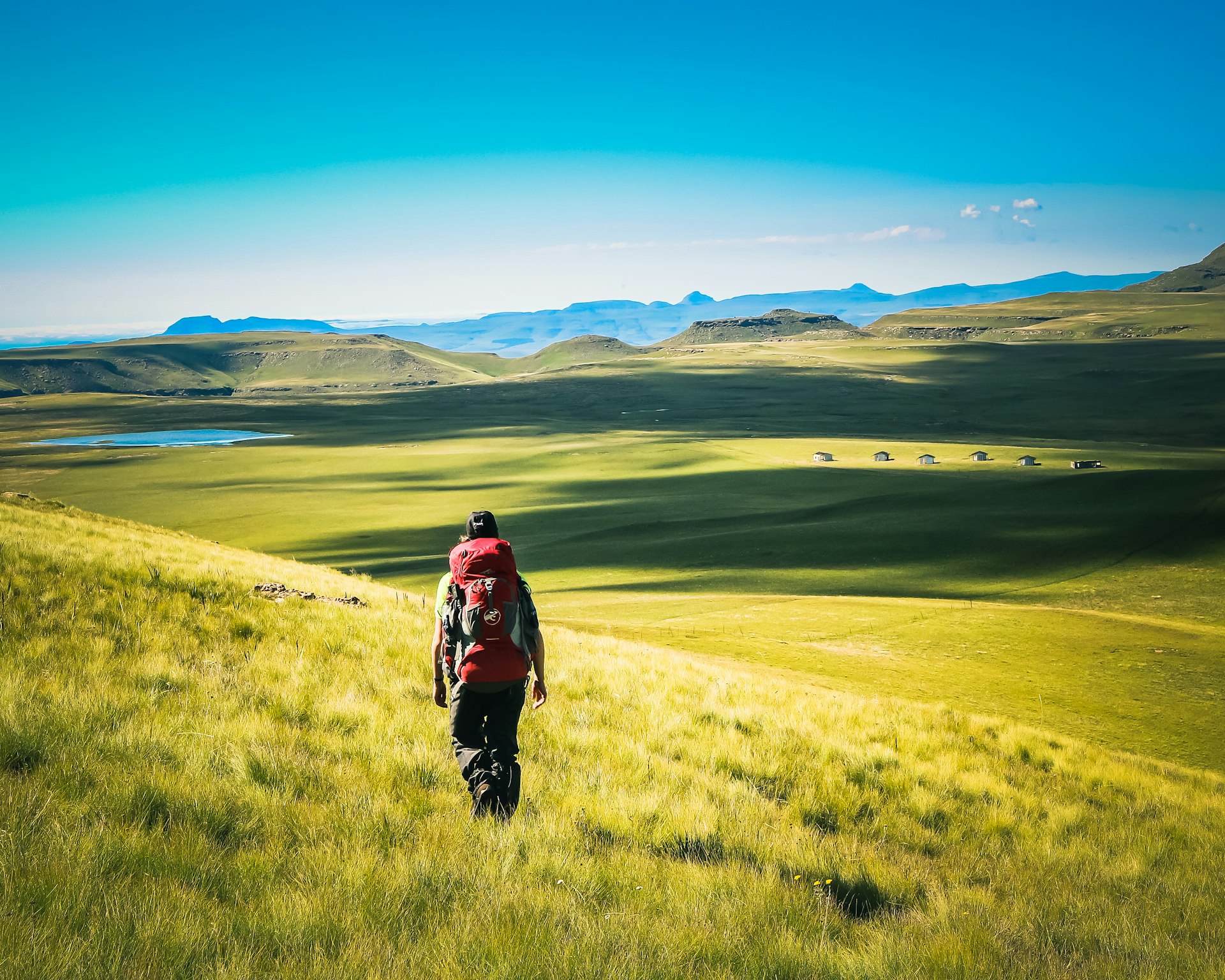
Photo by Arthur Hickinbotham on Unsplash
About Malealea Valley
The sign at the entry to Malealea has been welcoming visitors for decades: "Stranger, this gate divides the world you know from the world of the Basotho people." The gate, a traditional reed fence at the edge of the historic trading post, is now a slightly self-conscious piece of destination branding. The valley beyond it, however, delivers on what the sign promises.
Malealea is the premier hub for community-based tourism in Lesotho, and its defining credential is the pony trek. In the western highlands, the terrain is not merely difficult for wheeled vehicles, vast sections of it are completely impossible for them. Narrow basalt ridges, steep valley descents, and rocky river crossings that would destroy any vehicle have preserved an extensive network of routes through the landscape accessible only on foot or horseback. The Basotho pony, a hardy, sure-footed mountain breed developed specifically for this terrain, is the key. From Malealea Lodge, multi-day pony treks penetrate this roadless landscape, reaching hidden waterfalls, ancient San rock art galleries, and highland villages that see very few visitors. The pony is not a novelty; it is how this territory has always been navigated.
The lodge itself evolved from a trading post established in 1905, the original stone buildings still form part of the property, into a sprawling eco-adventure centre with accommodation from farmhouse rooms to basic rondavels. The communal character of the lodge, shared dining, guests eating together, information exchanged freely over the dinner table, is a deliberate philosophy that reflects the community-centred ethos of the destination. Malealea is not a luxury property; it is comfortable but rustic, with hearty rather than gourmet food and functional rather than sophisticated facilities. What it offers instead is a quality of place, the valley, the ponies, the community, the evenings of village choirs around the fire, that luxury infrastructure would not improve. Most travellers describe the multi-day pony trek as the most human and memorable experience of their Lesotho trip.
Things to Do in Malealea Valley
Multi-day Basotho pony trek
The definitive Malealea experience. Pony treks ranging from half-day rides through the immediate valley to 3–5 day expeditions deep into roadless highlands. Multi-day format involves sleeping in village guesthouses or basic mountain huts, eating with local families, crossing high passes at dawn, and reaching locations no vehicle has ever reached. Saddle time 4–6 hours per day; no previous riding experience required.
Visit hidden waterfalls and rock art
The multi-day pony trek routes pass several significant waterfalls in the valley system inaccessible by road, and panels of San rock art in sheltered overhangs. Local guides provide interpretive context for both. The waterfalls are unnamed and unmarked on most maps; the rock art is part of a continuous tradition stretching across the broader Drakensberg.
Walk a Basotho village with the Development Trust
Guided village walks through the Malealea community, managed through the Malealea Development Trust, provide ground-level access to rural Basotho agricultural and domestic life. The Trust ensures tourism revenue benefits the community directly. Walks cover the local chief's compound, agricultural fields, traditional cooking demonstrations, and informal conversations with community members.
Listen to a village choir evening
Malealea Lodge maintains long-standing relationships with local village choirs and musical groups, who perform in the lodge's communal space in the evenings. Not a staged cultural performance, a genuine community engagement that has evolved organically over decades. Sitting around a fire listening to a Basotho choir, with the highland darkness beyond, is the most authentically human evening experience that Lesotho's tourism infrastructure provides.
Take a half-day ride for first-timers
For visitors not committed to a multi-day expedition, half-day and one-day rides through the immediate valley provide the riding experience without the logistical commitment. The ponies are accustomed to first-time riders and the paths are navigated by the animal's instinct rather than the rider's skill.
Combine with Maletsunyane
Malealea (pony trekking) and Semonkong (the abseil and falls) form Lesotho's western highlands circuit. The 4–5 night combination, 2–3 nights at each, delivers the country's most rewarding non-mountain itinerary, accessible from Maseru without committing to the more demanding Sani or Sehlabathebe routes.
When to Visit Malealea Valley
Optimal Riding
May, October
The dry season delivers the best pony trekking conditions, stable trails, dry river crossings, settled weather, and clear visibility. June–August is genuinely cold at altitude (frosty mornings) but offers the sharpest light and the most reliable conditions for multi-day expeditions.
Spring
September, November
Warming temperatures, wildflowers, and lambing season in the surrounding villages. The trails are at their most beautiful and the pony herd is at its most active. Light afternoon storms become more common toward late November but rarely disrupt rides.
Summer
December, March
The summer rains transform the valley into vivid green. Riding remains possible but trails become muddier and river crossings can become difficult after sustained rain. Lightning risk on exposed ridges demands early starts. The community choir evenings are at their best as longer days bring people together.
Getting to Malealea Valley
From Maseru is approximately 2.5–3 hours. Drive south via the A2 to Mafeteng, then east on gravel roads to Malealea. The approach is sign-posted; the final stretch is gravel and requires a vehicle with good clearance. A 4WD is not essential in dry conditions but provides significantly more comfort on the approach track. Visitors entering Lesotho from the south via Van Rooyen's Gate can reach Malealea directly, bypassing Maseru, approximately 1.5 hours from the border.
Where to Stay
Malealea Lodge is the single defining accommodation, a sprawling eco-adventure property evolved from a 1905 trading post, with everything from farmhouse rooms to basic rondavels to camping. The communal character, shared dining, and information exchange over dinner are part of the experience. It is not a luxury property; the food is hearty rather than gourmet and facilities are functional rather than sophisticated. What it offers is the valley, the ponies, the community, and the evenings, and these are the reasons people come.
Travel Tips for Malealea Valley
Frequently Asked Questions
- Do I really need to do the multi-day trek?
- It's optional but transformative. Half-day rides give you the experience; the 3–5 day format gives you the place. Most travellers who do the multi-day trek describe it as the most human and memorable part of their Lesotho trip. The 2-night format is the minimum that delivers the cumulative quality of the experience.
- Are the ponies treated well?
- Yes, the welfare standards are high and the working relationship between lodge and pony owners is long-established. The ponies are mountain-adapted and the work is appropriate to their breed; the rest periods, feeding, and general care meet the standards expected by international visitors. Tipping the handlers personally reinforces this welfare-positive economic model.
- Is Malealea suitable for families?
- Yes, with realistic expectations. Children old enough to ride independently (8–10+) can join half-day or one-day treks; younger children can do village walks and lodge activities. The communal lodge setting and choir evenings work well for families. The 3–5 day expeditions are demanding for younger children, assess fitness and patience honestly.
- How does it compare to Semonkong?
- Both have pony trekking; Malealea is the primary hub and Semonkong is secondary. Malealea has the deeper community-tourism programme; Semonkong has the world-record abseil and the falls. Most western-Lesotho itineraries combine the two, 2–3 nights at each, in either order, with the connecting drive through dramatic highland terrain.
Explore More, Malealea Valley
Plan Your Trip
More in Lesotho
Maletsunyane Falls & Semonkong
A 192-metre uninterrupted plunge into a basalt gorge in central Lesotho, the tallest single-drop waterfall in southern Africa, and host to t…
Sehlabathebe National Park
Lesotho's oldest park and part of the UNESCO Maloti-Drakensberg Transfrontier site. Sandstone monoliths, natural rock arches, 65+ San rock a…
Thaba-Bosiu
The flat-topped sandstone mesa where King Moshoeshoe I founded the Basotho nation in the 1820s and successfully defended it against Zulu, Nd…
Afriski Mountain Resort
Africa's only fully functional ski resort, in the Maluti Mountains of northern Lesotho. Genuine slopes from late June to August, mountain bi…
Katse Dam
A 185-metre double-curvature arch dam at the heart of the Lesotho Highlands Water Project, holding back 1.95 billion cubic metres in a flood…
Sani Pass
The most famous 4x4 mountain pass in southern Africa, 8 kilometres of severe switchbacks ascending from KwaZulu-Natal to 2,865 metres on the…
Ts'ehlanyane National Park
A rare patch of indigenous Afromontane forest preserved in a sheltered valley of the front-range Maluti Mountains. Multi-day treks to Afrisk…
Morija & Ha Kome
Lesotho's cultural and intellectual capital, site of the country's oldest standing building (1833), 200-million-year-old dinosaur footprints…
Maseru & the Highlands Circular Route
Lesotho's capital city and primary entry point, plus the spectacular Highlands Circular Route, some of the highest surfaced roads in souther…