
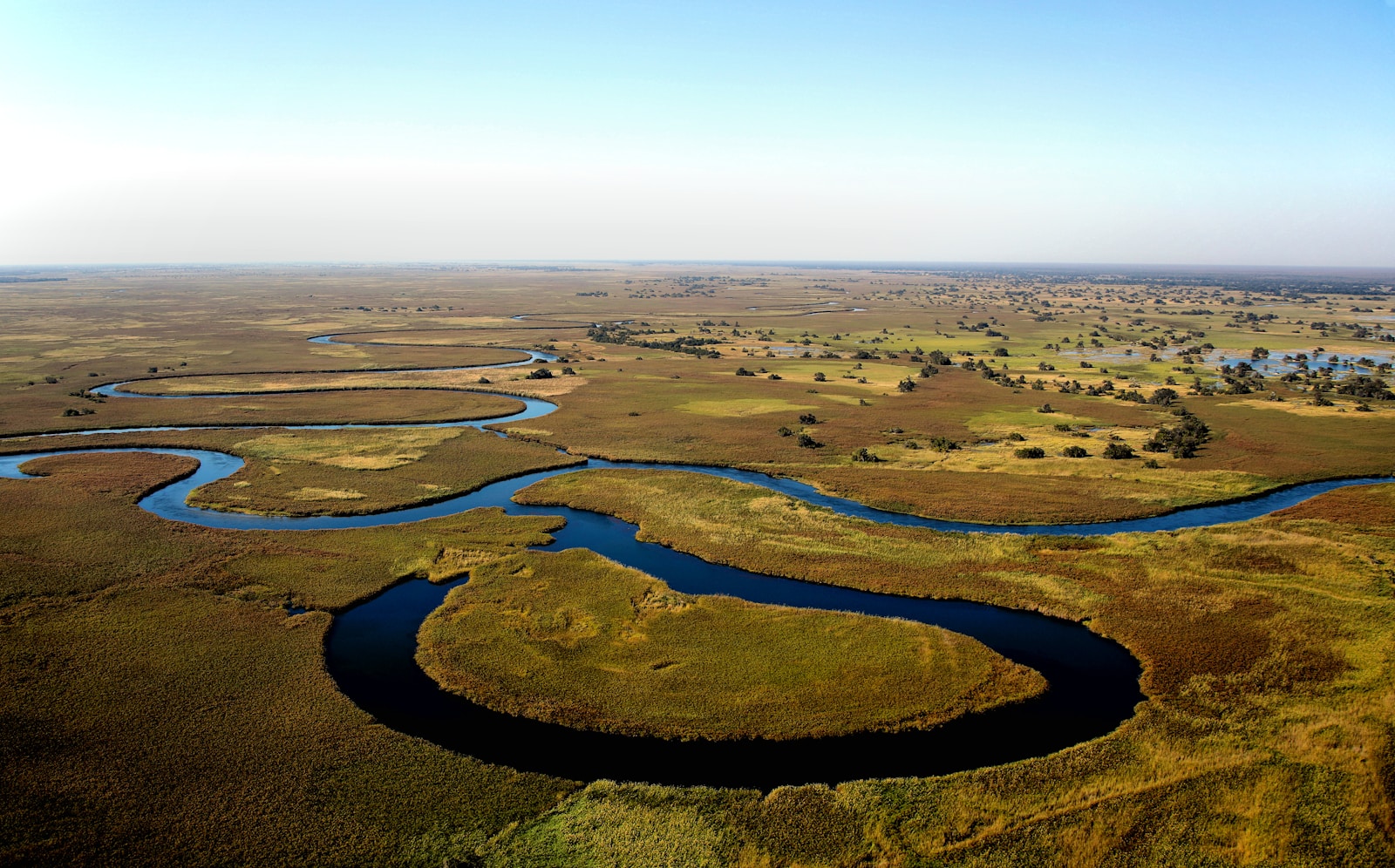
Okavango Delta
A vast inland delta where the Okavango River empties into the Kalahari Desert, creating 15,000 square kilometres of seasonal floodplains, palm-fringed islands, and some of the densest wildlife concentrations in Africa.
Africa's Last Eden
Photo by Wynand Uys on Unsplash
About Okavango Delta
The Okavango River rises in the Angolan highlands, travels 1,200 kilometres south, crosses the Caprivi Strip of Namibia, and then, instead of reaching the sea, disappears into the Kalahari Desert. The water fans out across the ancient fault lines of the Kalahari basin, creating an inland delta of 15,000 square kilometres of channels, lagoons, islands, and flooded grasslands in the middle of one of the driest landscapes on earth. Designated Africa's 1,000th UNESCO World Heritage Site in 2014, it is the largest inland delta in the world and the heart of Botswana's high-value, low-volume safari model.
The Delta operates on inverse seasonal logic. The Angolan rains from January and February travel south for four to six months and arrive at the Delta during the dry season, July and August, when the surrounding Kalahari is at its most parched. The result is a paradox: the largest inland flood arrives precisely when its surroundings are driest, creating a productive wildlife ecosystem in the middle of a desert. The flood pulls game into the Delta's islands and channels in concentrations rarely seen anywhere on the continent. Lion prides wading shoulder-deep after lechwe. Wild dog packs, of one of the continent's most endangered large carnivores, with some of their largest remaining populations on earth. Leopards in extraordinary densities along the channel margins. The mokoro, a shallow-drafted traditional dugout canoe poled by a local guide, is the only vessel that makes sense in the papyrus-lined waterways, and it remains the defining Delta experience.
The Delta has almost no roads. Most camps are reached by light aircraft, and the safari experience is a mix of mokoro trips through the channels, motorboat exploration of the deeper waters, walking safaris on the drier islands, night drives in the private concessions (not permitted inside Moremi reserve), and game drives across the floodplain margins. It is an expensive destination, peak season at the apex camps runs USD $1,800-2,800+ per person per night, but the quality of the experience is unmatched. Three nights is a minimum to begin to understand it. Four or more is when the Delta starts to do its actual work on you.
Things to Do in Okavango Delta
Mokoro safari through the channels
The defining Delta experience. A traditional dugout canoe poled by a local guide through reed-lined channels at water level. The silence lets you approach elephants, hippos, and birds without disturbance. Peak conditions during flood months (June-September); some operators offer multi-day mokoro trails with island camping.
Predator tracking on Chief's Island
Chief's Island in the central Delta is known as the predator capital of Africa. Lion prides on the Mombo concession have been continuously studied for decades, leopards are unusually relaxed around vehicles, and wild dog packs hunt the open floodplains at dawn. The apex Delta wildlife experience.
Walking safari on the islands
Three- to four-guest guided walks with armed professional guides on the drier Delta islands. Tracks, vegetation, the small-mammal world that game drives skim past. The high predator density means strict protocols; the guides are exceptional.
Game drives in Moremi and Khwai
Moremi Game Reserve covers the eastern 30% of the Delta and offers Botswana's only Big Five reserve. The adjacent Khwai community concession permits off-road tracking, walking, and the night drives that the national reserve does not, including some of the most reliable pangolin sightings in Africa.
Helicopter scenic flight
Doors-off helicopter flights reveal the Delta's fractal channel network from above and produce the iconic aerial photography that defines the wetland in print. Around USD $600-800 per hour from Maun or directly from selected camps; 60-90 minutes is the standard for serious photographers.
Combine wet and dry camps
The optimal Delta itinerary pairs a flood-season water camp (Jao, Tubu Tree, Pom Pom for mokoro and boat) with a drier predator-focused camp (Mombo, Vumbura, Chitabe). The two formats reveal entirely different sides of the ecosystem. A classic Botswana loop adds Chobe and Makgadikgadi for 10-14 days.
When to Visit Okavango Delta
Peak Flood
June, August
The flood is at its highest and the Kalahari is at its driest, pulling wildlife into the Delta in huge numbers. Cool, dry weather and clear skies. The best time for mokoro trips through the channels. Peak season, book 9-12 months ahead.
Late Dry
September, October
Water levels begin to drop and wildlife concentrates around the remaining pools. Temperatures climb through October. The most intense big-cat and elephant action of the year, though the heat is significant.
Green Season
November, March
Summer rains bring the Delta to life in a different way, migratory birds arrive, antelope give birth, and the landscape turns lush. Flood levels are at their lowest. Lodges offer significant discounts and the light is dramatic.
Flood Rising
April, May
The shoulder season. The rains are ending, the flood is beginning to arrive from Angola, and wildlife viewing ramps up quickly. Fewer crowds than peak season with many of its rewards.
Getting to Okavango Delta
The Delta is almost entirely accessible by light aircraft. Most visitors fly into Maun (MUB), Botswana's safari hub, via Johannesburg, Cape Town, or Gaborone on Air Botswana, SA Airlink, or Fastjet. Charter transfers to camp airstrips take 15-40 minutes through Mack Air, Wilderness Air, or operator-specific networks. Light aircraft enforce a strict 15-20kg soft-sided luggage limit per person; hard suitcases will be refused at the airstrip. A handful of southeastern Delta camps and the Khwai community concession are reachable by road (3-5 hours on rough tracks; 4WD mandatory) but the central Delta concessions are fly-in only.
Where to Stay
The Delta operates on a clearly stratified pricing model. Ultra-luxury (USD $1,800-2,800+ per person per night) covers the apex concession camps: Mombo on Chief's Island, Jao, Vumbura Plains, Duba Plains. Mid-high luxury (USD $900-1,800) covers strong concession properties: Tubu Tree, Pom Pom, Chitabe Lediba, Kanana. Mid-range (USD $500-900) is concentrated in the Khwai community concession, which offers substantively similar wildlife at lower bed density. Mobile tented expeditions (USD $400-1,200) physically relocate every few days through the Khwai and eastern Delta concessions, providing the purist small-group experience. Premium concessions book 12-18 months ahead for peak season; the most sought-after dates at Mombo and Jao are routinely full a year in advance.
Travel Tips for Okavango Delta
Frequently Asked Questions
- When does the Okavango flood arrive?
- The flood arrives from Angola starting in April and peaks between June and August. The lag means the Delta is at its wettest during Botswana's dry winter, which is also when surrounding wildlife is most concentrated, the reason the Delta is such an extraordinary safari destination.
- Is the Okavango Delta worth the cost?
- For most travellers who go, yes, but it is genuinely expensive, and the same budget could buy a longer itinerary in Zambia or Tanzania. If you want the most pristine, lowest-pressure wildlife experience in Africa and are prepared to pay for it, the Delta delivers. If you want maximum days in the bush on a limited budget, look elsewhere.
- Can I visit the Delta on a budget?
- Yes, but only at the edges. Mobile camping operators based in Maun run 3-7 day trips into the eastern Delta and Moremi for a fraction of the fly-in camp rates. You sleep in dome tents, share bucket showers, and travel by 4x4, but you still get genuine bush experiences.
- What's the difference between Moremi and the rest of the Delta?
- Moremi Game Reserve is a formally protected national reserve inside the Delta covering roughly 30% of the wetland, mostly the drier eastern sections. The rest of the Delta is a patchwork of private concessions, where lodges have exclusive rights and can offer off-road driving, walking, and night drives that Moremi doesn't permit.
Explore More, Okavango Delta
More in Botswana
Chobe National Park
The world's highest concentration of African elephants — around 120,000 across the greater Chobe ecosystem — drinks from the Chobe River eve…
Moremi Game Reserve & Khwai
The eastern third of the Okavango Delta and Botswana's only Big Five reserve. Moremi protects exceptional wild dog populations and Big Five …
Central Kalahari Game Reserve
At 52,800 square kilometres, the second-largest game reserve on earth. Black-maned Kalahari lions, cheetah hunting on open fossil valleys, S…
Makgadikgadi Pans
Twelve thousand square kilometres of salt pans, the remains of a prehistoric super-lake. Lunar landscapes for dry-season quad-biking, Africa…
Kgalagadi Transfrontier Park
A 38,000 km² transfrontier park spanning Botswana and South Africa. Rolling red Kalahari dunes, black-maned lion prides, brown hyena, and th…
Linyanti & Selinda Concessions
The private concessions between the Okavango Delta and Chobe — ultra-exclusive safari territory with extraordinary wild dog populations, mas…
Nxai Pan National Park
A fossil lakebed adjacent to the Makgadikgadi with open terrain ideal for cheetah hunting and the ancient cluster of baobabs painted by Thom…
Tsodilo Hills
A UNESCO World Heritage rock art site with over 4,500 paintings on four quartzite massifs rising from the flat Kalahari, the highest concent…
Tuli Block
Far eastern Botswana at the meeting of three countries. Sandstone cliffs, massive baobabs, large elephant herds, and Mashatu Game Reserve's …