
Chobe National Park
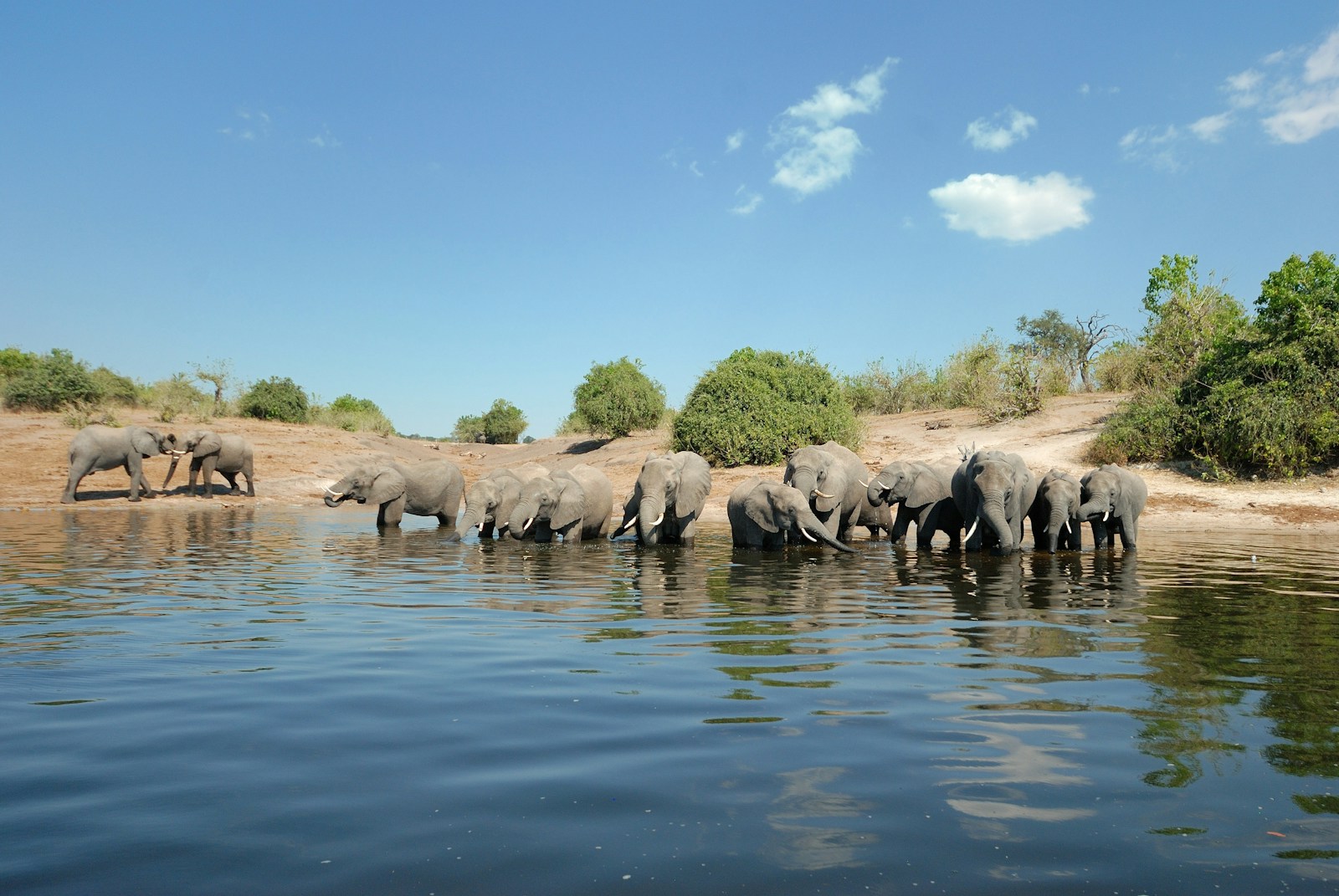
The world's highest concentration of African elephants — around 120,000 across the greater Chobe ecosystem — drinks from the Chobe River every dry season. Botswana's most accessible safari destination and one of the most reliable places anywhere to see wildlife at water-level intimacy.
The Elephant Capital of Africa
Photo by Colin Watts on Unsplash
About Chobe National Park
The numbers at Chobe National Park are well-documented and still astonishing: an estimated 120,000 elephants inhabit the greater Chobe ecosystem, the highest elephant concentration on the African continent, and one of the densest populations of any large mammal species anywhere on earth. During the dry season, when the Chobe River is the primary remaining water source for vast tracts of northern Botswana and Namibia's Caprivi, these elephants converge on the riverfront in herds of extraordinary scale. A river cruise from Kasane on a pontoon or small motorboat positions you at water level as hundreds of elephants drink, bathe, and swim across the river simultaneously. Breeding herds wade in while bulls spar on the banks. Calves are carried across the current by their mothers. The scene operates at a scale that no photograph prepares you for.
The Chobe Riverfront, where most visitors spend their time, is one section of a much larger park covering 11,700 square kilometres of significantly varied habitat. The Savuti region in the south, an arid marshy depression where the famous Savuti Channel flows and dries on a multi-decade cycle, is home to specialized lion prides that have learned to hunt elephants, an extraordinary behavioural adaptation documented by researchers and filmmakers over decades. The Linyanti frontage in the southwest forms part of the broader Linyanti-Selinda private concession network, among the most exclusive safari areas in Africa. But the river is the headline. Boat safaris glide past pods of 30-40 hippos, Nile crocodiles four metres and longer basking on every sandbar, and the densest year-round birding in northern Botswana (African fish eagle, carmine bee-eaters, African skimmers, and over 460 recorded species).
What makes Chobe particularly attractive is the combination of accessibility and quality. The town of Kasane sits at the four-country meeting point of Botswana, Namibia, Zambia, and Zimbabwe, with a small international airport (BBK), the Kazungula Bridge to Zimbabwe (opened 2021), and direct road access to Victoria Falls (70 km, 90 minutes). Day trips into the park from Kasane are straightforward; multi-day stays are easier still; and the town's lodges run twice-daily boat and game drive activities at far lower price points than the fly-in camps of the Okavango Delta. For travellers who want a serious Botswana wildlife experience without the all-inclusive Delta budget, Chobe delivers.
Things to Do in Chobe National Park
Afternoon boat safari on the Chobe River
The signature Chobe experience. A 3-hour cruise through pods of hippo, herds of elephant wading in the river, and one of the best birding stretches of water in Africa. The light at sunset over the floodplain is among the best in Botswana.
Morning game drive along the river road
The dirt track running parallel to the Chobe River through the park is one of the most productive wildlife roads in Botswana. Lion, leopard, sable, buffalo, kudu, and the largest elephant numbers in Africa.
Day trip from Victoria Falls
Many visitors do Chobe as a single-day excursion from Victoria Falls, a 90-minute road transfer to Kasane, a morning game drive, lunch, an afternoon boat cruise, and back to the falls by evening. A great way to add Botswana to a Zimbabwe trip without the cost of a fly-in safari.
Multi-day stay at a Chobe river lodge
Three or four nights at a lodge on the Chobe River front, alternating boat cruises, game drives, and rest, is the classic Chobe experience and dramatically cheaper than the Okavango Delta. The light at dawn and dusk over the floodplain is unforgettable.
Visit the Savuti or Linyanti sectors
For a more remote, more exclusive Chobe experience, the Savuti marsh and the Linyanti wetlands in the south and west are reached by light aircraft from Kasane. Both are renowned for predator action and feel completely different from the river front.
Combine with the Okavango Delta
Most fly-in Botswana itineraries combine 2-3 nights at Chobe with 3-4 nights in the Okavango Delta. Together they cover the country's two great water-based wilderness experiences and form the most popular Botswana safari combination.
When to Visit Chobe National Park
Dry Season
May, October
The defining Chobe window. Surrounding water sources dry up and elephants from across the wider ecosystem move to the Chobe River. Boat safaris become the highlight, afternoon cruises through hundreds of elephants is unlike anything else in Africa.
Hot Dry
September, October
The most extreme dry season, wildlife concentrations peak, the temperatures climb above 40°C, and the action at the river is at its most intense. October is the hottest and the most rewarding for serious wildlife photographers.
Green Season
November, March
The rains arrive, water disperses across the wider region, and the elephants spread out. The river is still beautiful and birding is exceptional, but the spectacular concentrations of dry season are gone. Lodge prices drop significantly.
Shoulder
April
The rains taper off, the river is full, and game starts moving back. Cooler weather makes walking and game drives comfortable. A pleasant shoulder window with most of the dry-season experience starting to return.
Getting to Chobe National Park
Kasane Airport (BBK) is the main entry point and has regional flights from Johannesburg, Maun, Cape Town, and Victoria Falls. Most international visitors arrive overland from Victoria Falls, a 90-minute road transfer or a slightly slower combined road and boat crossing of the Zambezi at Kazungula. The Kazungula Bridge, opened in 2021, replaced the old ferry crossing and made the trip much easier. Self-drive is possible from Maun and Windhoek but takes 8-10 hours on remote roads.
Where to Stay
Chobe has the widest range of accommodation in Botswana. Kasane town has affordable hotels and lodges within walking distance of the park gate. Lodges along the river front (Chobe Game Lodge, Chobe Marina Lodge, Chobe Bush Lodge) offer comfortable stays with twice-daily activities at mid-range prices. For a more exclusive experience, the houseboats on the river run multi-day cruises, and the high-end lodges in Savuti and Linyanti offer the kind of remote, low-density safari Botswana is famous for. Two to four nights covers the river front; longer stays let you combine sectors.
Travel Tips for Chobe National Park
Frequently Asked Questions
- Chobe or the Okavango Delta?
- They are different experiences. Chobe is more accessible, much cheaper, easier to do as a short trip, and weighted toward elephants and river-based safari. The Delta is wilder, much more expensive, and weighted toward exclusivity and the mokoro/island experience. The classic Botswana itinerary does both.
- Can I do Chobe as a day trip?
- Yes, many travellers do Chobe as a single-day excursion from Victoria Falls and it works well. But staying overnight in Kasane lets you do both a morning game drive and an afternoon boat cruise without the rushed transfer, and the dawn light at the river is worth seeing.
- When is the best time to see the elephants?
- August to October. Surrounding water sources are at their lowest, the elephants concentrate at the Chobe River, and afternoon boat cruises regularly pass herds of 100+ elephants drinking, swimming, and crossing between Botswana and Namibia. October is the most extreme, and the hottest.
- Is Chobe family-friendly?
- Yes, more so than the Okavango Delta. Boat cruises and short game drives work well for kids, the lodges along the river are comfortable, and the activity rhythm is less intense than fly-in camps. Many families do Chobe and Victoria Falls together as their introduction to African safari.
Explore More, Chobe National Park
Things To Do
Plan Your Trip
More in Botswana
Okavango Delta
A vast inland delta where the Okavango River empties into the Kalahari Desert, creating 15,000 square kilometres of seasonal floodplains, pa…
Moremi Game Reserve & Khwai
The eastern third of the Okavango Delta and Botswana's only Big Five reserve. Moremi protects exceptional wild dog populations and Big Five …
Central Kalahari Game Reserve
At 52,800 square kilometres, the second-largest game reserve on earth. Black-maned Kalahari lions, cheetah hunting on open fossil valleys, S…
Makgadikgadi Pans
Twelve thousand square kilometres of salt pans, the remains of a prehistoric super-lake. Lunar landscapes for dry-season quad-biking, Africa…
Kgalagadi Transfrontier Park
A 38,000 km² transfrontier park spanning Botswana and South Africa. Rolling red Kalahari dunes, black-maned lion prides, brown hyena, and th…
Linyanti & Selinda Concessions
The private concessions between the Okavango Delta and Chobe — ultra-exclusive safari territory with extraordinary wild dog populations, mas…
Nxai Pan National Park
A fossil lakebed adjacent to the Makgadikgadi with open terrain ideal for cheetah hunting and the ancient cluster of baobabs painted by Thom…
Tsodilo Hills
A UNESCO World Heritage rock art site with over 4,500 paintings on four quartzite massifs rising from the flat Kalahari, the highest concent…
Tuli Block
Far eastern Botswana at the meeting of three countries. Sandstone cliffs, massive baobabs, large elephant herds, and Mashatu Game Reserve's …