
Serengeti National Park
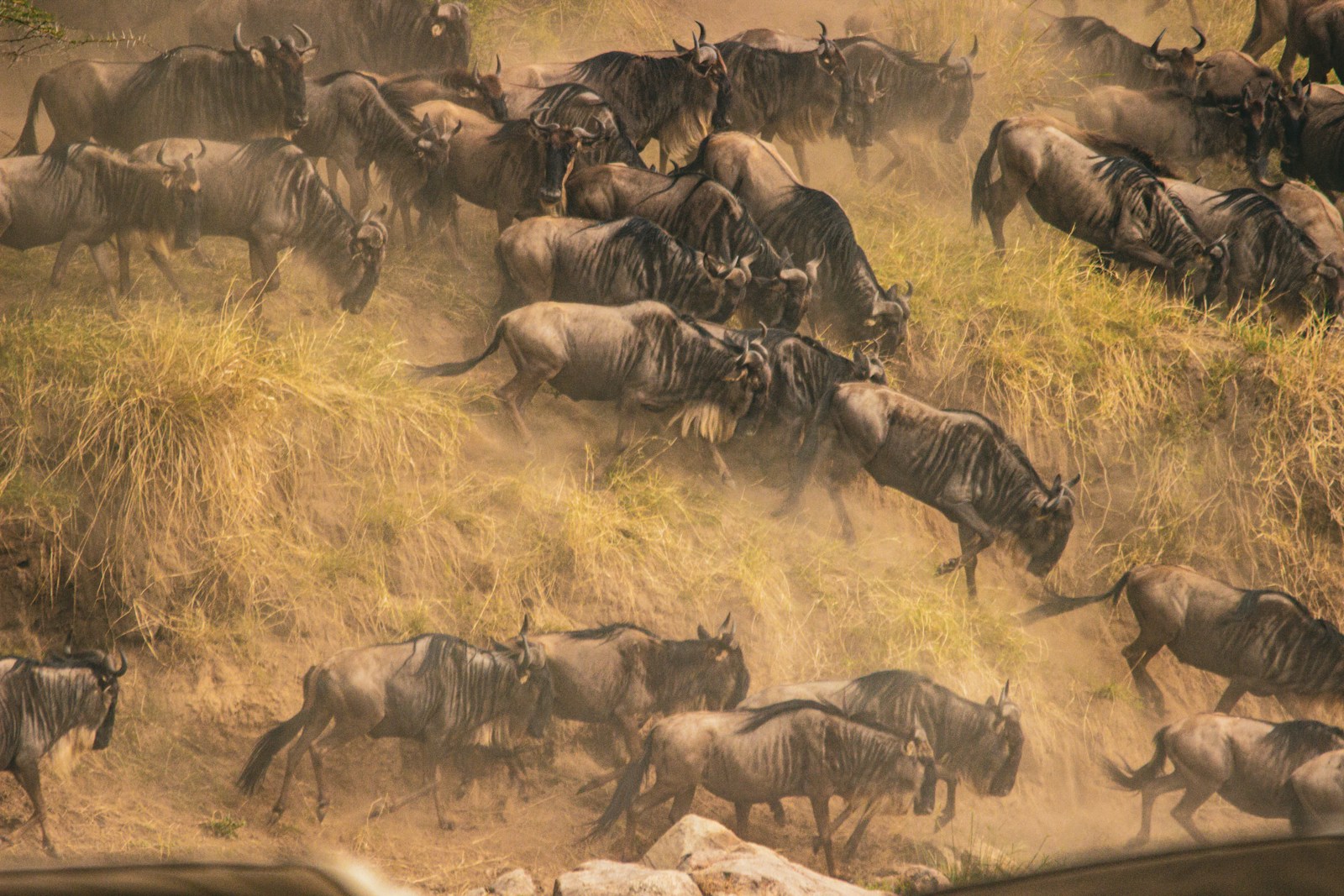
The largest intact ecosystem on Earth and the setting of the Great Migration, the year-round movement of over two million wildebeest, zebra, and gazelle across 30,000 square kilometres of open plains.
The Stage of the Great Migration
Photo by Denice Alex on Unsplash
About Serengeti National Park
The Serengeti is Africa's most famous wilderness for a reason. Its 14,750 square kilometres of protected area, extending across the unfenced Mara, Ngorongoro, and Maswa ecosystems to over 30,000 square kilometres in total, host the largest land-mammal migration on the planet. Over two million wildebeest, zebra, and gazelle move clockwise through the park in an annual cycle driven by rainfall, pursued by lions, cheetahs, leopards, hyenas, and crocodiles.
But the Serengeti is not only about the migration. The Seronera Valley in the park's centre is one of the most productive year-round game-viewing areas in Africa, with resident big cats, huge herds of buffalo, and some of the continent's densest leopard populations. The Grumeti River in the west hosts Nile crocodiles the size of small cars. The southern plains, in the short grass season from December to March, become a vast nursery where over 500,000 wildebeest calves are born in a six-week window.
The landscape itself is part of the draw. Classic African savanna rolls to the horizon, broken only by granite kopjes and lone acacias. The light at dawn and dusk turns the grass gold and the sky impossibly wide. For many visitors this is not just their first African safari, it is the landscape they had imagined before they came.
Things to Do in Serengeti National Park
Witness a Mara River crossing
Between July and October, wildebeest mass on the north bank of the Mara River before launching into the current under the jaws of Nile crocodiles. One of the most extraordinary wildlife spectacles on Earth.
Hot air balloon safari over the plains
Drift silently above the Serengeti at dawn as herds move below and the sun comes up over the horizon. Balloons launch from Seronera, Ndutu, and the northern Serengeti, and include a champagne bush breakfast on landing.
Big cat tracking in the Seronera Valley
The Seronera region has some of the highest densities of lion, leopard, and cheetah anywhere in Africa. Year-round game drives here reliably produce sightings of all three big cats.
Visit a Maasai boma
Communities on the edges of the park offer visits to traditional Maasai homesteads where you can learn about pastoralist life, traditional dress, and the centuries-old relationship between the Maasai and the ecosystem.
Walking safaris in private conservancies
Several private conservancies bordering the Serengeti offer off-road driving, walking safaris, and night drives that are not permitted inside the national park itself. An excellent complement to a classic game drive itinerary.
Combine with Ngorongoro Crater
Most itineraries pair the Serengeti with a day in Ngorongoro Crater, a collapsed volcanic caldera that forms a natural amphitheatre for dense year-round wildlife, including the best chance to see black rhino in East Africa.
When to Visit Serengeti National Park
Calving Season
January, March
The herds are concentrated on the southern short-grass plains and Ndutu area. Over 500,000 wildebeest calves are born in roughly three weeks, and predators are everywhere. Exceptional action viewing.
Long Rains
April, May
The herds begin moving north through the central Serengeti. Heavy rains make some roads difficult but lodges offer big discounts, and the landscape is greenest. Birding is at its best.
River Crossings
June, October
Peak safari season. The herds reach the northern Serengeti and Mara River, where the famous crossings happen, wildebeest leaping into crocodile-infested water against the current. Book a year ahead.
Short Rains
November, December
Brief afternoon rains trigger the herds' return south. An excellent shoulder season, fewer crowds than July-October, green landscapes, and dramatic cloud formations.
Getting to Serengeti National Park
Most visitors fly into Kilimanjaro International Airport (JRO) near Arusha, then connect via a light aircraft charter to one of the Serengeti's airstrips, Seronera, Kogatende, Kirawira, or Ndutu, depending on where the herds are. The drive from Arusha takes 7-8 hours via Ngorongoro and is best combined with a stay at the crater rim. Many itineraries start in Arusha, include Tarangire and Ngorongoro on the way in, then fly out of the Serengeti to avoid the long drive back.
Where to Stay
Accommodation ranges from permanent lodges in the Seronera area to mobile tented camps that move with the migration through the year. Mobile camps, which relocate quarterly to stay near the herds, are the best way to maximise your chances of witnessing key events. Private conservancies bordering the park offer a more exclusive experience with walking and night drives, usually at a higher price point. Budget travellers can base themselves in Seronera, which has several good mid-range options and year-round game viewing.
Travel Tips for Serengeti National Park
Frequently Asked Questions
- When is the best time to see the Great Migration?
- It depends on which part you want to see. River crossings happen July-October in the northern Serengeti. Calving season is January-February in the south. Both are extraordinary, different animals, different stages, different experiences.
- How many days do I need in the Serengeti?
- Three to four nights minimum. The park is enormous, and a single-night visit barely scratches the surface. Five to six nights lets you see different regions and greatly improves your chances of witnessing a major event.
- Serengeti or Maasai Mara, which is better?
- They are the same ecosystem, the Mara is the Kenyan extension of the Serengeti. The Serengeti is larger, wilder, and has more variety of landscape and game. The Mara is smaller, easier to access, and delivers the famous river crossings from July to September. Serious safari travellers often visit both.
- Is it safe to walk or camp in the Serengeti?
- Walking safaris are only permitted in designated private conservancies, not inside the national park proper. Fly-camping under the stars is offered by several mobile camp operators and is safe when run by experienced guides with armed support.
Explore More, Serengeti National Park
Things To Do
Plan Your Trip
Planning a trip to Tanzania?
Explore the full Tanzania travel guide for more on when to visit, how to get around, and what else there is to see.
Tanzania Travel Guide